Loading...
Done
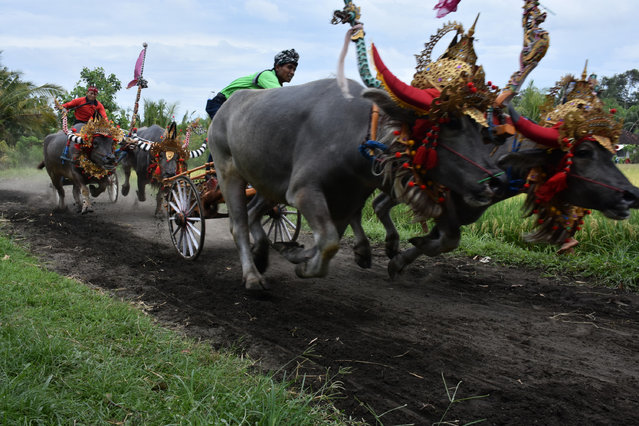
Jockeys spur buffalos during the Makepung buffalo races at Jembrana in Bali, Indonesia on October 23, 2016. Makepung is a tradition for farmers to celebrate a bumper harvest in Bali. (Photo by Kadek Raharja/Xinhua/Barcroft Images)

Jockeys spur buffalos during the Makepung buffalo races at Jembrana in Bali, Indonesia on October 23, 2016. Makepung is a tradition for farmers to celebrate a bumper harvest in Bali. (Photo by Kadek Raharja/Xinhua/Barcroft Images)
Details
25 Oct 2016 10:50:00
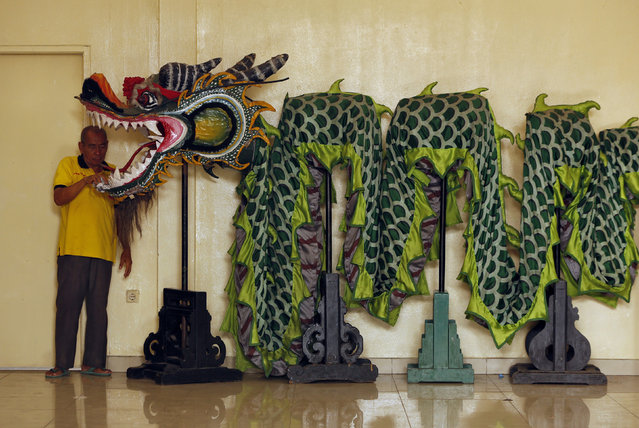
A worker cleans a dragon ahead of the upcoming Chinese Lunar New Year celebrations at the Boen Tek Bio temple in Tangerang, Banten province, Indonesia February 1, 2016. (Photo by Reuters/Beawiharta)

A worker cleans a dragon ahead of the upcoming Chinese Lunar New Year celebrations at the Boen Tek Bio temple in Tangerang, Banten province, Indonesia February 1, 2016. (Photo by Reuters/Beawiharta)
Details
02 Feb 2016 13:45:00
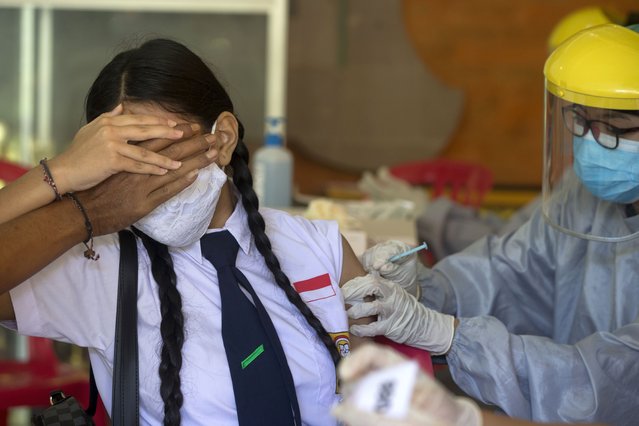
A teenager reacts as she receives a shot of the Sinovac vaccine for COVID-19 during a vaccination campaign at a school in Denpasar, Bali, Indonesia on Monday, July 5, 2021. (Photo by Firdia Lisnawati/AP Photo)

A teenager reacts as she receives a shot of the Sinovac vaccine for COVID-19 during a vaccination campaign at a school in Denpasar, Bali, Indonesia on Monday, July 5, 2021. (Photo by Firdia Lisnawati/AP Photo)
Details
06 Jul 2021 10:41:00
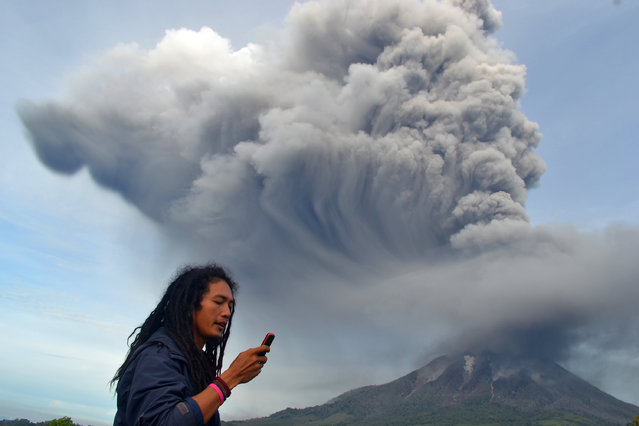
A man uses his mobile phone as Mount Sinabung continues to erupt, with hot smoke spewing from the volcano, in the Karo district on the north of Indonesia's Sumatra island on November 18, 2013. Officials said a week ago at more than 5,000 people had fled their homes since the volcano erupted early this month. (Photo by Sutanta Aditya/AFP Photo)

Starting in September, Indonesia's Mount Sinabung began erupting yet again. In the days that followed, ash and smoke were shot into the air multiple times. As a result, nearby towns turned gray from repeated blows by the volcano. Photo: A man uses his mobile phone as Mount Sinabung continues to erupt, with hot smoke spewing from the volcano, in the Karo district on the north of Indonesia's Sumatra island on November 18, 2013. Officials said a week ago at more than 5,000 people had fled their homes since the volcano erupted early this month. (Photo by Sutanta Aditya/AFP Photo)
Details
22 Nov 2013 08:08:00
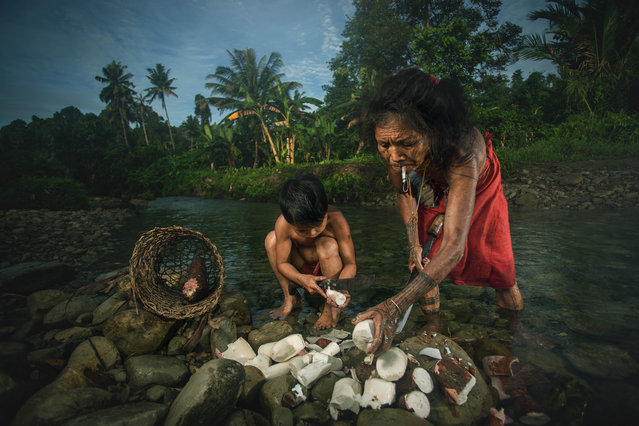
These stunning images document the everyday lives of the men, women and children of the Mentawai tribe. The Mentawai people, a native population in Indonesia, are famous for their decorative tattoos and for living a semi-nomadic life on the Mentawai Islands in West Sumatra. Shot by professional photographer Mohammed Saleh Bin Dollah, the series captures a glimpse of life on the island as the Mentawai men smoke and hunt for food and the children play in the river. (Photo by Muhamad Saleh Dollah/Barcroft Media)

These stunning images document the everyday lives of the men, women and children of the Mentawai tribe. The Mentawai people, a native population in Indonesia, are famous for their decorative tattoos and for living a semi-nomadic life on the Mentawai Islands in West Sumatra. Shot by professional photographer Mohammed Saleh Bin Dollah, the series captures a glimpse of life on the island as the Mentawai men smoke and hunt for food and the children play in the river. Here: A young boy helps a woman to prepare food taken on July 19, 2014 on the Mentawai Islands, Indonesia. (Photo by Muhamad Saleh Dollah/Barcroft Media)
Details
06 Feb 2016 13:09:00
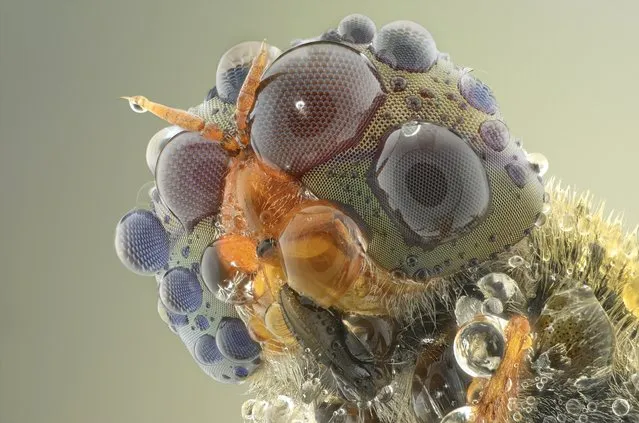
A close-up shot of dews of a soldier fly on August 2014, in Banten, Indonesia. Wildlife photographer takes incredible close-up images of tiny bugs. Yudy Sauw has captured close-up images of creepy crawlies – revealing their disturbing faces. The insects have an assortment bulging eyes and sharp pincers and look grotesque in the face-to-face shots. The miniature-models include a soldier fly, a red ant and a longhorn beetle. (Photo by Yudy Sauw/Barcroft Media)

A close-up shot of dews of a soldier fly on August 2014, in Banten, Indonesia. Wildlife photographer takes incredible close-up images of tiny bugs. Yudy Sauw has captured close-up images of creepy crawlies – revealing their disturbing faces. The insects have an assortment bulging eyes and sharp pincers and look grotesque in the face-to-face shots. The miniature-models include a soldier fly, a red ant and a longhorn beetle. The 33-year-old photographed the bugs at his home studio in Banten, Indonesia, placing them 2-10 centimeters away from the camera. (Photo by Yudy Sauw/Barcroft Media)
Details
22 Aug 2014 12:42:00
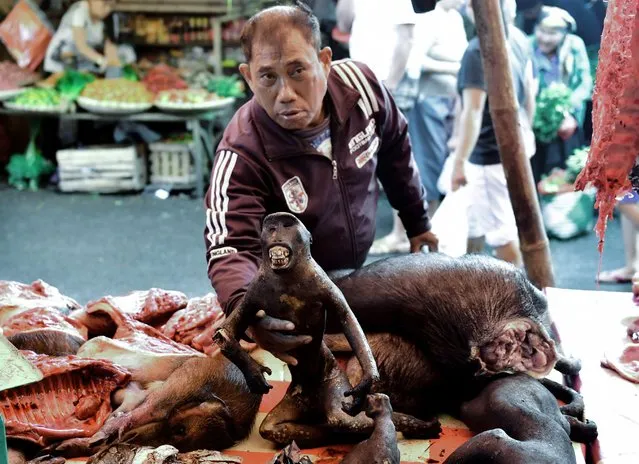
This picture taken on February 18, 2017 shows a customer holding a crested black macaque in Tomohon market in northern Sulawesi, Indonesia. (Photo by Bay Ismoyo/AFP Photo)

This picture taken on February 18, 2017 shows a customer holding a crested black macaque in Tomohon market in northern Sulawesi, Indonesia. Authorities and activists are stepping up efforts to persuade villagers on Sulawesi island to stop consuming the critically endangered crested black macaques, one of many exotic creatures that form part of the local indigenous community' s diet. The macaque' s meat is prized by the ethnic Minahasan people, a largely Christian group in the world' s most populous Muslim- majority country, who have no reservation about eating exotic animals, unlike Indonesia' s Islamic communities. (Photo by Bay Ismoyo/AFP Photo)
Details
04 Apr 2017 10:01:00
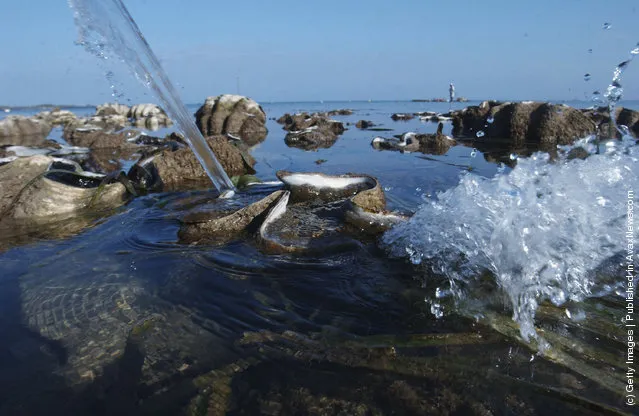
Tridacna Gigas, or Giant Clams

“The giant clam, Tridacna gigas (known as pā’ua in Cook Islands Māori), is the largest living bivalve mollusc. T. gigas is one of the most endangered clam species. It was mentioned as early as 1825 in scientific reports. One of a number of large clam species native to the shallow coral reefs of the South Pacific and Indian oceans, they can weigh more than 200 kilograms (440 lb) measure as much as 120 cm (47 in) across, and have an average lifespan in the wild of 100 years or more”. – Wikipedia

Photo: Tridacna Gigas, or Giant Clams spew water as a traditional fisherman passes by a small sanctuary on January 23, 2004 near Bolinao in the Northern Philippines. The clams, prime builders for coral reefs and providing shelter for spawning fish and other marine life, are exposed by low tides in the sanctuary. Overfishing and pollution throughout the country are not only threatening food security, but are also starting to choke one of the few working clam sanctuaries in the world. (Photo by David Greedy/Getty Images)

Details
01 Oct 2011 13:10:00