Loading...
Done
A bee and a red squirrel eyeball each other in the winning entry of the Mammal Society’s annual photography contest, taken by Gary Watson from Dingwall in the Scottish Highlands. (Photo by Gary Watson/Mammal Society/Bav Media)

A bee and a red squirrel eyeball each other in the winning entry of the Mammal Society’s annual photography contest, taken by Gary Watson from Dingwall in the Scottish Highlands. (Photo by Gary Watson/Mammal Society/Bav Media)
Details
07 Apr 2024 03:10:00
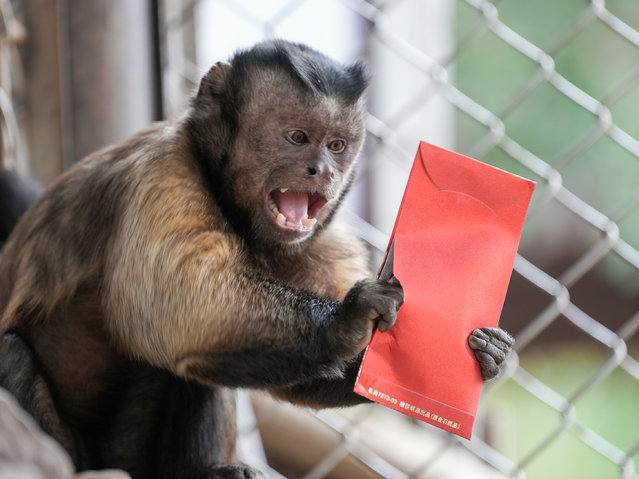
Tufted capuchin (Sapajus apella) receives a special red envelope containing delicious food to celebrate Chinese New Year at the Chongqing Zoo on January 28, 2025 in Chongqing, China. (Photo by Wang Chengjie/VCG via Getty Images)

Tufted capuchin (Sapajus apella) receives a special red envelope containing delicious food to celebrate Chinese New Year at the Chongqing Zoo on January 28, 2025 in Chongqing, China. (Photo by Wang Chengjie/VCG via Getty Images)
Details
02 Feb 2025 03:59:00
A view of the fireworks during the Edge at Hudson Yard's 4th of July Celebration at Edge at Hudson Yards on July 04, 2021 in New York City. (Photo by Roy Rochlin/Getty Images for Edge at Hudson Yards)

A view of the fireworks during the Edge at Hudson Yard's 4th of July Celebration at Edge at Hudson Yards on July 04, 2021 in New York City. (Photo by Roy Rochlin/Getty Images for Edge at Hudson Yards)
Details
07 Jul 2021 09:21:00
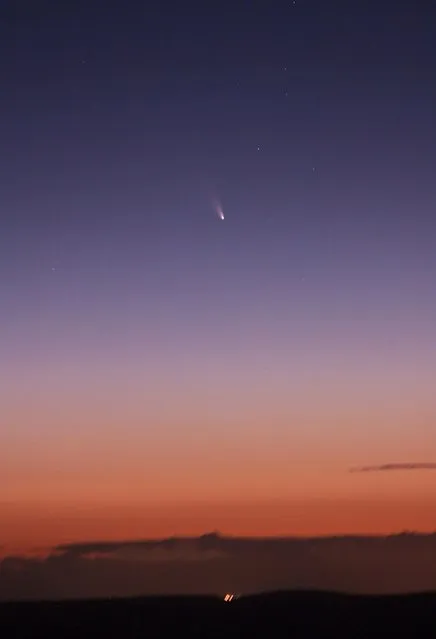
This image provided by NASA shoaws the comet PANSTARRS as seen from Mount Dale, Western Australia on March 5, 2013. According to NASA on March 10, it will make its closest approach to the sun about 28 million miles (45 million kilometers) away. As it continues its nightly trek across the sky, the comet may get lost in the sun's glare but should return and be visible to the naked eye by March 12. (Photo by AP Photo/NASA)

It’s time to start watching for Comet PANSTARRS, one of two comets to get excited about in 2013. Photo: This image provided by NASA shoaws the comet PANSTARRS as seen from Mount Dale, Western Australia on March 5, 2013. According to NASA on March 10, it will make its closest approach to the sun about 28 million miles (45 million kilometers) away. As it continues its nightly trek across the sky, the comet may get lost in the sun's glare but should return and be visible to the naked eye by March 12. (Photo by AP Photo/NASA)
Details
13 Mar 2013 08:03:00
An exile Tibetan monk gestures as he makes a point in a dialectics debate with another monk, sitting right, at the Kirti monastery in Dharmsala, India, Monday, January 18, 2016. The debate is an essential part of their training as Buddhist monks. (Photo by Ashwini Bhatia/AP Photo)

An exile Tibetan monk gestures as he makes a point in a dialectics debate with another monk, sitting right, at the Kirti monastery in Dharmsala, India, Monday, January 18, 2016. The debate is an essential part of their training as Buddhist monks. (Photo by Ashwini Bhatia/AP Photo)
Details
19 Jan 2016 13:45:00
A man performs a split as he practices Kung Fu at Beihai Park in Beijing, China August 20, 2017. (Photo by Reuters/China Stringer Network)

A man performs a split as he practices Kung Fu at Beihai Park in Beijing, China August 20, 2017. (Photo by Reuters/China Stringer Network)
Details
30 Aug 2017 07:14:00
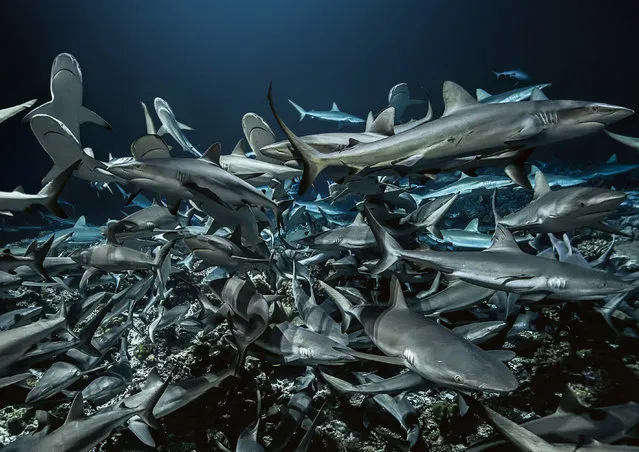
The men also decreased the time for Laurent to decompress from 20 hours to six. (Photo by Laurent Ballesta/Caters News Agency)

ne committed photographer spent a grand total of 3,000 dive hours trying to get the perfect shots, capturing beautiful images of a rare shark feeding frenzy. Laurent Ballesta’s images show the glimmering gray reef sharks hunting in swift packs, flying through the water and feasting on the likes of helpless grouper. (Photo by Laurent Ballesta/Caters News Agency)
Details
06 Jun 2018 00:03:00


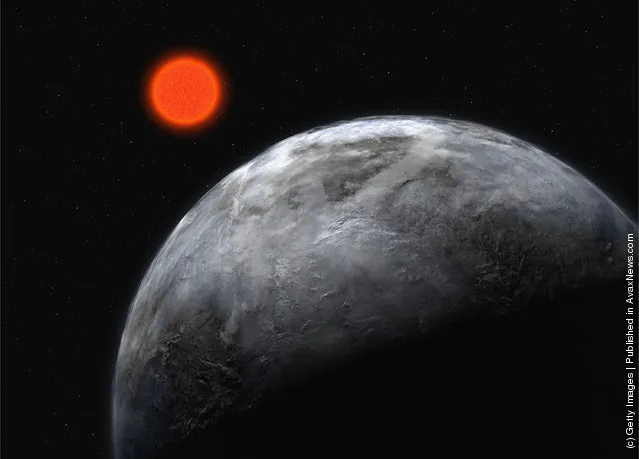
In this artist's impression supplied by the ESO (European Southern Observatory) on April 25, 2007, the planetary system around the red dwarf, Gliese 581, is pictured showing what astronomers believe is the most earth like planet found outside our solar system to date. Using the ESO 3.6-m telescope in Chile, astronomers have uncovered the planet which could have water running on its surface. The planet orbits the faint star Gliese 581, which is 20.5 light-years away in the constellation Libra. (Photo by ESO via Getty Images)
Details
12 Apr 2011 11:00:00