Loading...
Done
Mangalitsa The Hairy Pig

When you look at the picture of a furry pig that resembles a sheep from a distance, you may think that this may be the result of the work of some crazy scientist that tinkered with the pig’s genome. However, in this case, this is not true. Mangalica is a natural breed of pigs, which were bred in Europe for their lard. This breed of pigs is very unique, since the only other breed of pigs which had a long coat was Loncolnshire Curly Coat, which is now extinct. In the past, these pigs were quite popular, since they were able to produce a lot of lard. However, when the demand for pig lard dwindled, the population of these pigs rapidly decreased, making it a “rare breed”.
Details
01 Dec 2014 13:42:00
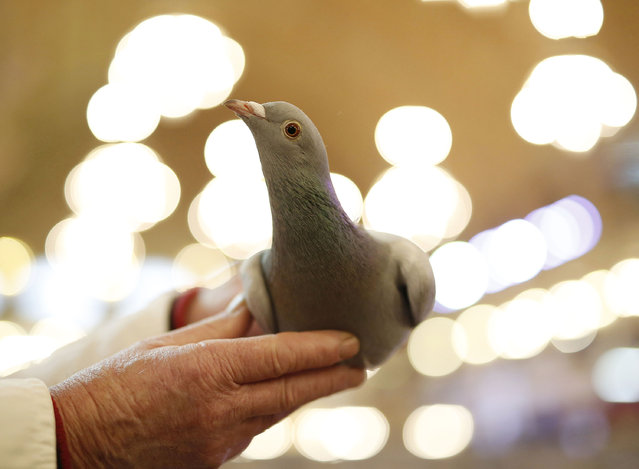
A man holds a pigeon during the British Homing World show of the year at Blackpool's Winter Gardens in Blackpool, north west England on January 17, 2016. (Photo by Andrew Yates/Reuters)

A man holds a pigeon during the British Homing World show of the year at Blackpool's Winter Gardens in Blackpool, north west England on January 17, 2016. Homing pigeon fanciers from across Europe gathered to find the Supreme Show Champion with judges casting their eyes over hundreds of birds on show. The Royal Pigeon Racing Association organises the event and has Queen Elizabeth II, who keeps pigeons at Sandringham, as its patron. (Photo by Andrew Yates/Reuters)
Details
19 Jan 2016 08:02:00
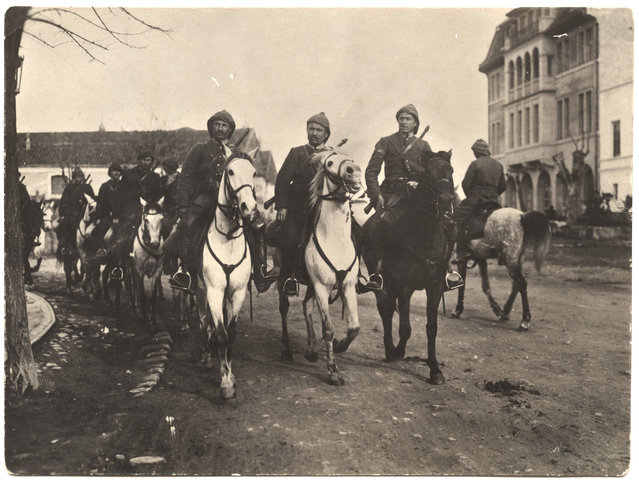
Turkish army, including cavalry, infantry and artillery. (Photo by Dr. P.A. Smithe/National World War I Museum, Kansas City, Mo.)

Dr. P.A. Smithe was sent by the American Red Cross as a doctor and surgeon to work at a hospital in Vienna. He sailed to Europe in December 1915 and returned home in August 1916, according to his daughter, who donated his images to the National World War I Museum. Photo: Turkish army, including cavalry, infantry and artillery. (Photo by Dr. P.A. Smithe/National World War I Museum, Kansas City, Mo.)
Details
29 Jul 2014 11:53:00
A diver crossing a bridge in the flood water. Green Lake in Tragoess, Austria. (Photo by Solnet/The Grosby Group)

These photographs appear to show a spectacular underwater world making it ideal for scuba divers – in central Europe. Twelve metres of water covers trees, footpaths, benches and bridges that are usually accessible throughout the year. Visitors to the Green Lake in Tragoess, Austria, that is normally only one metre deep, can leisurely stroll around the picturesque lagoon. Photo: A diver crossing a bridge in the flood water. (Photo by Solnet/The Grosby Group)
Details
29 Nov 2013 12:41:00


WOOTTON, UNITED KINGDOM - APRIL 07: Hot air balloons prepare to depart from Lydden Hill race circuit near Canterbury to take part in mass crossing of the Channel on April 7, 2011 in Wootton, England. 51 balloonists of various nationalities from across Europe took off from Kent making for Calais, France at about 7am. It is the first time a Guinness World Record bid has been made for "the largest group of hot air balloons to make the Channel crossing". (Photo by Oli Scarff/Getty Images)
Details
07 Apr 2011 10:15:00


An arial view of Top Pearsy's Maize Maze in the shape of Harry Potter, on July 11, 2011 in York, England. Farmer Tom Pearcy has cut two portraits of Harry Potter in his crop of maize plants. With some subtle differences the two images create the world's largest spot the difference competition. At over 50m in diameter, and cut out of over 1 million living maize plants, the York Maze is the largest “Maize Maze” in Europe and one of the largest in the world. (Photo by Bethany Clarke/Getty Images)
Details
12 Jul 2011 12:01:00
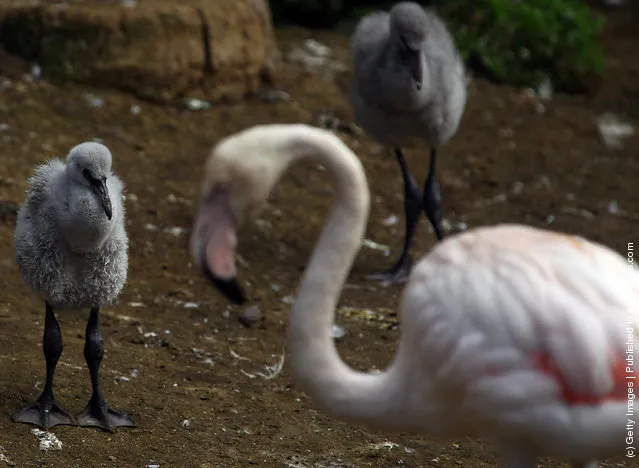
Baby Flamingoes

One of the nine baby flamingos born at Bristol Zoo stands with the adults as they feed together on August 19, 2011 in Bristol, England. Nine flamingo chicks have hatched at Bristol Zoo Gardens in the last three months – the biggest number the Zoo has ever had. The chicks, which are Greater Flamingoes from Africa and southern Europe and range in age from four weeks to three months old, take the Zoo's total flock to 38 birds. (Photo by Matt Cardy/Getty Images)
Details
21 Aug 2011 11:09:00
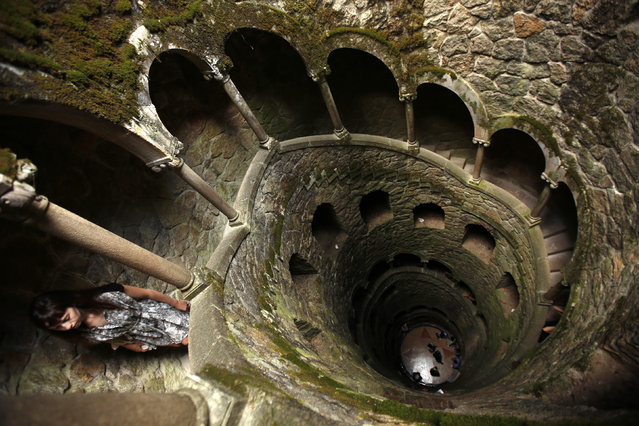
A visitor walks inside the initiation well at Quinta da Regaleira in Sintra October 6, 2014. (Photo by Rafael Marchante/Reuters)

A visitor walks inside the initiation well at Quinta da Regaleira in Sintra October 6, 2014. Sintra became the first centre of European Romantic architecture in the 19th century, which influenced the development of landscape architecture throughout Europe. It was classified as a World Heritage Site by UNESCO in 1995. Its monuments are visited by more than 1.5 million of tourists every year, according to local media. (Photo by Rafael Marchante/Reuters)
Details
28 Oct 2014 12:35:00