Loading...
Done
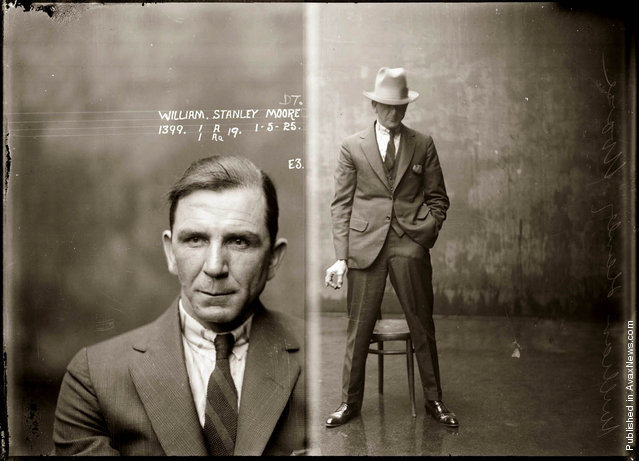
Mug shot of William Stanley Moore, 1 May 1925, Central Police Station, Sydney

Mug shot of William Stanley Moore, 1 May 1925, Central Police Station, Sydney. This picture appears in the Photo Supplement to the NSW Police Gazette, 28 July, 1926 captioned: “Opium dealer. Operates with large quantities of faked opium and cocaine. A wharf labourer; associates with water front thieves and drug traders”. (Photo by NSW Police Forensic Photography Archive, Justice & Police Museum, Histiric Houses Trust of NSW)
Details
24 Apr 2012 11:46:00
Ajka alumina plant accident

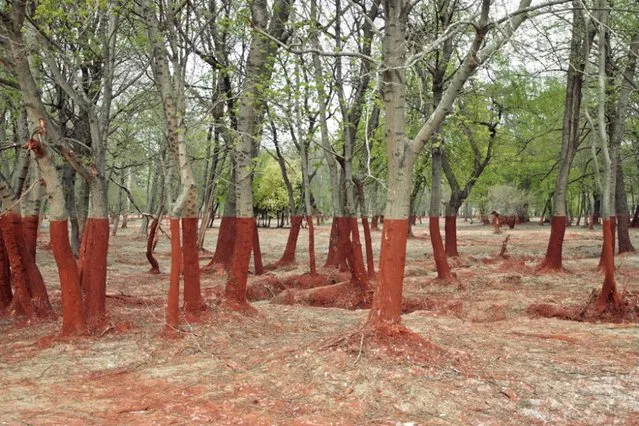
The photograph you see above isn’t the result of Photoshop or infrared photography. Captured by Spanish photographer Palíndromo Mészáros, it shows what the landscape of Ajka, Hungary looked like half a year after the Ajka alumina plant accident — an industrial disaster in which 35 million cubic feet of toxic waste flooded the land to a height of around 6.5 feet. Mészáros lined up the thick red line caused by the sludge with the horizon line to obtain this surreal image.
Details
13 Jul 2012 05:24:00
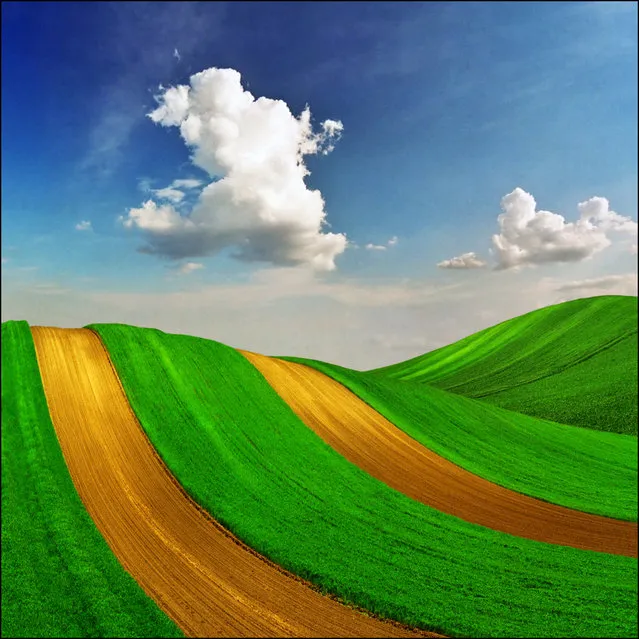
Happy dog (..?) – Pannonian spring fantasy

“I am not a photo reporter, so I don’t feel obligated to honour every detail. What I’m trying to achieve is to emphasize the whole potential of a shot, creating a sight that I'd like if existed.. And since it’s impossible in real life, I do it in virtual :) My work is maybe more similar to ‘photo-painting’ than photography”. – Katarina Stefanović

Photo: Pannonian spring fantasy. (Photo by by Katarina Stefanović)
Details
17 Aug 2012 10:17:00
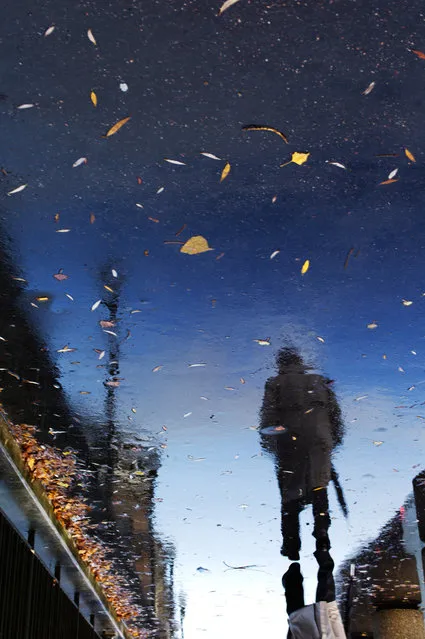
“Reflets” Project by Manuel Plantin aka Yodamanu

“In a nutshell and to prevent my english readers from experiencing eye bleeding after having read too many syntax errors, I’m a french journalist – I work as an editor, not as photographer – who happens to be nuts about photography. Being the happy owner of too many Leica M for a man to shoot, I spend most of my free time shooting my friend and my town, Strasbourg, in b&w and sometimes in colors”. – Manuel Plantin

Photo: “Even detectives got the blues”. Strasbourg, 2011 (Photo by Manuel Plantin)
Details
18 Dec 2012 10:28:00
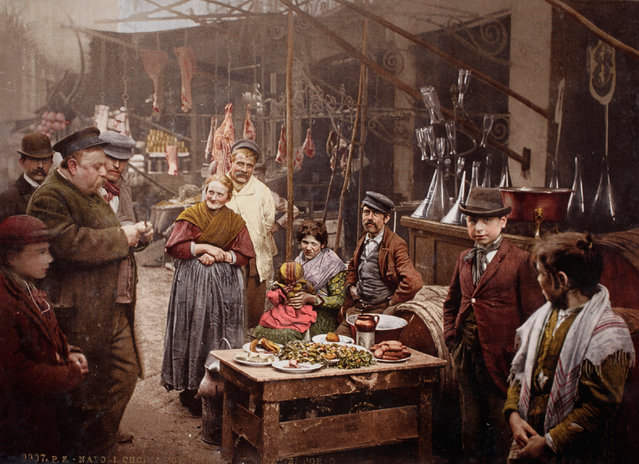
The finished photochromes were produced using at least six different tint stones, although many more were often used. Here: Street food in the Strada del Porto in Naples, Italy, 1899. (Photo by Swiss Camera Museum/The Guardian)

Photochromes are vibrant and nuanced prints hand-coloured from black-and-white negatives. Created using a process pioneered in the 1880s, these images offer a fascinating insight into the world when colour photography was still in its infancy. A Tour of the World in Photochromes is at the Swiss Camera Museum, Vevey, until 21 August. Here: Street food in the Strada del Porto in Naples, Italy, 1899. (Photo by Swiss Camera Museum/The Guardian)
Details
07 Jul 2016 10:56:00
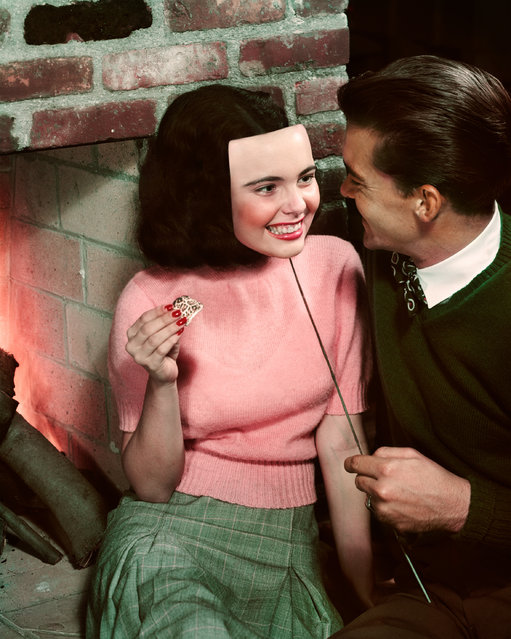
“Untitled #5”. “Family scenes, vacation souvenirs, everyday life, suspended anywhere between truth and fiction. It is hard to figure out whether they are spontaneous or entirely staged”. (Photo by Weronika Gęsicka/The Guardian)

In Weronika Gęsicka’s unsettling images, American archive photography gets distorted into scenes that are both nightmarish yet somehow entirely plausible. Gęsicka is a guest artist at the Circulations festival for young European photographers, Paris, until 5 March. Here: “Untitled #5”. (Photo by Weronika Gęsicka/The Guardian)
Details
23 Jan 2017 10:15:00
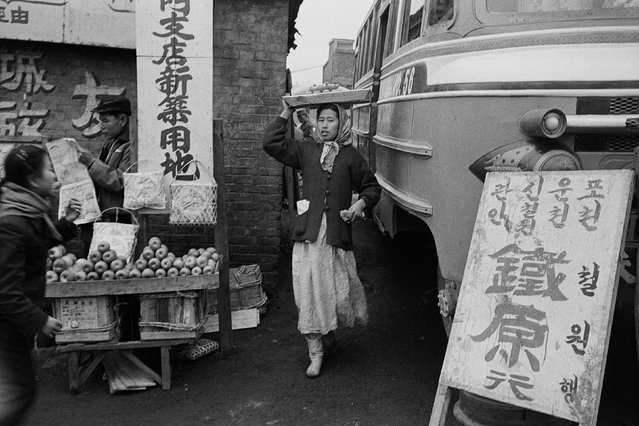
“At the height of the Korean war, I was moving across the front lines as a soldier experiencing this tragedy, witnessing countless scenes that enraged me”. Here: Seoul, Korea. (Photo by Han Youngsoo/The Guardian)

Photographer Han Youngsoo captured the ordinary people of Korea as the country emerged from war into an age of prosperity. Han Youngsoo: Photographs of Seoul 1956–63 is at the International Center of Photography (ICP), Jersey City, New Jersey, until June 9, 2017. Here: Seoul, Korea. (Photo by Han Youngsoo/The Guardian)
Details
01 Mar 2017 00:05:00
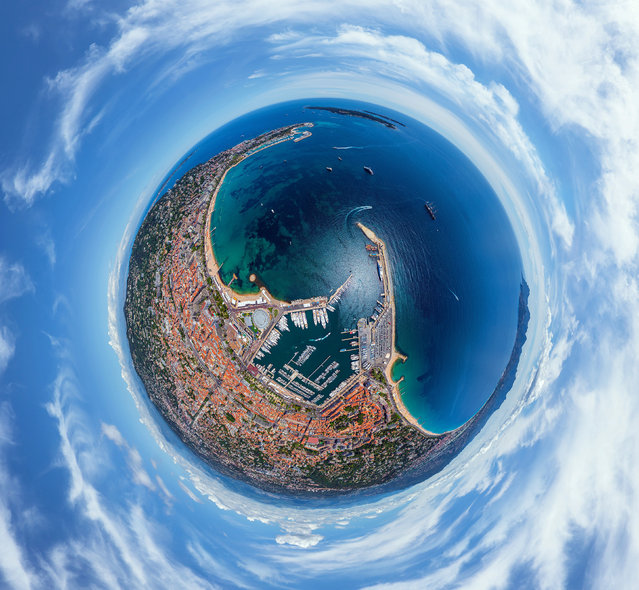
The French Riveria of Cannes, France. (Photo by Airpano/Caters News)

Some of the worlds most iconic cities have been photographed as youve never seen them before in the shape of tiny round planets. By using a pioneering method of aerial photography, each location can be now seen at a full 360 degree angle. After some skilful manipulation on Photoshop known technically as stereographic projection, each sweeping panorama is then turned into a small circular shaped image. Whether its the Eiffel Tower, The Empire State Building or the Shanghai Skyline, each image manages to show hundreds of miles of city landscape. Here: the French Riveria of Cannes, France. (Photo by Airpano/Caters News)
Details
25 Mar 2015 12:14:00