Loading...
Done
Woman With The World's Biggest Lip Disc

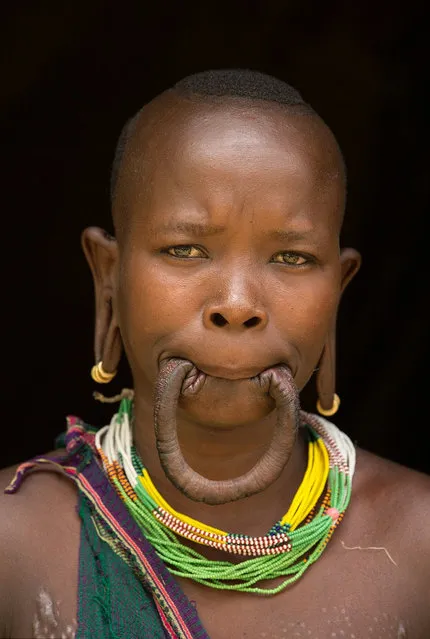
The world's largest lip disc has been discovered by an Australian film crew, led by cinematographer Abrahem Joffe, in the remote valleys of southern Ethiopia. The crew was shooting a documentary when they stumbled on 20 year old Ataye Eligidagne, who left them shocked .Joffe told Daily Mail Australia ‘We were taking a tour with some of the local guides.
Details
15 Oct 2014 10:41:00
Bo (pictured) is president and co-founder of Grown Men On Bikes (GMOB), one of the oldest groups at Slow Roll. Bo spent $1,300 getting a one-off low-rider custom bike build – but that’s just the start. “Once I go back in it’s going to get big”, he says. “I’m going to get a custom seat, wheels, paint” … The finished bike could cost around $3,000 – but would still be far cheaper than pimping a car. “This is much better. It’s a community. We party”. (Photo by Nick Van Mead)

“We take rusty old junk and we put love into it”. The old Motor City has a unique style in bicycles these days: from fat wheels and fake fuel tanks to stretched cycles with powerful sound systems – and even a family-sized BBQ. “Detroit’s custom bike scene developed alongside Slow Roll, a weekly cycle ride started in 2010 by Jason Hall and Mike MacKool. Now upwards of 2,000 people turn up each Monday to cruise a different part of the city. The week I go the crowd seems evenly split between black and white, male and female, city and suburbs. It’s the most inclusive cycle event I’ve ever witnessed”. (Photo by Jason Walker/Slow Roll Monday Nights)
Details
03 Nov 2016 12:33:00
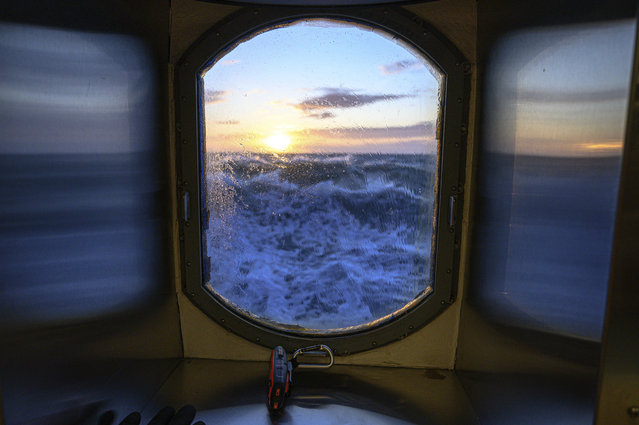
This November 8, 2019, photo provided by John Guillote shows a view from the main lab of the Sikuliaq in the Chukchi Sea. University of Washington scientists onboard the research vessel are studying the changes and how less sea ice will affect coastlines, which already are vulnerable to erosion because increased waves delivered by storms. More erosion would increase the chance of winter flooding in villages and danger to hunters in small boats. (Photo by John Guillote via AP Photo)

This November 8, 2019, photo provided by John Guillote shows a view from the main lab of the Sikuliaq in the Chukchi Sea. University of Washington scientists onboard the research vessel are studying the changes and how less sea ice will affect coastlines, which already are vulnerable to erosion because increased waves delivered by storms. More erosion would increase the chance of winter flooding in villages and danger to hunters in small boats. (Photo by John Guillote via AP Photo)
Details
26 Aug 2021 08:22:00
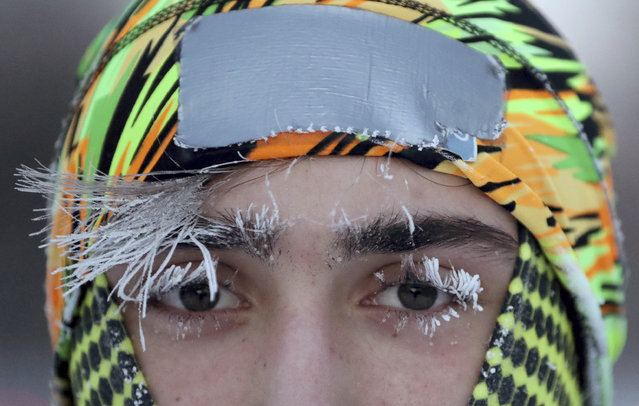
Frost covers part of the face of University of Minnesota student Daniel Dylla during a morning jog along Mississippi River Parkway Tuesday, January 29, 2019, in Minneapolis. Extreme cold and record-breaking temperatures are crawling into parts of the Midwest after a powerful snowstorm pounded the region, and forecasters warn that the frigid weather could be life-threatening. (Photo by David Joles/Star Tribune via AP Photo)

Frost covers part of the face of University of Minnesota student Daniel Dylla during a morning jog along Mississippi River Parkway Tuesday, January 29, 2019, in Minneapolis. Extreme cold and record-breaking temperatures are crawling into parts of the Midwest after a powerful snowstorm pounded the region, and forecasters warn that the frigid weather could be life-threatening. (Photo by David Joles/Star Tribune via AP Photo)
Details
30 Jan 2019 09:04:00
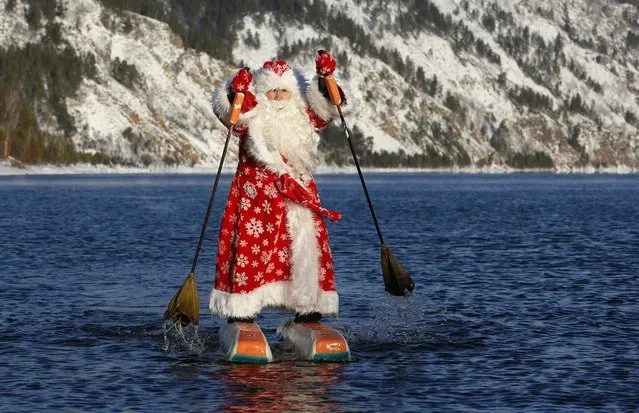
Nikolai Vasilyev, 64, dressed as Father Frost, the Russian equivalent of Santa Claus, water-skis along the Yenisei River outside the Siberian city of Krasnoyarsk, Russia December 19, 2017. Vasilyev, former teacher of the Siberian State Aerospace University, constructed the water skis out of plastic foam and designed the sticks to propel him forward, while travelling on the water surface. (Photo by Ilya Naymushin/Reuters)

Nikolai Vasilyev, 64, dressed as Father Frost, the Russian equivalent of Santa Claus, water-skis along the Yenisei River outside the Siberian city of Krasnoyarsk, Russia December 19, 2017. Vasilyev, former teacher of the Siberian State Aerospace University, constructed the water skis out of plastic foam and designed the sticks to propel him forward, while travelling on the water surface. (Photo by Ilya Naymushin/Reuters)
Details
23 Dec 2017 07:31:00
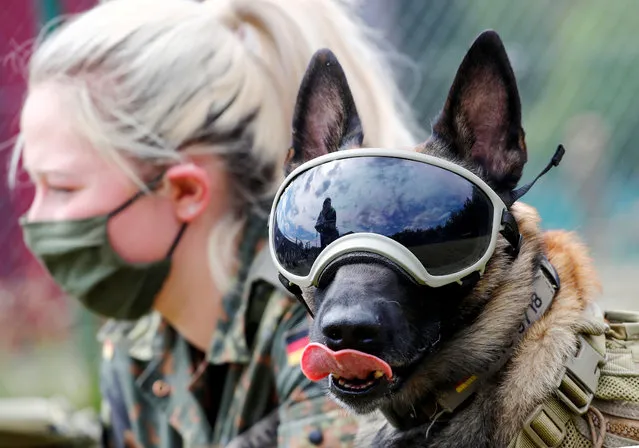
Five-year-old sniffing dog “Vine” wears protection goggles against the sun and dust as he poses together with Giulia Gausemann for photographers, at the sniffing dogs school of the German Army (Bundeswehr) in Daun, Germany, July 24, 2020. The Bundeswehr sniffing dogs school and the veterinarian university of Hanover are developing a training programme to sniff out the coronavirus disease (COVID-19) with dogs at airports, border crossings and other highly frequented places. (Photo by Wolfgang Rattay/Reuters)

Five-year-old sniffing dog “Vine” wears protection goggles against the sun and dust as he poses together with Giulia Gausemann for photographers, at the sniffing dogs school of the German Army (Bundeswehr) in Daun, Germany, July 24, 2020. The Bundeswehr sniffing dogs school and the veterinarian university of Hanover are developing a training programme to sniff out the coronavirus disease (COVID-19) with dogs at airports, border crossings and other highly frequented places. (Photo by Wolfgang Rattay/Reuters)
Details
26 Jul 2020 00:01:00
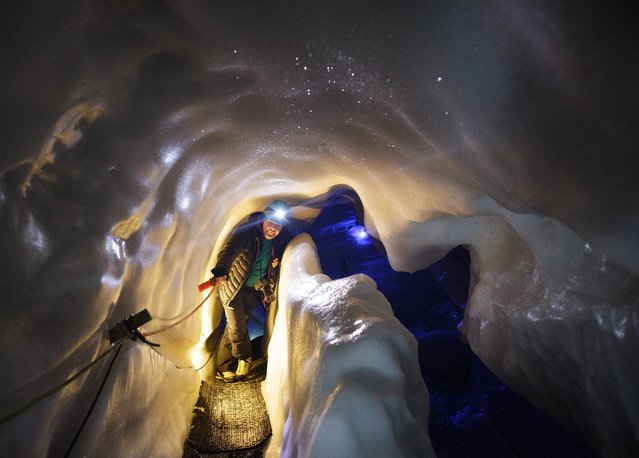
A tourist walks inside the Ice Palace glacier hollow at Hintertux glacier, located at around 3250 meters above sea level, in Zillertal, Austria, 02 March, 2016. The hollow's temperature remains constant at 0 degrees Celsius, in summer and winter alike, and is also used by the University of Innsbruck for scientific research projects. (Photo by Lisi Niesner/EPA)

A tourist walks inside the Ice Palace glacier hollow at Hintertux glacier, located at around 3250 meters above sea level, in Zillertal, Austria, 02 March, 2016. The hollow's temperature remains constant at 0 degrees Celsius, in summer and winter alike, and is also used by the University of Innsbruck for scientific research projects. (Photo by Lisi Niesner/EPA)
Details
03 Mar 2016 11:44:00
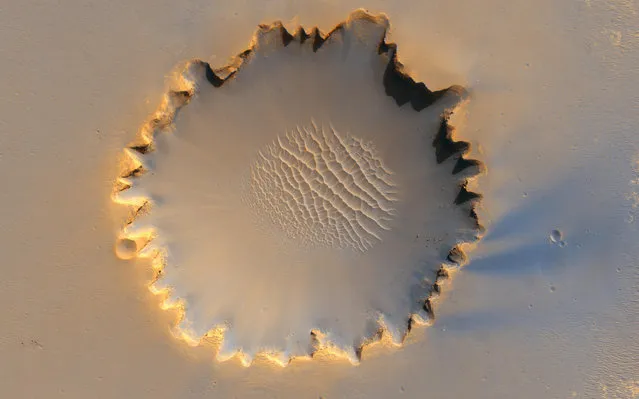
NASA's rover Opportunity visits Victoria Crater, viewed from orbit by the High Resolution Imaging Science Experiment on NASA's Mars Reconnaissance Orbiter in october of 2006. Opportunity is a small dot on the crater's lip, at top right. Opportunity first reached the crater's rim on September 27, 2006. (Photo by NASA/JPL-Caltech/University of Arizona/The Atlantic)

“NASA's Mars rover Opportunity just celebrated its ninth anniversary on Mars – a mission that was originally meant to last just 90 days...” – The Atlantic. Photo: NASA's rover Opportunity visits Victoria Crater, viewed from orbit by the High Resolution Imaging Science Experiment on NASA's Mars Reconnaissance Orbiter in october of 2006. Opportunity is a small dot on the crater's lip, at top right. Opportunity first reached the crater's rim on September 27, 2006. (Photo by NASA/JPL-Caltech/University of Arizona via The Atlantic)


Details
14 Feb 2013 10:58:00