Loading...
Done
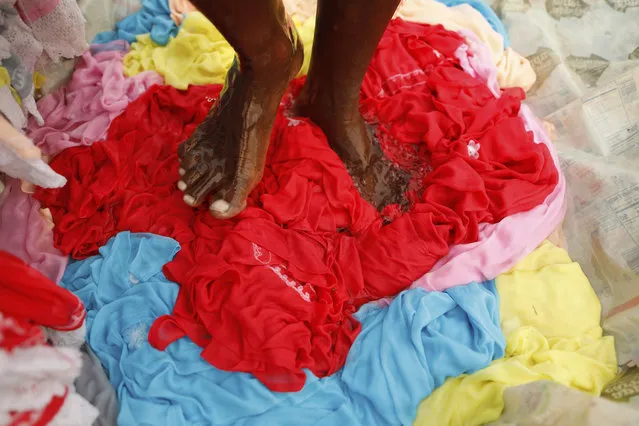
A dhobi, or a washerman washes cloths on the banks of the River Gomti in Lucknow, India, Saturday, September 12, 2020. Dhobis are traditional laundry workers who wash clothes by hand and dry them in the sun, an occupation which has been in existence for generations. Most cities in India have a Dhobi Ghat, or washermen's area, where the city's pile of clothes is laundered. This practice is still popular in India, despite of modern technology. Around 1,000 families work in Lucknow's Dhobi Ghat. However, in light of the novel coronavirus, their wages have decreased drastically. With each family earning around US$100-200 per month. (Photo by Rajesh Kumar Singh/AP Photo)

A dhobi, or a washerman washes cloths on the banks of the River Gomti in Lucknow, India, Saturday, September 12, 2020. Dhobis are traditional laundry workers who wash clothes by hand and dry them in the sun, an occupation which has been in existence for generations. Most cities in India have a Dhobi Ghat, or washermen's area, where the city's pile of clothes is laundered. This practice is still popular in India, despite of modern technology. Around 1,000 families work in Lucknow's Dhobi Ghat. However, in light of the novel coronavirus, their wages have decreased drastically. With each family earning around US$100-200 per month. (Photo by Rajesh Kumar Singh/AP Photo)
Details
25 Sep 2020 00:03:00
People drink in the street in the Soho area of London, on April 12, 2021 as coronavirus restrictions are eased across the country in step two of the government's roadmap out of England's third national lockdown. Britons on Monday toasted a significant easing of coronavirus restrictions, with early morning pints – and much-needed haircuts – as the country took a tentative step towards the resumption of normal life. Businesses including non-essential retail, gyms, salons and outdoor hospitality were all able to open for the first time in months in the second step of the government's roadmap out of lockdown. (Photo by Tolga Akmen/AFP Photo)

People drink in the street in the Soho area of London, on April 12, 2021 as coronavirus restrictions are eased across the country in step two of the government's roadmap out of England's third national lockdown. Britons on Monday toasted a significant easing of coronavirus restrictions, with early morning pints – and much-needed haircuts – as the country took a tentative step towards the resumption of normal life. Businesses including non-essential retail, gyms, salons and outdoor hospitality were all able to open for the first time in months in the second step of the government's roadmap out of lockdown. (Photo by Tolga Akmen/AFP Photo)
Details
13 Apr 2021 08:02:00
Animal rights activists perform, demanding the abolition of bullfights, during a demonstration in Medellin, Colombia February 11, 2018. The Colombian Constitutional Court overruled on February 7, 2018, a judgment that allowed to hold a referendum regarding bullfights. (Photo by Fredy Builes/Reuters)

Animal rights activists perform, demanding the abolition of bullfights, during a demonstration in Medellin, Colombia February 11, 2018. The Colombian Constitutional Court overruled on February 7, 2018, a judgment that allowed to hold a referendum regarding bullfights. (Photo by Fredy Builes/Reuters)
Details
13 Feb 2018 08:58:00
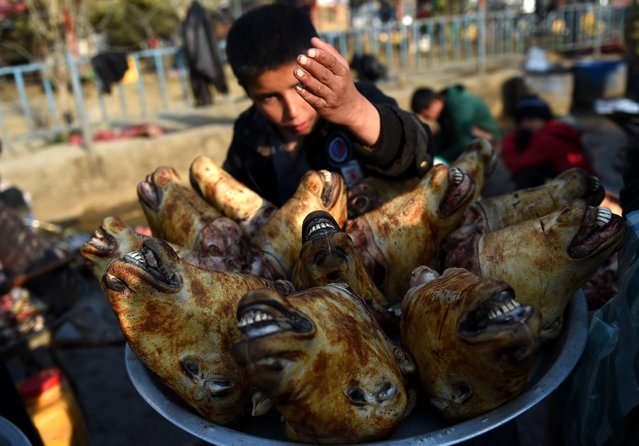
A young Afghan vendor waits for customers to buy sheep's heads at a roadside stall at the busy market in Kabul on November 29, 2015. (Photo by Wakil Kohsar/AFP Photo)

A young Afghan vendor waits for customers to buy sheep's heads at a roadside stall at the busy market in Kabul on November 29, 2015. (Photo by Wakil Kohsar/AFP Photo)
Details
27 Apr 2016 09:23:00
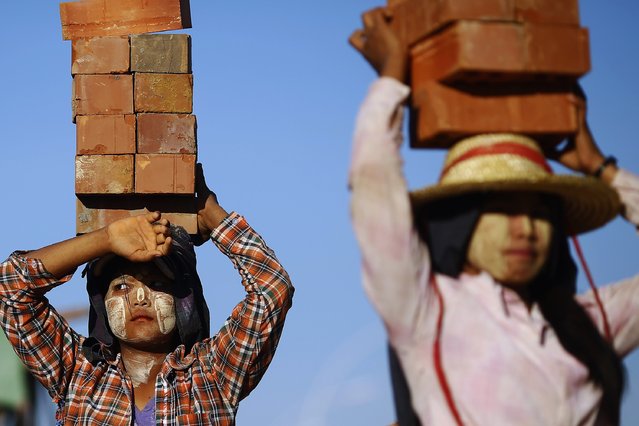
Construction workers carry bricks on their heads near the country's parliament building in Naypyitaw November 11, 2014. Yangon lost its status as Myanmar's capital in 2005, after the former military junta carved a new seat of government from a parched wilderness some 380 km (236 miles) to the north and called it Naypyitaw (“Abode of Kings”). (Photo by Damir Sagolj/Reuters)

Construction workers carry bricks on their heads near the country's parliament building in Naypyitaw November 11, 2014. Yangon lost its status as Myanmar's capital in 2005, after the former military junta carved a new seat of government from a parched wilderness some 380 km (236 miles) to the north and called it Naypyitaw (“Abode of Kings”). (Photo by Damir Sagolj/Reuters)
Details
15 Nov 2014 12:29:00
(L-R) Ruby Zinner, 21, Caroline Reinstadler, 22, Marie Kallis, 22, and Julia Bogdanoff, 21, wearing graduation caps and gowns drink champagne while taking graduation photos in Washington Square Park amid the Coronavirus pandemic on May 09, 2021 in New York City. Due to the ongoing coronavirus pandemic NYU's commencement ceremony will be held virtually on May 19th. Students from the 2021 will be invited back for an in person graduation when public health guidelines allow. (Photo by Alexi Rosenfeld/Getty Images)

(L-R) Ruby Zinner, 21, Caroline Reinstadler, 22, Marie Kallis, 22, and Julia Bogdanoff, 21, wearing graduation caps and gowns drink champagne while taking graduation photos in Washington Square Park amid the Coronavirus pandemic on May 09, 2021 in New York City. Due to the ongoing coronavirus pandemic NYU's commencement ceremony will be held virtually on May 19th. Students from the 2021 will be invited back for an in person graduation when public health guidelines allow. (Photo by Alexi Rosenfeld/Getty Images)
Details
19 May 2021 09:28:00
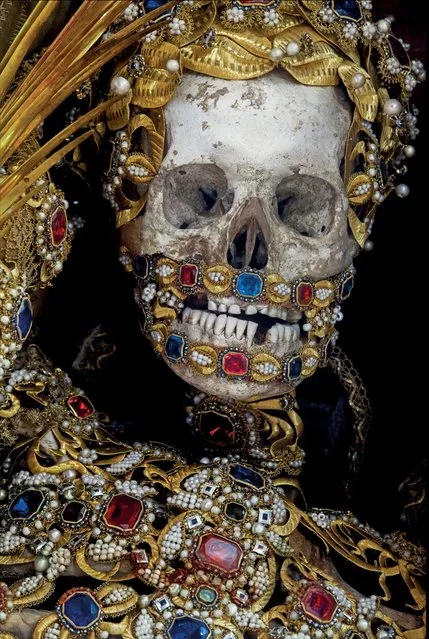
Albertus in the church of St George in Burgrain, Germany. Incredibly, some of the skeletons, which took up to five years to decorate, were even found hidden away in lock-ups and containers. (Photo by Paul Koudounaris/BNPS)

A relic hunter dubbed “Indiana Bones” has lifted the lid on a macabre collection of 400-year-old jewel-encrusted skeletons unearthed in churches across Europe. Art historian Paul Koudounaris has hunted down and photographed dozens of gruesome skeletons in some of the world's most secretive religious establishments. Photo: Albertus in the church of St George in Burgrain, Germany. Incredibly, some of the skeletons, which took up to five years to decorate, were even found hidden away in lock-ups and containers. (Photo by Paul Koudounaris/BNPS)
Details
08 Sep 2013 07:20:00
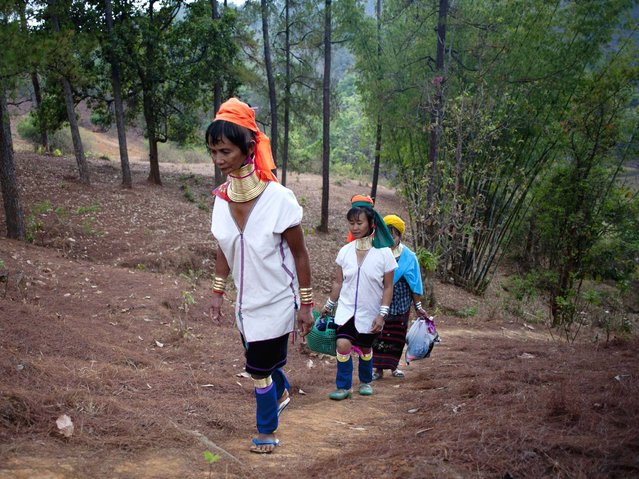
One of the theories says that the coils originate from the desire to look more attractive by exaggerating sexual dimorphism, as women have more slender necks than men. (Photo by Ye Aung Thu/AFP Photo)

This photo taken on April 16, 2014 shows ethnic Kayan women wearing traditional clothes and bronze rings around tbeir neck in Panpet village, Demoso township in Kayah state, eastern Myanmar. Some ethnic Kayan women, also known as Padaung, begin wearing the bronze rings on their neck and legs from a young age. Usually they start wearing six to ten rings when they are five to ten-years-old and then they put on one more ring a year for years after then. (Photo by Ye Aung Thu/AFP Photo)
Details
23 Apr 2014 08:56:00