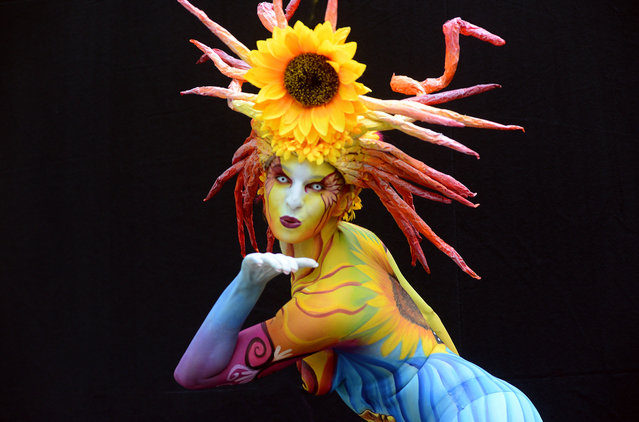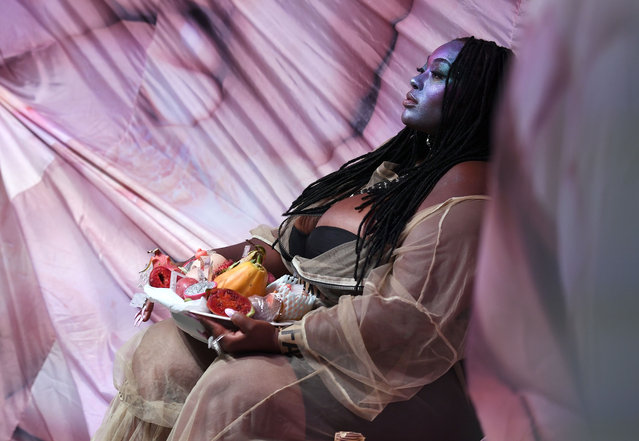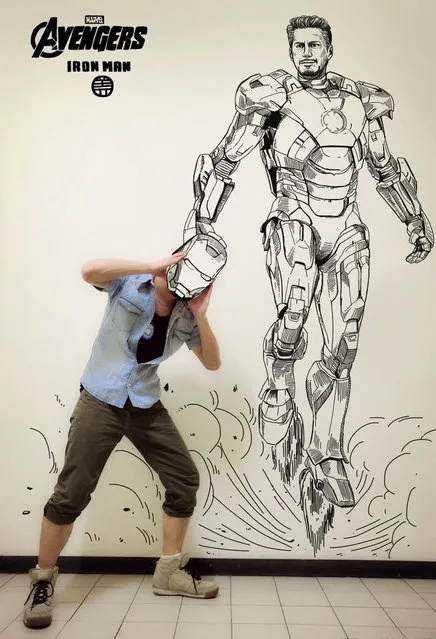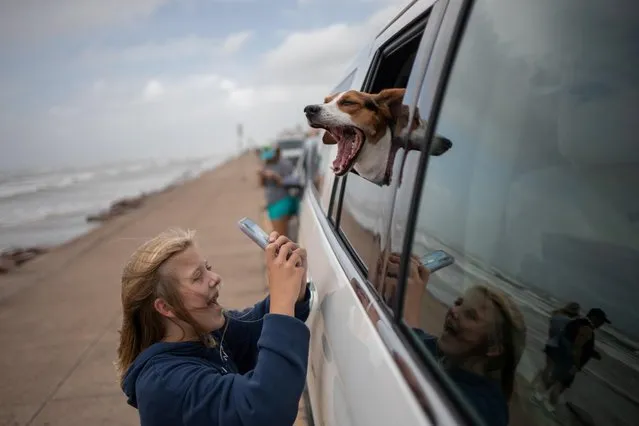
General atmosphere on Shipyard Island, the venue of the 24th Sziget (Island) Festival in Northern Budapest, Hungary, 14 August 2016. (Photo by Mohai Balázs/Rockstar Photographers)
A three-seater Toyota Kikai concept car is displayed during the 2016 CES trade show in Las Vegas, Nevada January 8, 2016. (Photo by Steve Marcus/Reuters)
A crew members walks on the flight deck past Super Etendard fighter jets aboard France's Charles de Gaulle aircraft carrier on missino in the Gulf, January 29, 2016. (Photo by Philippe Wojazer/Reuters)
A participant from Indonesia waits to perform a dance during the last day of World Culture Festival on the banks of the river Yamuna in New Delhi, India, March 13, 2016. The festival opened on the banks of the Yamuna River in the Indian capital Friday despite concerns the sprawling construction of roads, ramps and pontoon bridges would irreparably damage the river's floodplains. (Photo by Adnan Abidi/Reuters)
When Roberto Perez (also known as Rob The Original) gives you a haircut, it’s probably not going to be just a haircut. This San-Antonio-based artist and hair stylist creates amazing works of art using nothing but his clients’ scalp and hair as his canvas. Perez can create just about anything he or his clients can think of – from a photo-realistic portrait or illustration to full-head paintings or graphic designs.
“I was born in 1977 in Warsaw, Poland. I had graduated from the High School of Art in Warsaw. My journey into the world of photography began in the early 90's, but at that time my biggest passion was painting. Painting helped me develop vision that was hard to create. Unfortunately I had to leave the paintbrush and canvas. A few years ago, I opened “the door” to my own world with help of a different key”... – Michal Karcz. Photo: “Last Outpost”. (Photo by Michal Karcz)
Sharon Beals is a San Francisco based photographer who has photographed nest and eggs specimens collected over the last two centuries at The California Academy of Sciences, The Museum of Vertebrate Zoology, and The Western Foundation of Vertebrate Zoology. While few nests are collected today, these nests and eggs are used for research, providing important information about their builder’s habitats, DNA, diseases and other survival issues.