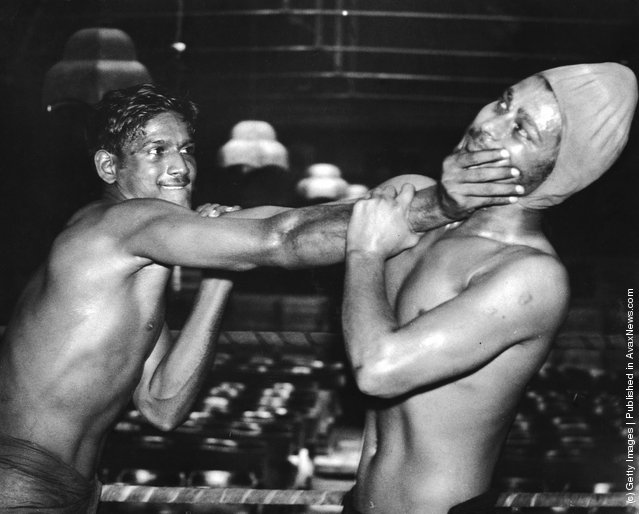
Indian wrestlers Rashid Anwar (left) and Ajaib Singh in a training bout at Lane's Club in Baker Street London before the Empire Games, 19th July 1934. (Photo by Keystone/Hulton Archive/Getty Images)
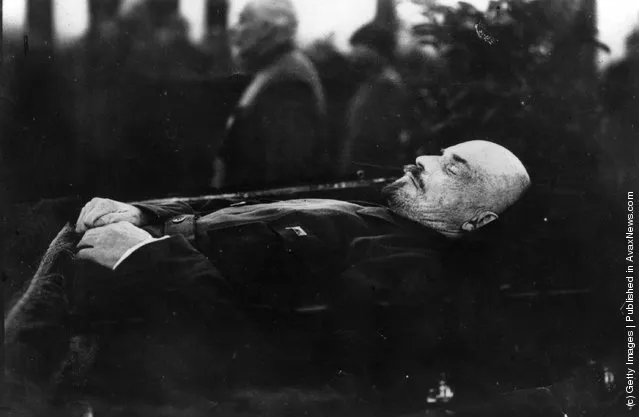
Photo: Vladimir Ilyich Lenin (1870 – 1924) lying in state in the Kremlin. (Photo by Hulton Archive/Getty Images). 1924
Important! For the same article in Russian language click here.
Something quite intriguing is happening within Russian-speaking internet during the last few – should you type a fully academic inquiry (at least, according to Russian academic requirements) in national search engines for "Lenin's mausoleum" – the first thing you get (even in top 10 searches) is website pages talking about black magic and occult. Website authors view this construction differently, but unconditionally agree on one thing: the mausoleum of the "leader of the world proletariat” – the essence of a magical artifact, a sort of “energy vampire”. It was built with a certain purpose: to drain the energy out of miserable Soviet citizens on one hand; and to poison the anthroposphere of one-sixth part of the earth with its vibes (the exact territory that was occupied by the former Soviet Union), depriving the Russian people of will to resist on the other hand. Complete nonsense? No doubt. Nevertheless, an intriguing one. Well, probably because some oddities do exist in mausoleum's history. These oddities are the thing we are going to discuss this time. First, let me refresh you memory on the subject.
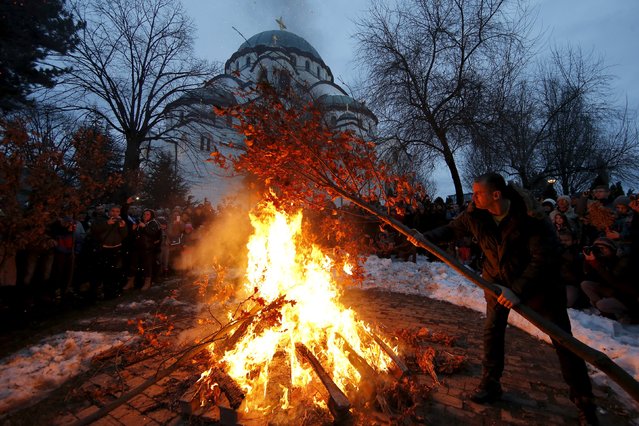
Believers burn dried oak branches, which symbolizes the Yule log, on Orthodox Christmas Eve in front of the St. Sava temple in Belgrade, Serbia, January 6, 2016. Serbian Orthodox believers celebrate Christmas on January 7, according to the Julian calendar. (Photo by Marko Djurica/Reuters)
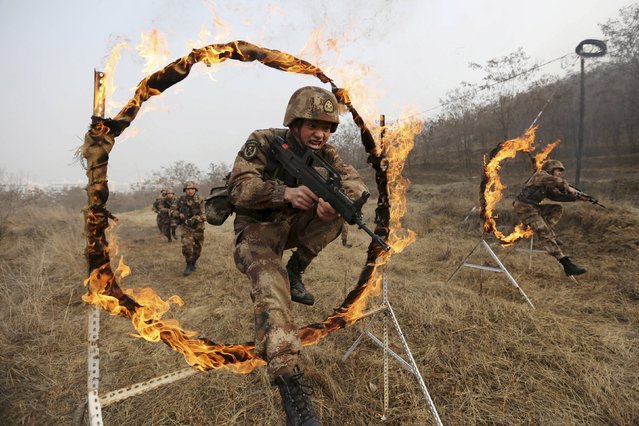
Soldiers of People's Liberation Army (PLA) Lanzhou Military Region jump through a burning obstacle during a training session at a military base in Tianshui, Gansu province, China, January 6, 2016. (Photo by Reuters/Stringer)
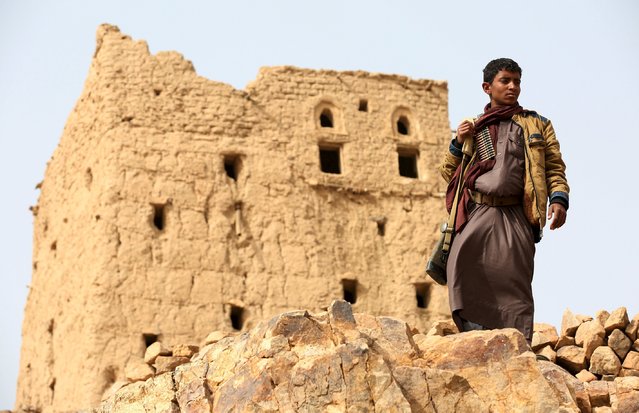
A tribal fighter loyal to Yemen's government stands in Al Khurais village of Nihm district east of the capital Sanaa January 11, 2016. (Photo by Ali Owidha/Reuters)
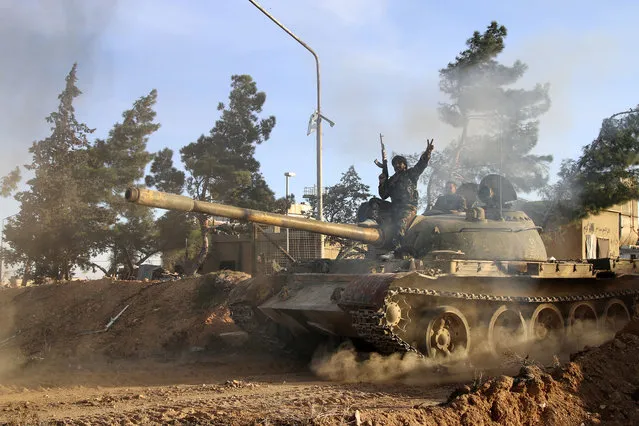
In this photo taken on Wednesday, February 17, 2016, a volunteer fighter with the Syrian Government forces sits atop a tank in the province of Raqqa, Syria. In recent weeks, Syrian government forces captured dozens of villages and towns across the country. (Photo by Alexander Kots/Komsomolskaya Pravda via AP Photo)
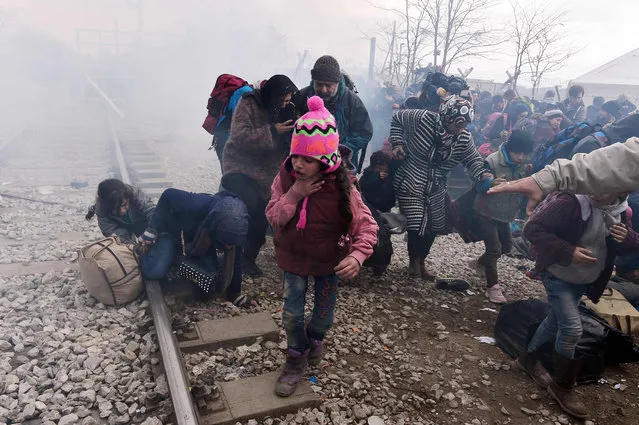
A child coughs as migrants and refugees run away after Macedonian police fired tear gas at hundreds of Iraqi and Syrian migrants who tried to break through the Greek border fence in Idomeni, on February 29, 2016. Greek police said more than 6,000 people were massed at the border, in a buildup triggered by Austria and Balkan states capping the numbers of migrants entering their territory. (Photo by Louisa Gouliamaki/AFP Photo)