Loading...
Done
Swimmers prepare to take part in the annual Christmas Day Peter Pan Cup handicap race in the Serpentine River, in Hyde Park, London, December 25, 2015. (Photo by Andrew Winning/Reuters)

Swimmers prepare to take part in the annual Christmas Day Peter Pan Cup handicap race in the Serpentine River, in Hyde Park, London, December 25, 2015. (Photo by Andrew Winning/Reuters)
Details
27 Dec 2015 08:04:00
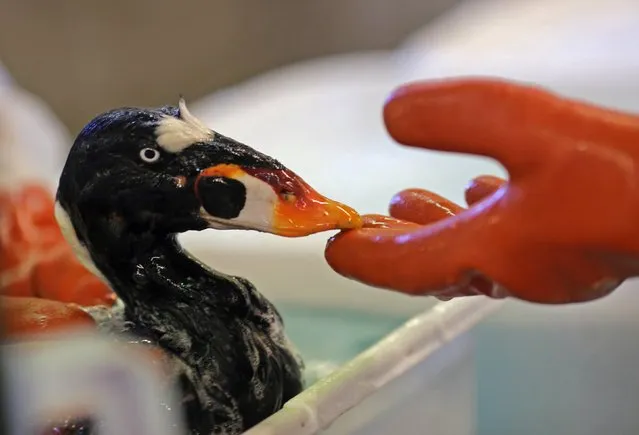
A bird is cleaned at the International Bird Rescue in Fairfield, California January 20, 2015. A gooey, unknown material discovered on the eastern shores of San Francisco Bay is clinging to the feathers of birds, and more than 100 birds, mostly species of oceangoing, diving ducks, have died after their feathers were fouled by the viscous substance now undergoing testing at state labs in Sacramento. (Photo by Robert Galbraith/Reuters)

A bird is cleaned at the International Bird Rescue in Fairfield, California January 20, 2015. A gooey, unknown material discovered on the eastern shores of San Francisco Bay is clinging to the feathers of birds, and more than 100 birds, mostly species of oceangoing, diving ducks, have died after their feathers were fouled by the viscous substance now undergoing testing at state labs in Sacramento. (Photo by Robert Galbraith/Reuters)
Details
22 Jan 2015 14:03:00
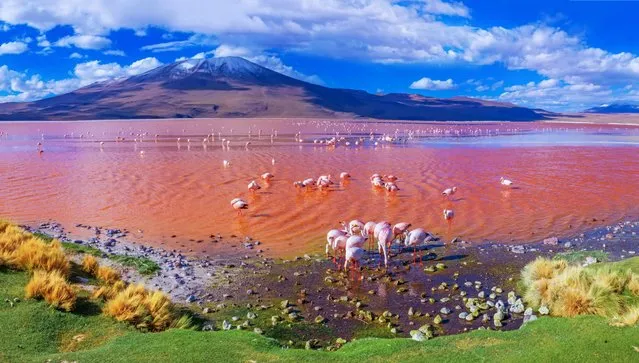
Flamingoes in Laguna Colorada, Altiplano, Bolivia, South America in 2018. (Photo by Oksana Belikova/Rex Features/Shutterstock)

Flamingoes in Laguna Colorada, Altiplano, Bolivia, South America in 2018. (Photo by Oksana Belikova/Rex Features/Shutterstock)
Details
06 Aug 2023 04:24:00
Police Cpl. Cristiano de Oliveira offers a hand to police dog “Corporal Oliveira”, at the 17 Military Police Battalion's station, in Rio de Janeiro, Brazil, Thursday, April 7, 2022. Oliveira is one of two rescue dogs that have turned into local mascots and budding online influencers after joining their rescuers' ranks. (Photo by Silvia Izquierdo/AP Photo)

Police Cpl. Cristiano de Oliveira offers a hand to police dog “Corporal Oliveira”, at the 17 Military Police Battalion's station, in Rio de Janeiro, Brazil, Thursday, April 7, 2022. Oliveira is one of two rescue dogs that have turned into local mascots and budding online influencers after joining their rescuers' ranks. (Photo by Silvia Izquierdo/AP Photo)
Details
14 Apr 2022 06:22:00
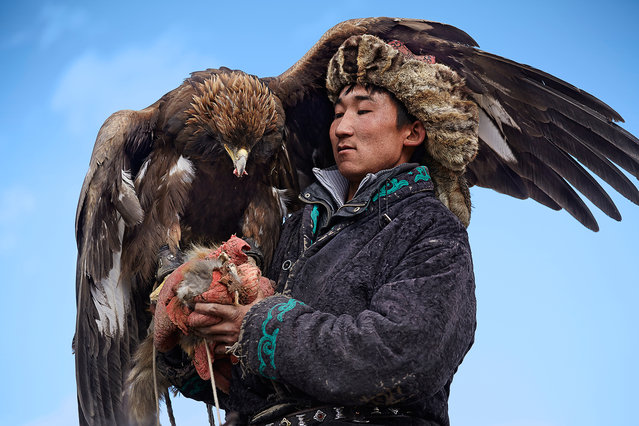
In one of the planet’s most desolate and harsh terrains, the Altai Mountains which run from Siberia in Russia down to Mongolia’s Gobi Desert, hunting with eagles is currently only practiced by a handful of Kyrgyz and Kazakhs. This form of falconry, the practice of hunting with the aid of birds of prey, can be traced back as far as 4,000 years in Central Asia. (Photo by Tariq Zaidi/The Washington Post)

In one of the planet’s most desolate and harsh terrains, the Altai Mountains which run from Siberia in Russia down to Mongolia’s Gobi Desert, hunting with eagles is currently only practiced by a handful of Kyrgyz and Kazakhs. This form of falconry, the practice of hunting with the aid of birds of prey, can be traced back as far as 4,000 years in Central Asia. Here: after a successful hunt, a proud hunter rewards his eagle by feeding it the lungs of the prey, which is considered the most highly prized part of the animal. (Photo by Tariq Zaidi/The Washington Post)
Details
22 Aug 2015 12:46:00
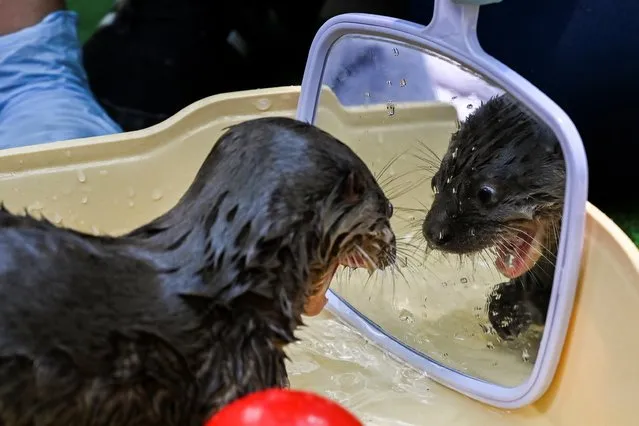
A river otter (lontra longicaudis) of 6-weeks-old looks in the mirror during a bath in the Animal Welfare Unit of the Zoo in Cali, Colombia, on October 22, 2019. The baby otter was found abandoned brought to the Cali Zoo for breeding, for its extensive experience in raising these species. According to the International Union for Conservation of Nature the river otter (lontra longicaudis) are in danger of extinction, because of mining, agriculture, pollution of rivers and housing construction in their habitat. (Photo by Luis Robayo/AFP Photo)

A river otter (lontra longicaudis) of 6-weeks-old looks in the mirror during a bath in the Animal Welfare Unit of the Zoo in Cali, Colombia, on October 22, 2019. The baby otter was found abandoned brought to the Cali Zoo for breeding, for its extensive experience in raising these species. According to the International Union for Conservation of Nature the river otter (lontra longicaudis) are in danger of extinction, because of mining, agriculture, pollution of rivers and housing construction in their habitat. (Photo by Luis Robayo/AFP Photo)
Details
27 Oct 2019 00:03:00
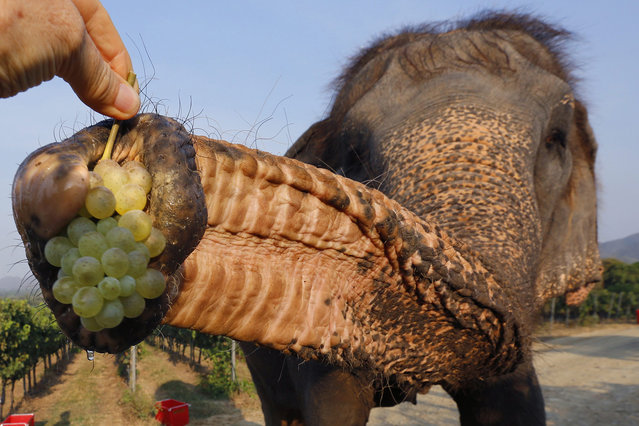
Tourists feed freshly picked grapes to 40-year-old elephant Boonruen, a long-term resident of the Hua Hin Hills vineyard, that used to be an elephant corral in Hua Hin, about 200km southwest of Bangkok, Thailand, 08 March 2016. The winery is among a handful of companies producing new latitude wines in non-traditional wine areas of the world near the equator. Harvest is only once a year in Thailand, this year in March. (Photo by Barbara Walton/EPA)

Tourists feed freshly picked grapes to 40-year-old elephant Boonruen, a long-term resident of the Hua Hin Hills vineyard, that used to be an elephant corral in Hua Hin, about 200km southwest of Bangkok, Thailand, 08 March 2016. The winery is among a handful of companies producing new latitude wines in non-traditional wine areas of the world near the equator. Harvest is only once a year in Thailand, this year in March. (Photo by Barbara Walton/EPA)
Details
20 Mar 2016 11:20:00
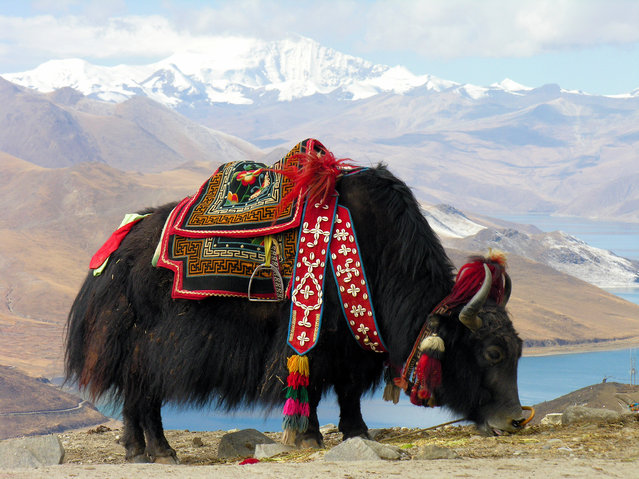
Yak near Yamdrok lake, Tibet. It is a long-haired bovinae found throughout the Himalayan region of south Central Asia, the Tibetan Plateau and as far north as Mongolia and Russia. The Tibetan economy is dominated by subsistence agriculture. Due to limited arable land, the primary occupation of the Tibetan Plateau is raising livestock, such as sheep, cattle, goats, camels, yaks, dzo, and horses. The Tibetan yak is an integral part of Tibetan life. (Photo by Dennis Jarvis)


Yak near Yamdrok lake, Tibet. It is a long-haired bovinae found throughout the Himalayan region of south Central Asia, the Tibetan Plateau and as far north as Mongolia and Russia. The Tibetan economy is dominated by subsistence agriculture. Due to limited arable land, the primary occupation of the Tibetan Plateau is raising livestock, such as sheep, cattle, goats, camels, yaks, dzo, and horses. The Tibetan yak is an integral part of Tibetan life. (Photo by Dennis Jarvis)
Details
10 Jun 2015 10:48:00