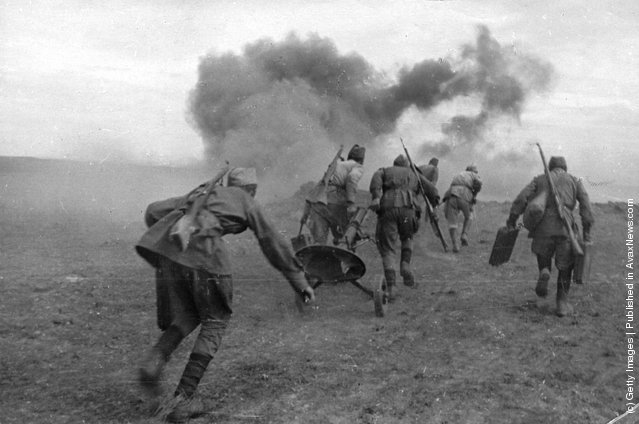
A Russian trenchmortar crew run to take up a new firing position in the Stalingrad area during the Great Patriotic War. (Photo by Keystone/Getty Images). October 1942
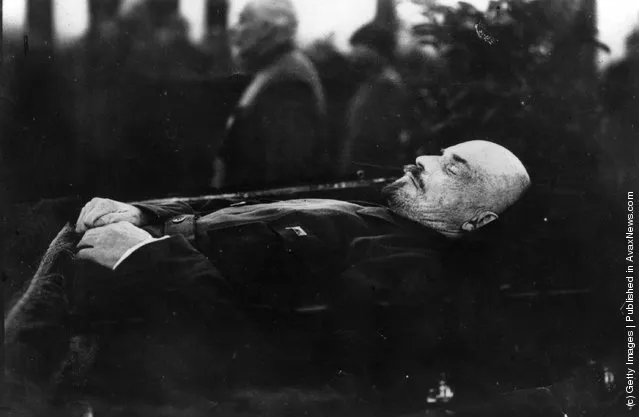
Photo: Vladimir Ilyich Lenin (1870 – 1924) lying in state in the Kremlin. (Photo by Hulton Archive/Getty Images). 1924
Important! For the same article in Russian language click here.
Something quite intriguing is happening within Russian-speaking internet during the last few – should you type a fully academic inquiry (at least, according to Russian academic requirements) in national search engines for "Lenin's mausoleum" – the first thing you get (even in top 10 searches) is website pages talking about black magic and occult. Website authors view this construction differently, but unconditionally agree on one thing: the mausoleum of the "leader of the world proletariat” – the essence of a magical artifact, a sort of “energy vampire”. It was built with a certain purpose: to drain the energy out of miserable Soviet citizens on one hand; and to poison the anthroposphere of one-sixth part of the earth with its vibes (the exact territory that was occupied by the former Soviet Union), depriving the Russian people of will to resist on the other hand. Complete nonsense? No doubt. Nevertheless, an intriguing one. Well, probably because some oddities do exist in mausoleum's history. These oddities are the thing we are going to discuss this time. First, let me refresh you memory on the subject.
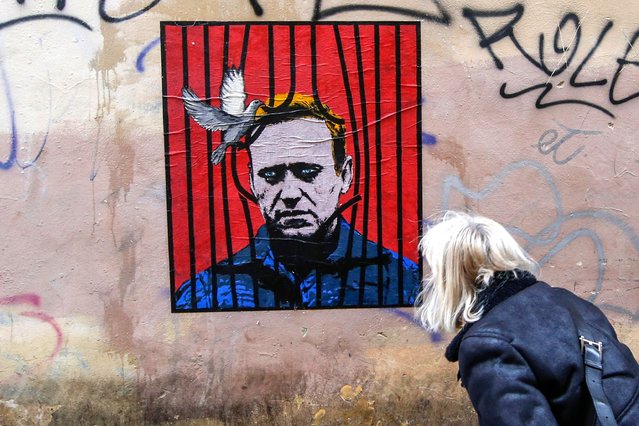
A view of a large poster depicting Russian opposition leader Alexei Navalny behind bars with a dove freeing him from detention, by an unidentified street artist known as Harry Greb, in downtown Rome, Italy, 25 January 2021. Navalny was detained after his arrival to Moscow from Germany on 17 January 2021. A Moscow judge on 18 January ruled that he will remain in custody for 30 days following his airport arrest. Navalny urged Russians to take to the streets to protest against President Putin's rule. (Photo by Fabio Frustaci/EPA/EFE)
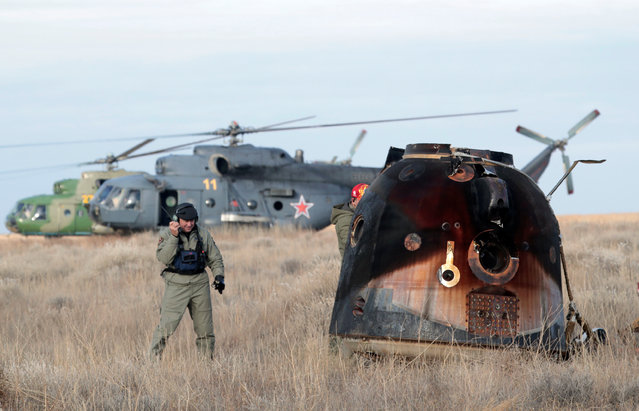
A Russian Soyuz MS space capsule stands on the ground shortly after its landing with International Space Station (ISS) crew members Kate Rubins of the U.S., Anatoly Ivanishin of Russia and Takuya Onishi of Japan, as a rescue helicopter lands nearby, outside the town of Dzhezkazgan (Zhezkazgan), Kazakhstan, October 30, 2016. (Photo by Dmitri Lovetsky/Reuters)
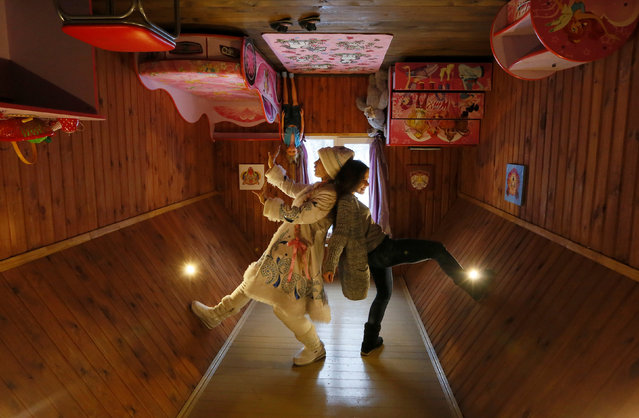
A visitor and an employee dressed as Snegurochka (Snow Maiden), the granddaughter of Ded Moroz (Russian equivalent of Santa Claus), pose for a picture inside an upside down house, constructed as an attraction for local residents and tourists and located at the Royev Ruchey Park of Flora and Fauna in the suburbs of Krasnoyarsk, Russia, December 7, 2016. (Photo by Ilya Naymushin/Reuters)
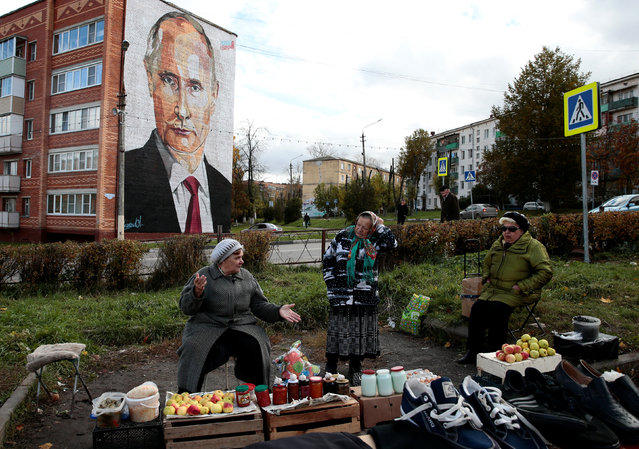
Elderly women wait for customers as they sell their self-made food products at a street market, with a graffiti depicting Russian President Vladimir Putin on the wall of a house seen in the background, in the town of Kashira, outside Moscow, Russia on October 10, 2017. (Photo by Andrey Volkov/Reuters)
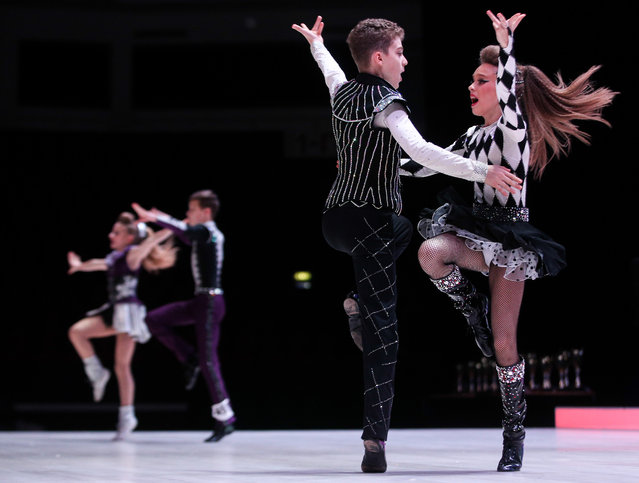
Young couples compete in Rock' n'Roll & Co, an all- Russian acrobatic rock' n'roll competition in Kazan, Russia on November 4, 2017. Acrobatic rock’n’roll is a discipline for couples combining energetic dancing with acrobatic moves. (Photo by Yegor Aleyev/TASS via Getty Images)
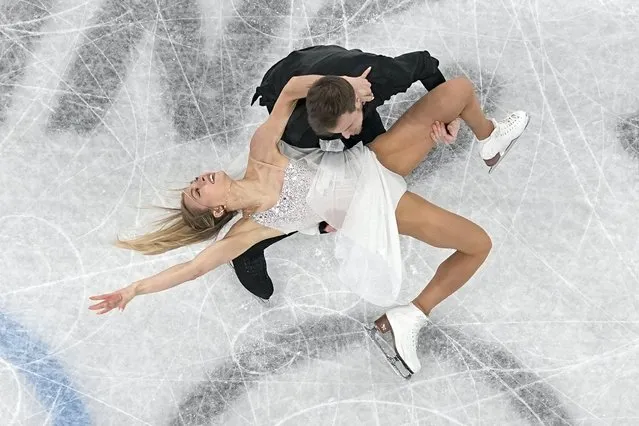
Victoria Sinitsina and Nikita Katsalapov, of the Russian Olympic Committee, compete in the team ice dance program during the figure skating competition at the 2022 Winter Olympics, Monday, Feb. 7, 2022, in Beijing. (Photo by Jeff Roberson/AP Photo)