Loading...
Done
“Stripper”: Has tucked her cash away safely. (Photo by Nick Veasey/Barcroft Media)

British artist Nick Veasey used an X-ray machine to show us exactly what's going on under people's clothes. The equipment took copies of items separately before they were mashed together to create characters and situations. The work is part of Veasey's latest exhibition named “X-ray Voyeurism”. In order to create the work, the 51-year-old has spent the last 20 years exposing himself to harmful radiation in his studio. Photo: “Stripper”: Has tucked her cash away safely. (Photo by Nick Veasey/Barcroft Media)
Details
22 Jun 2014 10:49:00
The Weird Shaped Trees Of Axel Erlandson

Axel Erlandson (December 15, 1884 – April 28, 1964) was a Swedish American farmer who shaped trees as a hobby, and opened a horticultural attraction in 1947 advertised as "See the World's Strangest Trees Here," and named "The Tree Circus."
The trees appeared in the column of Robert Ripley's Believe It or Not! twelve times. Erlandson sold his attraction shortly before his death. The trees were moved to Gilroy Gardens in 1985.
Details
20 Sep 2013 11:38:00
Ralph Is Worlds Biggest Bunny

A rabbit named Ralph has reclaimed his crown as the world's fattest Easter bunny after munching his way to almost FOUR stone in weight. Hungry Ralph, aged four, held the title in 2010 before being overtaken by fellow Continental Giant Darius, who ballooned to three-and-a-half stone. Owner Pauline Grant says Ralph, who is over three-foot long and weighs more than an average three-year-old child, now tips the scales at 3-st 8lbs.
Details
08 Apr 2013 09:44:00


The Shannara Chronicles - A Refreshing Adventure in a Post-Apocalyptic Fantasy Future

I was sitting idly on the couch, drinking cola and playing Red Flush online casino games while my better half was channel surfing besides me. I was completely immersed in my game, but dragged back with my feet on the ground when I heard a name - Terry Brooks - coming from the telly. And from MTV?!
Details
10 Mar 2016 02:57:00
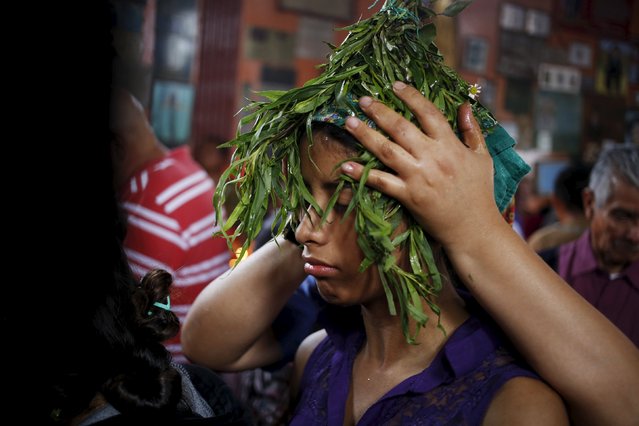
A woman receives a traditional cleansing in the church of San Simon in Iztapa, Chimaltenango, Guatemala, October 28, 2015. (Photo by Jorge Dan Lopez/Reuters)

A woman receives a traditional cleansing in the church of San Simon in Iztapa, Chimaltenango, Guatemala, October 28, 2015. People in Guatemala revere San Simon, also known by his Mayan name Maximon o Ry Laj Man, on October 28 annually. For some devotees, San Simon is synonymous with prosperity and happiness, while others associate him with witchcraft, paganism and a protector for drunkards. Since the 19th century, devotees have offered money, liquor or tobacco in exchange for his blessings. (Photo by Jorge Dan Lopez/Reuters)
Details
01 Nov 2015 08:03:00
Combines Photos By Stephen McMennamy

Art director Stephen McMennamy puts photos together to create quirky images for his ongoing project “combophoto’s”. Whether it’s a seagull with an airplane tail or a pair of donut headphones, he jots down his inspirations for each piece on his tumblr. Ever since he got interested in photography through instagram in 2012, he also set up an extra account named @combophotofail, where he shares a look behind-the-scenes on how these images are produced.
Details
17 Feb 2016 08:02:00
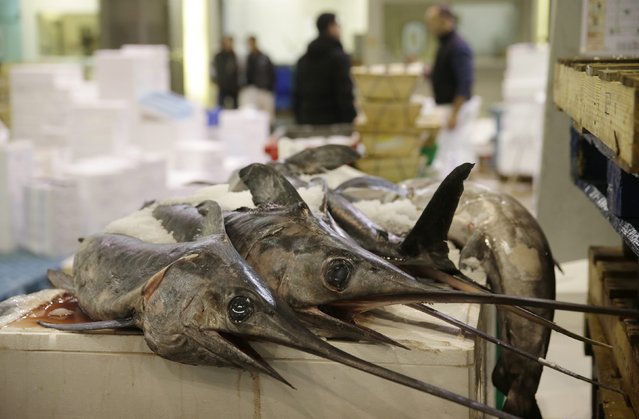
Swordfish are sold at the fish pavilion in Rungis International food market as buyers prepare for the Christmas holiday season in Rungis, south of Paris, December 11, 2015. (Photo by Philippe Wojazer/Reuters)

Rungis is a commune in the southern suburbs of Paris, France. It is best known as the location of the large wholesale food market serving the Paris metropolitan area and beyond, the Marché d'Intérêt National de Rungis, said to be the largest food market in the world. The name Rungis was recorded for the first time in a royal charter of 1124 as Rungi Villa. Here: swordfish are sold at the fish pavilion in Rungis International food market as buyers prepare for the Christmas holiday season in Rungis, south of Paris, December 11, 2015. (Photo by Philippe Wojazer/Reuters)
Details
13 Dec 2015 08:02:00
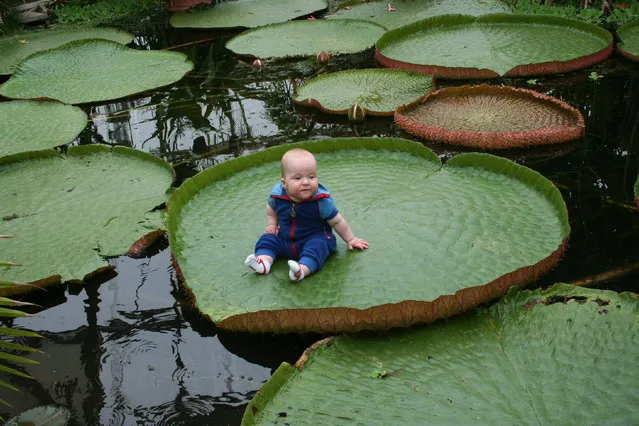
Victoria amazonica

The species has very large leaves, up to 3 m in diameter, that float on the water's surface on a submerged stalk, 7–8 m in length. The species was once called Victoria regia after Queen Victoria, but the name was superseded. V. amazonica is native to the shallow waters of the Amazon River basin, such as oxbow lakes and bayous. It is depicted in the Guyanese coat of arms. The flowers are white the first night they are open and become pink the second night. They are up to 40 cm in diameter, and are pollinated by beetles.
Details
03 Sep 2012 06:58:00