Loading...
Done
Owner of a shop that sells electronic cigarettes demonstrates how to use one

“An electronic cigarette, or e-cigarette, is an electrical device that simulates the act of tobacco smoking by producing an inhaled mist bearing the physical sensation, appearance, and often the flavor and nicotine content of inhaled tobacco smoke; though without its odor, and intended to omit its health risks. The device uses heat (or in some cases, ultrasonics) to vaporize a propylene glycol- or glycerin-based liquid solution into an aerosol mist, similar to the way a nebulizer or humidifier vaporizes solutions for inhalation”. – Wikipedia

Photo: Owner of a shop that sells electronic cigarettes demonstrates how to use one on March 1, 2012 in Berlin, Germany. The German government has announced that it classifies the liquids used in electronic cigarettes as pharmaceuticals because the liquids contain nicotine, and that sale of the liquids requires certification. (Photo Illustration by Sean Gallup/Getty Images)
Details
03 Mar 2012 10:01:00
The student Patricia Vasconcellos de Almeida, 22, tried to kiss one of the military police who formed a cordon ostensibly in front of the building Fetranspor (Federation of Transport Companies), in Rio de Janeiro, on June 27, 2013. (Photo by Zulmair Rocha/UOL)

The student Patricia Vasconcellos de Almeida, 22, tried to kiss one of the military police who formed a cordon ostensibly in front of the building Fetranspor (Federation of Transport Companies), in Rio de Janeiro, on June 27, 2013. (Photo by Zulmair Rocha/UOL)
Details
28 Jun 2013 06:30:00
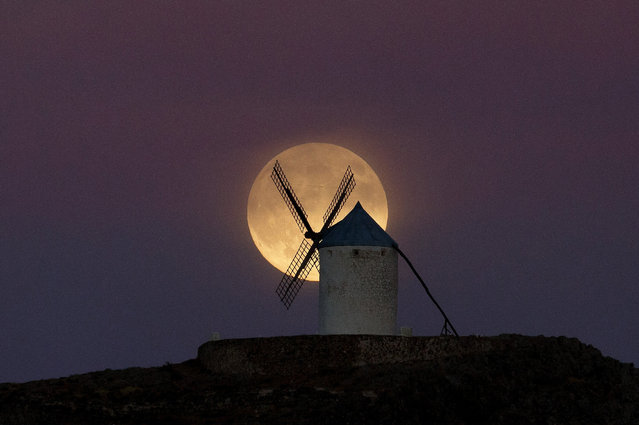
A moon appears behind a windmill a day before the supermoon is full on September 8, 2014 in Consuegra, in Toledo province, Spain. Consuegra belongs to a region made famous by the novel “Don Quijote de la Mancha” (Don Quixote) writed by Miguel De Cervantes. Some of the windmills belong to the 16th century. (Photo by Pablo Blazquez Dominguez/Getty Images)

A moon appears behind a windmill a day before the supermoon is full on September 8, 2014 in Consuegra, in Toledo province, Spain. Consuegra belongs to a region made famous by the novel “Don Quijote de la Mancha” (Don Quixote) writed by Miguel De Cervantes. Some of the windmills belong to the 16th century. (Photo by Pablo Blazquez Dominguez/Getty Images)
Details
10 Sep 2014 12:06:00
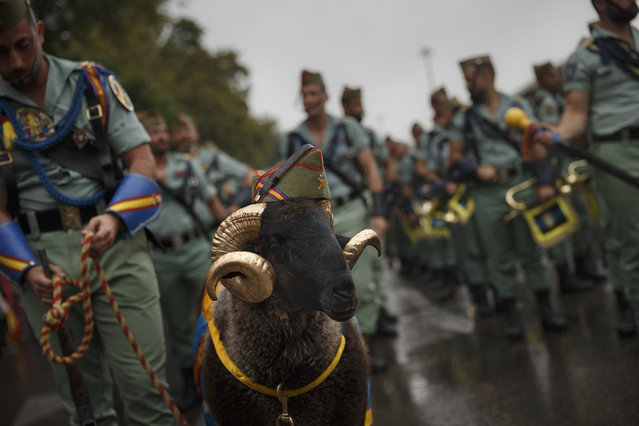
Members of La Legion, an elite unit of the Spanish Army, including a goat they use as a pet wait for the start of a military parade as they celebrate a holiday known as “Dia de la Hispanidad” or Hispanic Day in Madrid, Wednesday, October 12, 2016. (Photo by Daniel Ochoa de Olza/AP Photo)

Members of La Legion, an elite unit of the Spanish Army, including a goat they use as a pet wait for the start of a military parade as they celebrate a holiday known as “Dia de la Hispanidad” or Hispanic Day in Madrid, Wednesday, October 12, 2016. (Photo by Daniel Ochoa de Olza/AP Photo)
Details
13 Oct 2016 11:44:00
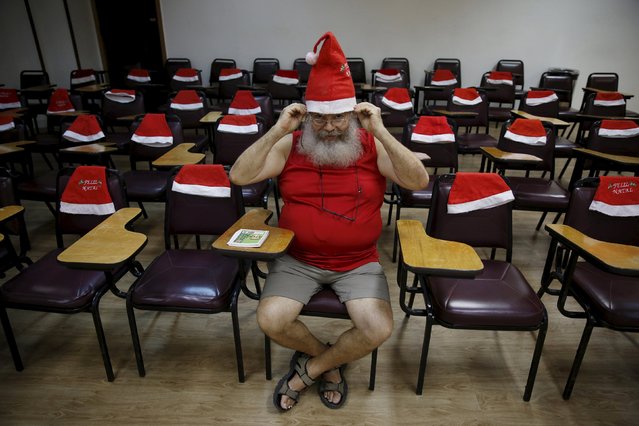
A student of the "Escola de Papai Noel do Brasil" (Brazil's school of Santa Claus) wears his hat before lessons in Rio de Janeiro, Brazil, October 27, 2015. (Photo by Pilar Olivares/Reuters)

A student of the "Escola de Papai Noel do Brasil" (Brazil's school of Santa Claus) wears his hat before lessons in Rio de Janeiro, Brazil, October 27, 2015. The school, which was founded since 1993, prepare men to represent Santa Claus during the Christmas season. Lessons include singing, physical activity, how to dress and how to care for their beard. (Photo by Pilar Olivares/Reuters)
Details
31 Oct 2015 08:03:00
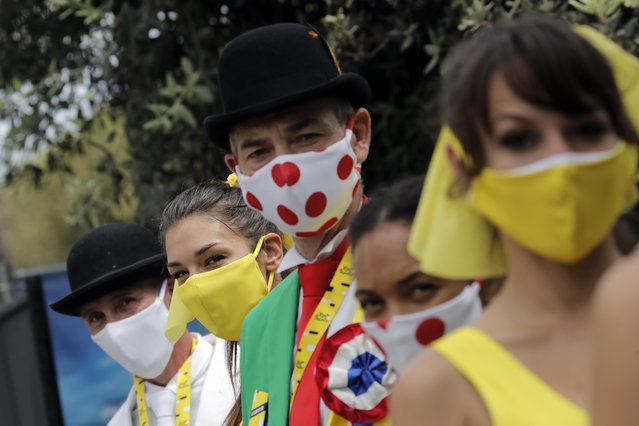
Tour de France hostess wear face masks prior to the start of the first stage of the Tour de France cycling race over 156 kilometers (97 miles) with start and finish in Nice, southern France, Saturday, August 29, 2020. (Photo by Christophe Ena/AP Photo)

Tour de France hostess wear face masks prior to the start of the first stage of the Tour de France cycling race over 156 kilometers (97 miles) with start and finish in Nice, southern France, Saturday, August 29, 2020. (Photo by Christophe Ena/AP Photo)
Details
31 Aug 2020 00:07:00
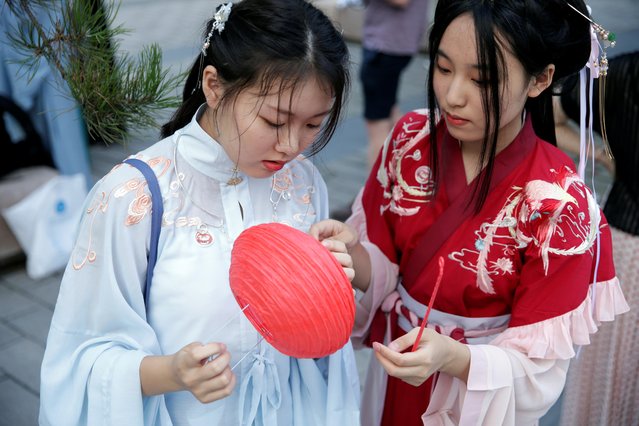
Girls dressed in “Hanfu”, or Han clothing, prepare for an event to mark the traditional Qixi festival, the Chinese equivalent of Valentine's Day, at a park in Beijing, China, August 7, 2019. Chinese for “Han clothing”, “Hanfu” is based on the idea of donning costumes worn in bygone eras by China's dominant Han ethnicity. Some of the most popular styles are from the Ming, Song and Tang dynasties. Hanfu enthusiasts doubled to two million in 2018 from a year earlier, according to a survey by Hanfu Zixun, a popular community account on the Wechat social media platform. (Photo by Jason Lee/Reuters)

Girls dressed in “Hanfu”, or Han clothing, prepare for an event to mark the traditional Qixi festival, the Chinese equivalent of Valentine's Day, at a park in Beijing, China, August 7, 2019. Chinese for “Han clothing”, “Hanfu” is based on the idea of donning costumes worn in bygone eras by China's dominant Han ethnicity. Some of the most popular styles are from the Ming, Song and Tang dynasties. Hanfu enthusiasts doubled to two million in 2018 from a year earlier, according to a survey by Hanfu Zixun, a popular community account on the Wechat social media platform. (Photo by Jason Lee/Reuters)
Details
23 Sep 2019 00:05:00
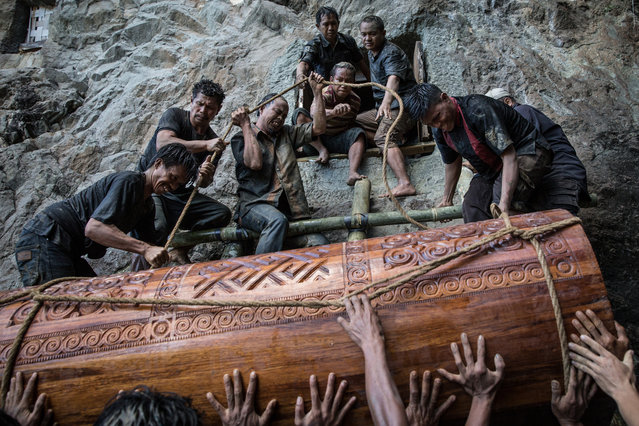
It is said that Torajans are people who “live to die”. For this Indonesian ethnic group, funerals are such extravagant events that they sometimes attract tourists. Families can postpone burials years (and the deceased are considered sick and hosted at home until the funeral) until the family can raise enough money and gather as many relatives as possible. And then it’s a jubilant multiday social event with a parade, dances and animal sacrifices. Agung Parameswara photographed these funerary practices when he traveled to South Sulawesi province, where the Torajans live. But often, their funeral isn’t the last time the dead are seen. In August, crypts are opened, coffins are slid back out and bodies delicately unsheathed. This tender ritual is known as Ma’Nene, which is customarily performed every few years. (Photo by Agung Parameswara/The Washington Post)

It is said that Torajans are people who “live to die”. For this Indonesian ethnic group, funerals are such extravagant events that they sometimes attract tourists. Families can postpone burials years (and the deceased are considered sick and hosted at home until the funeral) until the family can raise enough money and gather as many relatives as possible. And then it’s a jubilant multiday social event with a parade, dances and animal sacrifices. Agung Parameswara photographed these funerary practices when he traveled to South Sulawesi province, where the Torajans live. (Photo by Agung Parameswara/The Washington Post)
Details
06 Oct 2016 09:15:00