Loading...
Done
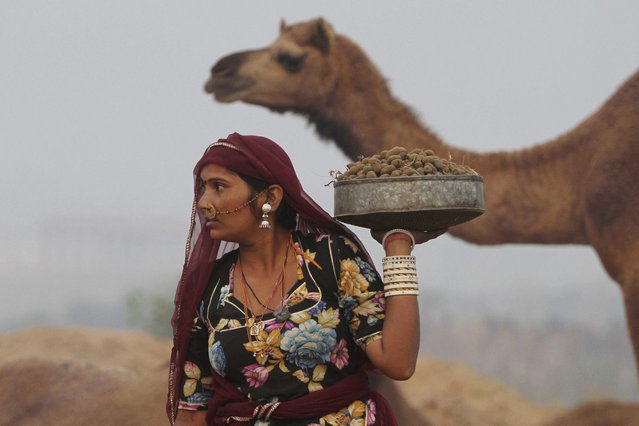
An Indian woman collects camel dung during the annual cattle fair in Pushkar, in the western Indian state of Rajasthan, Sunday, November 10, 2013. Pushkar, located on the banks of Pushkar Lake, is a popular Hindu pilgrimage spot that is also frequented by foreign tourists who come to the town for the annual cattle fair and camel races. (Photo by Ajit Solanki/AP Photo)

An Indian woman collects camel dung during the annual cattle fair in Pushkar, in the western Indian state of Rajasthan, Sunday, November 10, 2013. Pushkar, located on the banks of Pushkar Lake, is a popular Hindu pilgrimage spot that is also frequented by foreign tourists who come to the town for the annual cattle fair and camel races. (Photo by Ajit Solanki/AP Photo)
Details
11 Nov 2013 10:59:00
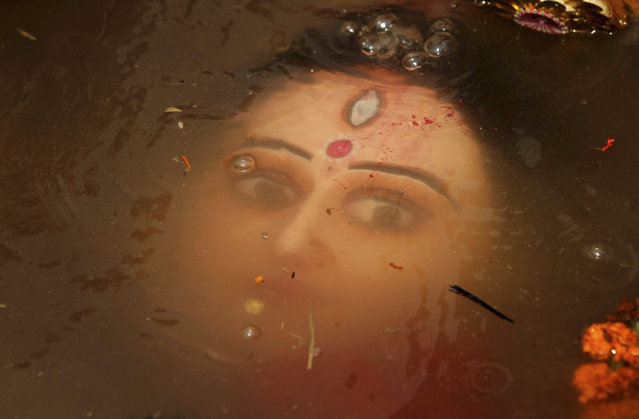
An idol of Hindu goddess Durga floats in water as devotees immerse the same in the River Kuakhai after the Durga Puja festival in Bhubaneswar, India, Saturday, October 24, 2015. The immersion of idols marks the end of the festival that commemorates the slaying of a demon king by lion-riding, 10-armed goddess Durga, marking the triumph of good over evil. (Photo by Biswaranjan Rout/AP Photo)

An idol of Hindu goddess Durga floats in water as devotees immerse the same in the River Kuakhai after the Durga Puja festival in Bhubaneswar, India, Saturday, October 24, 2015. The immersion of idols marks the end of the festival that commemorates the slaying of a demon king by lion-riding, 10-armed goddess Durga, marking the triumph of good over evil. (Photo by Biswaranjan Rout/AP Photo)
Details
26 Oct 2015 08:04:00
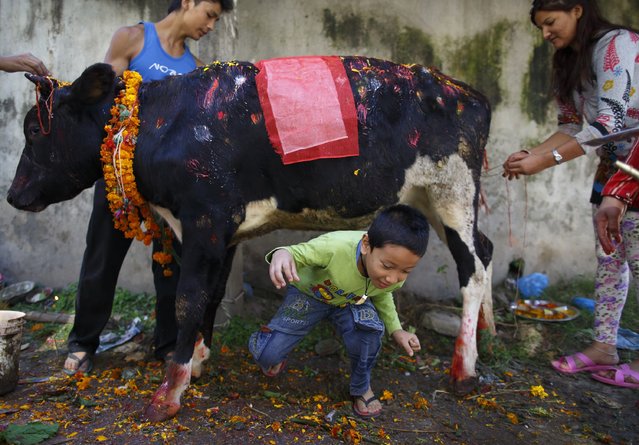
A boy crawls under a cow during a religious ceremony celebrating the Tihar festival, also called Diwali, in Kathmandu, October 23, 2014. Hindus all over Nepal are celebrating the festival during which they worship cows, which are considered a maternal figure, and other animals. Also known as the festival of lights, devotees worship the goddess of wealth Laxmi by illuminating and decorating their homes using garlands, oil lamps, candles and colourful light bulbs. (Photo by Navesh Chitrakar/Reuters)

A boy crawls under a cow during a religious ceremony celebrating the Tihar festival, also called Diwali, in Kathmandu, October 23, 2014. Hindus all over Nepal are celebrating the festival during which they worship cows, which are considered a maternal figure, and other animals. Also known as the festival of lights, devotees worship the goddess of wealth Laxmi by illuminating and decorating their homes using garlands, oil lamps, candles and colourful light bulbs. (Photo by Navesh Chitrakar/Reuters)
Details
25 Oct 2014 13:23:00
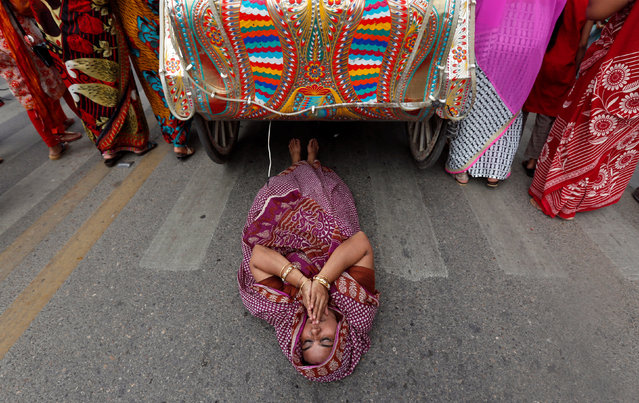
A Hindu devotee lies on a road as the holy “Rath”, or the chariot of lord Jagannath, passed over her during the Rath Yatra, or chariot procession in Karachi, Pakistan, July 17, 2016. Ratha-jatra is derived from two Odia words ratha/rotho meaning “chariot” and jatra meaning “journey”. The festival involves an annual procession (journey) of a deity's idols. Other names for the festival include ratha jatra or chariot festival. (Photo by Akhtar Soomro/Reuters)

A Hindu devotee lies on a road as the holy “Rath”, or the chariot of lord Jagannath, passed over her during the Rath Yatra, or chariot procession in Karachi, Pakistan, July 17, 2016. Ratha-jatra is derived from two Odia words ratha/rotho meaning “chariot” and jatra meaning “journey”. The festival involves an annual procession (journey) of a deity's idols. Other names for the festival include ratha jatra or chariot festival. (Photo by Akhtar Soomro/Reuters)
Details
18 Jul 2016 12:42:00
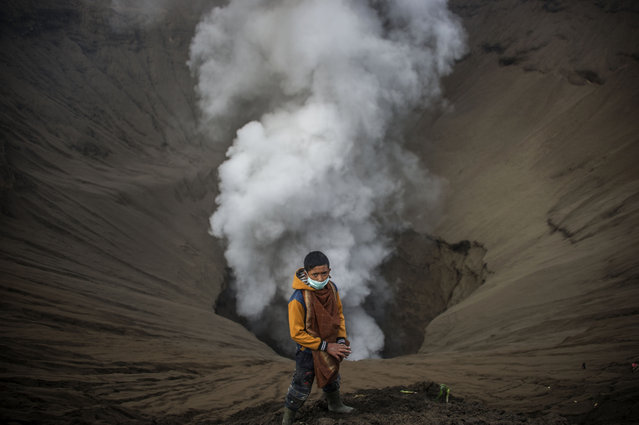
An Indonesian boy waits as he prepares to catch offerings released by Hindu devotees of the Tengger tribe during the Yadnya Kasada festival, on the crater of Mount Bromo in Probolinggo on July 21, 2016. During the annual Yadnya Kasada festival the Tenggerese climb Mount Bromo, an active volcano, and seek the blessing from the main deity Hyang Widi Wasa by presenting offerings of rice, fruit, livestock and other local produce. (Photo by Juni Kriswanto/AFP Photo)

An Indonesian boy waits as he prepares to catch offerings released by Hindu devotees of the Tengger tribe during the Yadnya Kasada festival, on the crater of Mount Bromo in Probolinggo on July 21, 2016. During the annual Yadnya Kasada festival the Tenggerese climb Mount Bromo, an active volcano, and seek the blessing from the main deity Hyang Widi Wasa by presenting offerings of rice, fruit, livestock and other local produce. (Photo by Juni Kriswanto/AFP Photo)
Details
22 Jul 2016 12:33:00
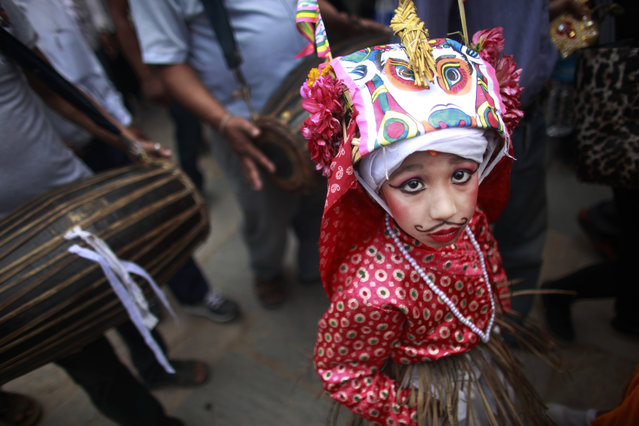
A Nepalese Hindu boy in festival attire walks in a procession during “Gai Jatra”, or Cow Festival in Kathmandu, Nepal, Friday, August 19, 2016. Members of Nepal's Newar Community celebrate the festival in memory of their family members who died the preceding year, believing that the cow will guide them in their journey to heaven. (Photo by Niranjan Shrestha/AP Photo)

A Nepalese Hindu boy in festival attire walks in a procession during “Gai Jatra”, or Cow Festival in Kathmandu, Nepal, Friday, August 19, 2016. Members of Nepal's Newar Community celebrate the festival in memory of their family members who died the preceding year, believing that the cow will guide them in their journey to heaven. (Photo by Niranjan Shrestha/AP Photo)
Details
20 Aug 2016 11:53:00
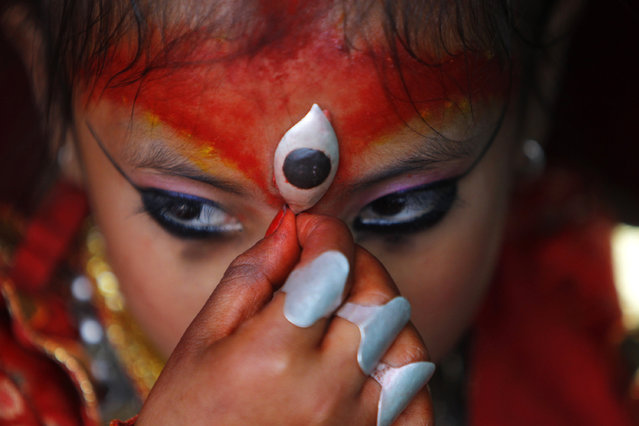
Nepal's Kumari, or living goddess, adjusts her ornament as she watches the Rato Machindranath chariot Festival in Lalitpur, Nepal, Friday, April 24, 2015. Nepal's living goddesses are young pre-pubescent girls considered by devotees to be incarnations of a Hindu goddess. Selected as toddlers, living goddesses usually keep their positions until they reach puberty. (Photo by Niranjan Shrestha/AP Photo)

Nepal's Kumari, or living goddess, adjusts her ornament as she watches the Rato Machindranath chariot Festival in Lalitpur, Nepal, Friday, April 24, 2015. Nepal's living goddesses are young pre-pubescent girls considered by devotees to be incarnations of a Hindu goddess. Selected as toddlers, living goddesses usually keep their positions until they reach puberty. (Photo by Niranjan Shrestha/AP Photo)
Details
25 Apr 2015 10:05:00
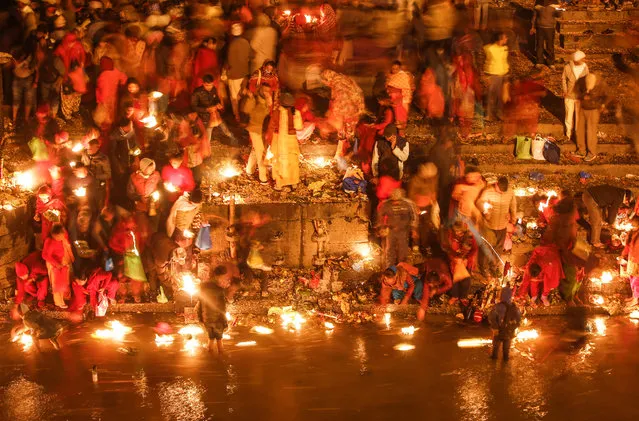
Nepalese Hindu devotees offer oil lamps in the Bagmati River as they observe the festival of Bala Chaturdashi in the early morning hours at the Pashupati Temple in Kathmandu, Nepal, 28 November 2016. Seven kinds of seeds – paddy, barley, sesame, wheat, gram, maize and finger millet – are sown around the temple premises in the name of loved ones departed during the last three years, in the belief that the departed souls will receive salvation. (Photo by Narendra Shrestha)

Nepalese Hindu devotees offer oil lamps in the Bagmati River as they observe the festival of Bala Chaturdashi in the early morning hours at the Pashupati Temple in Kathmandu, Nepal, 28 November 2016. Seven kinds of seeds – paddy, barley, sesame, wheat, gram, maize and finger millet – are sown around the temple premises in the name of loved ones departed during the last three years, in the belief that the departed souls will receive salvation. (Photo by Narendra Shrestha)
Details
05 Dec 2016 11:28:00