Loading...
Done
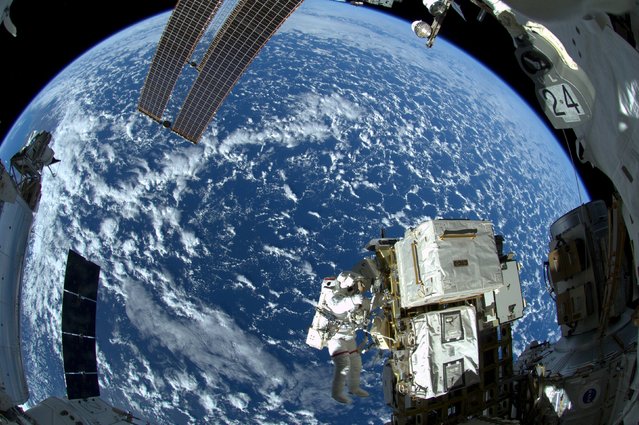
NASA astronaut Reid Wiseman and European Space Agency astronaut Alexander Gerst (not shown) works outside the space station's Quest airlock in the first of three spacewalks for the Expedition 41 crew aboard the International Space Station in this NASA image released October 8, 2014. (Photo by Reuters/NASA)

NASA astronaut Reid Wiseman and European Space Agency astronaut Alexander Gerst (not shown) works outside the space station's Quest airlock in the first of three spacewalks for the Expedition 41 crew aboard the International Space Station in this NASA image released October 8, 2014. (Photo by Reuters/NASA)
Details
05 Nov 2015 08:02:00
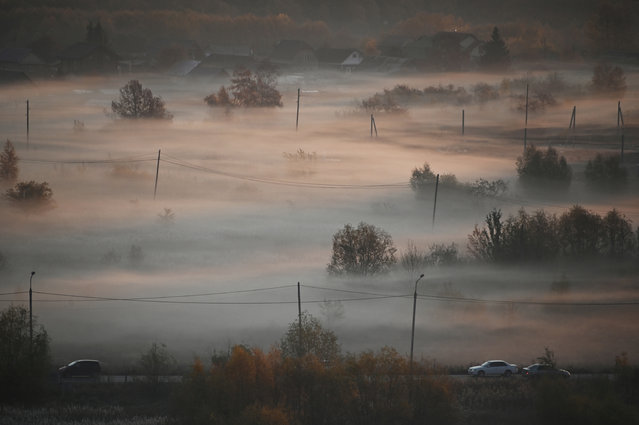
A morning fog is seen in the Siberian city of Omsk, Russia on October 8, 2019. (Photo by Alexey Malgavko/Reuters)

A morning fog is seen in the Siberian city of Omsk, Russia on October 8, 2019. (Photo by Alexey Malgavko/Reuters)
Details
19 Oct 2019 00:03:00
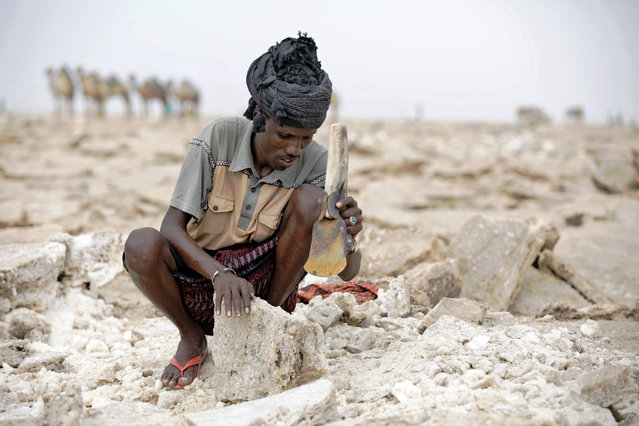
A man shaves blocks of salt from the Danakil Depression on 28 March 2017, in Afar, Ethiopia. (Photo by Zacharias Abubeker/AFP Photo)

A man shaves blocks of salt from the Danakil Depression on 28 March 2017, in Afar, Ethiopia. Every morning, hundreds of men converge on a dry lakebed in a remote corner of Ethiopia, where they cleave the ground open with handaxes to extract salt, just as their fathers and grandfathers once did. (Photo by Zacharias Abubeker/AFP Photo)
Details
19 Apr 2017 08:57:00
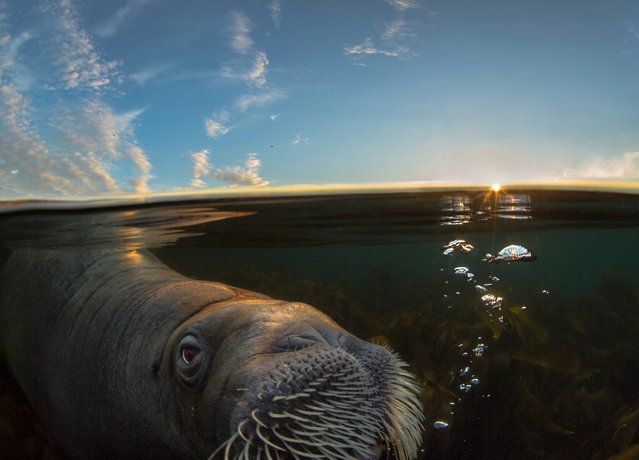
The Wildscreen festival is the world’s biggest celebration of screen-based natural history storytelling which takes place every two years in Bristol. Here: “Walrus in Midnight Sun”. Walrus feed mostly on bivalves in productive, shallow and often sandy habitats in the Arctic. This individual, though, arrived on a beach outside Tromsø, northern Norway, and found comfort on a stranded dead sperm whale. After two weeks he approached Audun, and only half a metre away he stretched his tusk forward and touched his hand gently. “This was one of the most memorable moments of my life”, Rikardsen says. He named the 500kg male Buddy. After two months, the dead whale was decomposed and Buddy suddenly disappeared. (Photo by Audun Rikardsen/Wildscreen 2016)

The Wildscreen festival is the world’s biggest celebration of screen-based natural history storytelling which takes place every two years in Bristol. Here: “Walrus in Midnight Sun”. Walrus feed mostly on bivalves in productive, shallow and often sandy habitats in the Arctic. This individual, though, arrived on a beach outside Tromsø, northern Norway, and found comfort on a stranded dead sperm whale. After two weeks he approached Audun, and only half a metre away he stretched his tusk forward and touched his hand gently. “This was one of the most memorable moments of my life”, Rikardsen says. He named the 500kg male Buddy. After two months, the dead whale was decomposed and Buddy suddenly disappeared. (Photo by Audun Rikardsen/Wildscreen 2016)
Details
07 Oct 2016 10:02:00
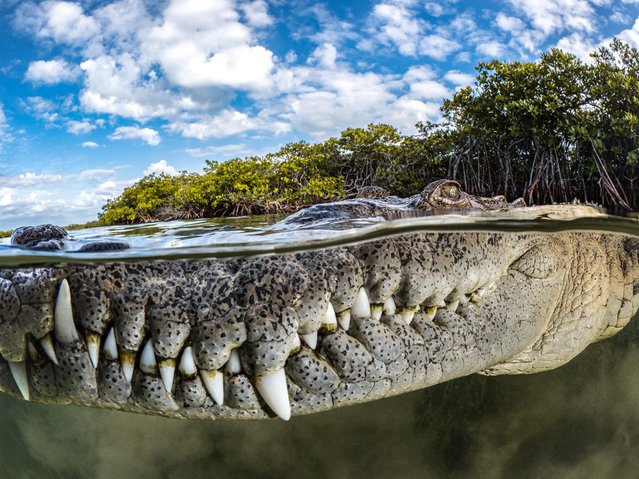
Guardian of the Mangroves – Overall Winner. Tanya Houppermans, Cuba. A curious American crocodile (Crocodylus acutus) swims right up to Tanya, at Gardens of the Queen (Jardines De La Reina), an archipelago off the coast of Cuba. It has been strictly protected since 1996, and is one of the most untouched marine ecosystems in the world. ‍ “The healthy population of American crocodiles is down to the pristine condition of the mangroves and I wanted to capture close ups of this gentle giant in its natural habitat. I hope this image can illustrate that protecting areas like this is so critical”. (Photo by Tanya Griffin Houppermans/Mangrove Photographer of the Year)

Guardian of the Mangroves – Overall Winner. Tanya Houppermans, Cuba. A curious American crocodile (Crocodylus acutus) swims right up to Tanya, at Gardens of the Queen (Jardines De La Reina), an archipelago off the coast of Cuba. It has been strictly protected since 1996, and is one of the most untouched marine ecosystems in the world. ‍ “The healthy population of American crocodiles is down to the pristine condition of the mangroves and I wanted to capture close ups of this gentle giant in its natural habitat. I hope this image can illustrate that protecting areas like this is so critical”. (Photo by Tanya Griffin Houppermans/Mangrove Photographer of the Year)
Details
05 Nov 2022 04:24:00
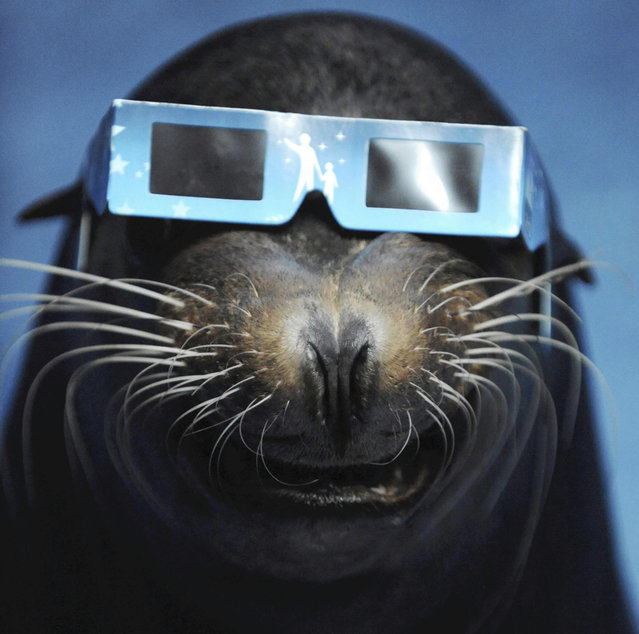
A sea lion

A sea lion wears a solar viewer during an annular solar eclipse at an aquarium in Tokyo, May 21, 2012. (Yomiuri Shimbun/Reuters)
Details
06 Jun 2012 02:28:00
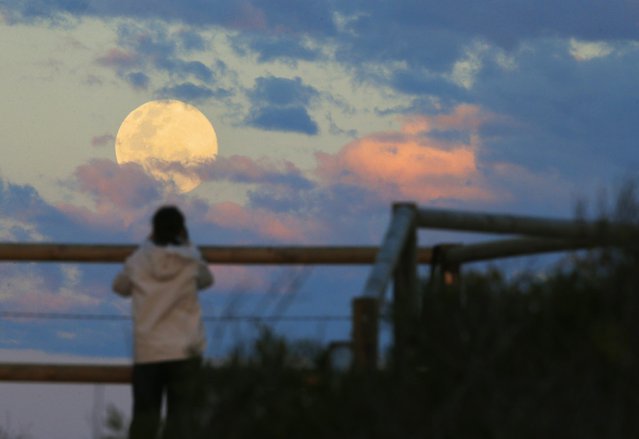
Sydney resident Virginia Maddock watches the supermoon rise off the Sydney beachside suburb of Wanda, August 10, 2014. The astronomical event occurs when the moon is closest to the Earth in its orbit, making it appear much larger and brighter than usual. (Photo by Jason Reed/Reuters)

Sydney resident Virginia Maddock watches the supermoon rise off the Sydney beachside suburb of Wanda, August 10, 2014. Sunday’s moon was at its closest approach to Earth, appearing bigger and brighter than any other moon this year. The moon was 221,765 miles away and looked 16 percent larger and 30 percent brighter than usual. (Photo by Jason Reed/Reuters)
Details
11 Aug 2014 11:50:00
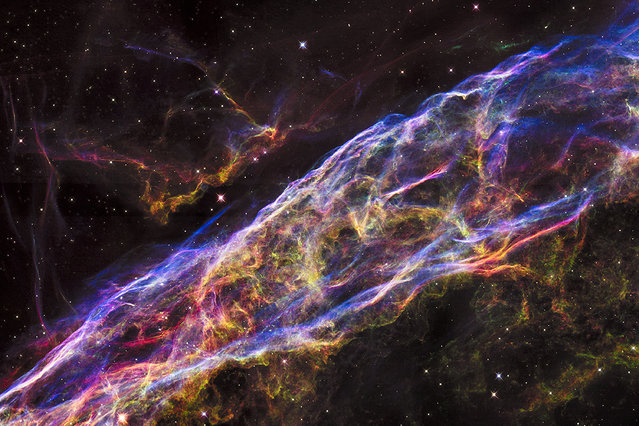
A small section of the expanding remains of the Veil Nebula, a massive star that exploded about 8,000 years ago. The entire nebula is 110 light-years across, covering six full moons on the sky as seen from Earth, and resides about 2,100 light-years away in the constellation Cygnus, the Swan. Image taken by NASA's Hubble Space Telescope. Released September 24, 2015. (Photo by Reuters/NASA/ESA/Hubble Heritage Team)

A small section of the expanding remains of the Veil Nebula, a massive star that exploded about 8,000 years ago. The entire nebula is 110 light-years across, covering six full moons on the sky as seen from Earth, and resides about 2,100 light-years away in the constellation Cygnus, the Swan. Image taken by NASA's Hubble Space Telescope. Released September 24, 2015. (Photo by Reuters/NASA/ESA/Hubble Heritage Team)
Details
10 Dec 2015 08:01:00