Loading...
Done
Canvas Paintings By Egidio Antonaccio

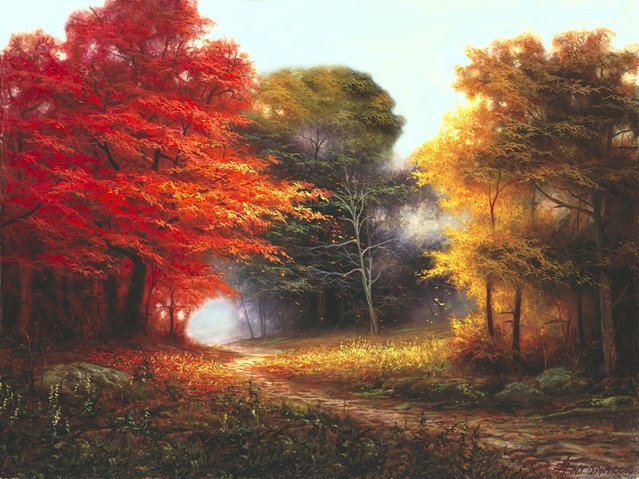
Realistic impressionist whose art, prints and posters express his love of nature and a man gifted with a rare talent. Having studied with some of the great Italian masters of fine art, he has developed a brilliant and commanding style. Born in Castelluccio, Italy, in 1954, Egidio Antonaccio graduated from the Institute of Fine Art in Castrovillari, Italy, in 1973. Then in 1978, he graduated with honors from the Academy of Fine Arts in Florence, Italy.
Details
12 Jan 2014 15:00:00
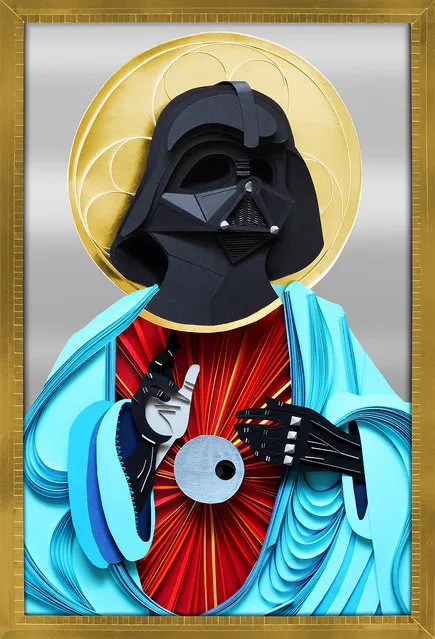
Paper Craft By Lobulo Design

London-based Lobulo Design (who is actually just a single desiner who goes by Lobulo) creates wonderful, vibrant designs using paper. From pop culture to anatomy and the natural world it seems like nothing is off limits. Check out much more over on Behance.
Details
30 Mar 2014 11:12:00
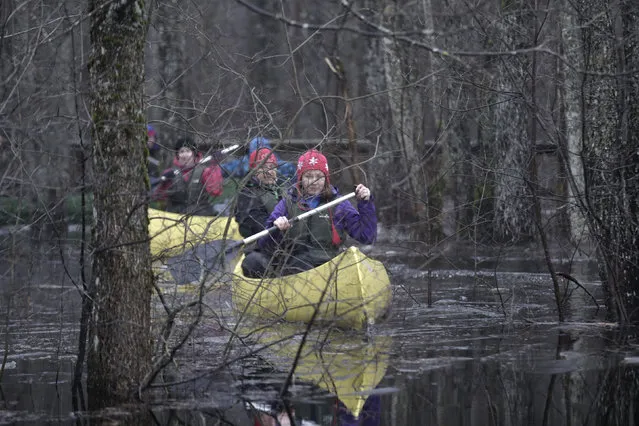
People canoe through a flooded forest in Soomaa national park, Estonia, February 7, 2016. (Photo by Ints Kalnins/Reuters)

People canoe through a flooded forest in Soomaa national park, Estonia, February 7, 2016. In this Estonian region hit by floods every spring the natural disaster is used to attract visitors and organise canoe tours through flooded territories. The floods are called Fifth Season by local people. (Photo by Ints Kalnins/Reuters)
Details
09 Feb 2016 13:50:00
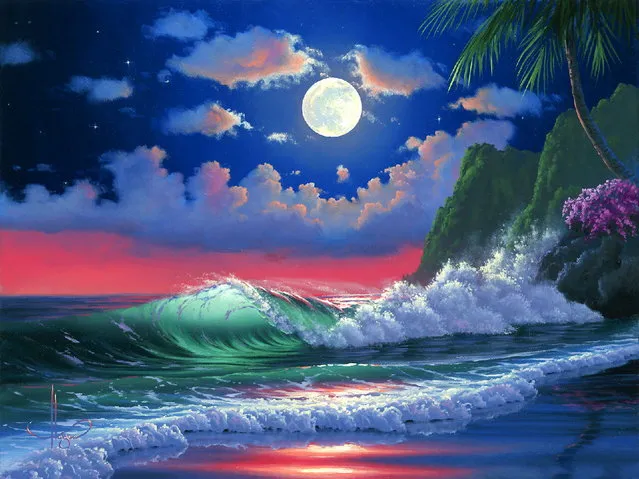
Amazing World By Al Hogue

Light is the sole reason why life exists. It provides us with warmth; it allows us to see; it nourishes all the living things on this planet. Many painters, especially the masters of Old Renaissance Period, have recognized the importance of light and its intimate connection with nature and life itself. In their paintings they gave tribute to light, giving the impression that their paintings had a light source hidden within them. Al Hogue, the artist who created the paintings that you see before you, has studied their techniques for many years. As time went by, light permeated not only his paintings by also his life, becoming his sole philosophy.
Details
06 Mar 2015 06:03:00
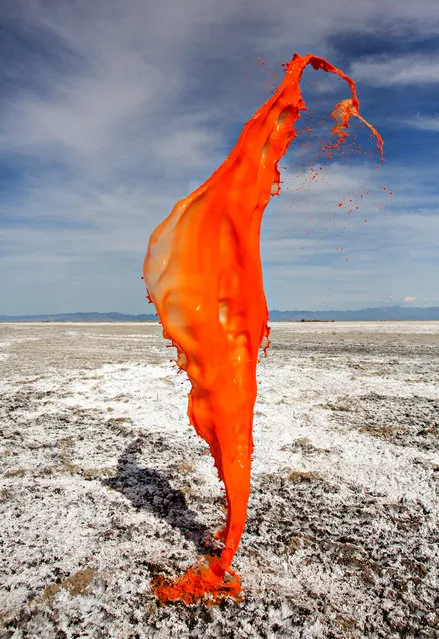
“Orange Salt Flats”. (Photo by Floto/Warner)

The photography duo of Floto+Warner created the series, “Colorant”, from an idea that stemmed out of a previous series and the fascination of landscapes, with results that leave one in awe. Creating shapes, not experienced in nature, they tossed colored water in the air to capture “a momentary graffiti of air and space”. Using a high shutter speed to capture these fleeting moments, Floto/Warner has produced a multi-medium series with jaw-dropping results. Photo: “Orange Salt Flats”. (Photo by Floto/Warner)
Details
02 Jul 2014 10:26:00
Redhead Day Dutch Summer Festival

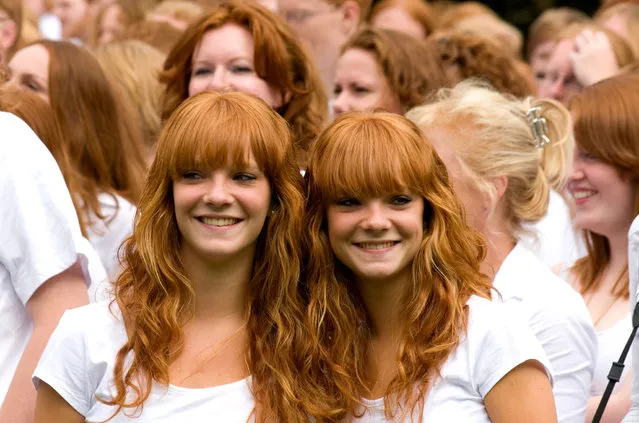
Redhead Day (Roodharigendag in Dutch) is the name of a Dutch summer festival that takes place each first weekend of September in the city of Breda, in the Netherlands. The two-day festival is a gathering of people with natural red hair, but is also focused on art related to the colour red. Activities during the festival are lectures, workshops and demonstrations which are aimed specifically at red-haired people. The festival attracts attendance from 50 countries and is free due to sponsorship of the local government.
Details
16 Jul 2014 12:58:00
Hawa Mahal India

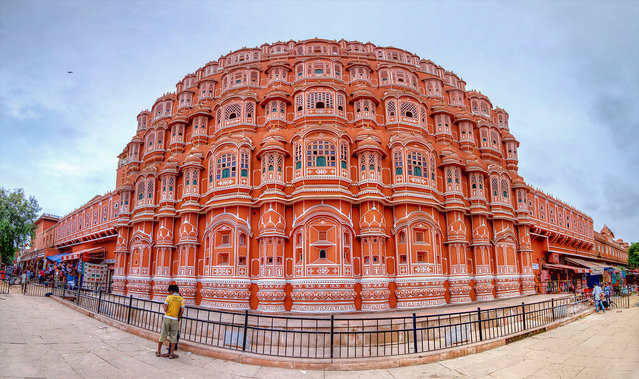
Hawa Mahal, which translates as the Palace of Winds, was built in 1799 by Maharaja Sawai Pratap Singh. The design of the palace was created by Shreyansh Jain to resemble the crown of Krishna. The design of this unique five-story building is akin to a honeycomb. The main purpose of this building was to allow royal ladies to watch the street below while remaining unseen, since during those times they had a strict code of dressing, which meant covering their faces. The palace was designed to produce the Venturi effect, which created natural air conditioning and kept the interior relatively cool during hot summers.
Details
22 Nov 2014 13:22:00
Split Apple Rock

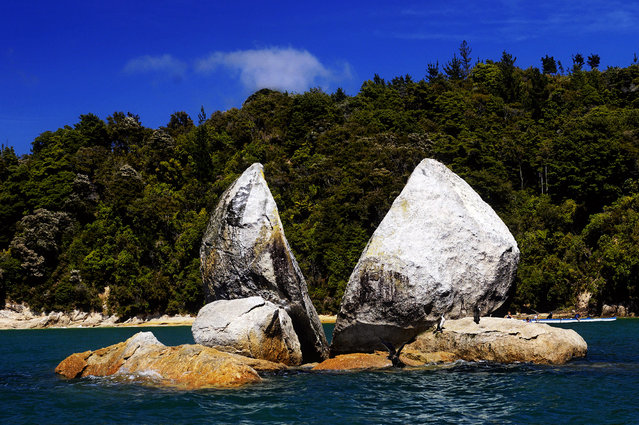
Split Apple Rock is a geological rock formation in The Tasman Bay off the northern coast of the South Island of New Zealand. Made of granite, it is in the shape of an apple which has been cut in half. It is a popular tourist attraction in the waters of the Tasman Sea approximately 50 metres off the coast between Kaiteriteri and Marahau. The rock sits in shallow water at low tide and is accessible by wading. It is also a point of interest for the many tourist boats and pleasure craft which operate along the shores of the Abel Tasman National Park. The cleft to produce two sides of the 'apple' was a natural occurrence. It is unknown when this happened and therefore the cleaving of the rock has attracted mythological explanations.
Details
19 Oct 2013 10:58:00