Loading...
Done
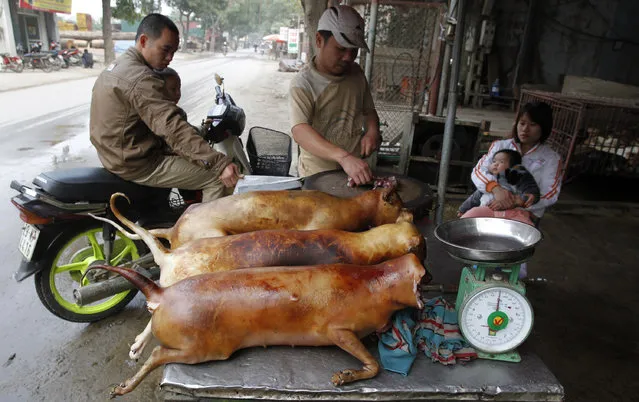
A vendor (C) cuts slaughtered dogs for sale at his roadside stall in Duong Noi village, outside Hanoi December 16, 2011. While animal rights activists have condemned eating dog meat as cruel treatment of the animals, it is still an accepted popular delicacy for some Vietnamese, as well in some other Asian countries. (Photo by Reuters/Kham)

A vendor (C) cuts slaughtered dogs for sale at his roadside stall in Duong Noi village, outside Hanoi December 16, 2011. While animal rights activists have condemned eating dog meat as cruel treatment of the animals, it is still an accepted popular delicacy for some Vietnamese, as well in some other Asian countries. Duong Noi is well-known as a dog-meat village, where hundreds of dogs are killed each day for sale as popular traditional food. Dog-eating as a custom is rooted in Vietnam and was developed as a result of poverty. One kilogram of dog meat costs about 130,000 dongs ($6.2). (Photo by Reuters/Kham)
Details
16 Jul 2013 11:40:00
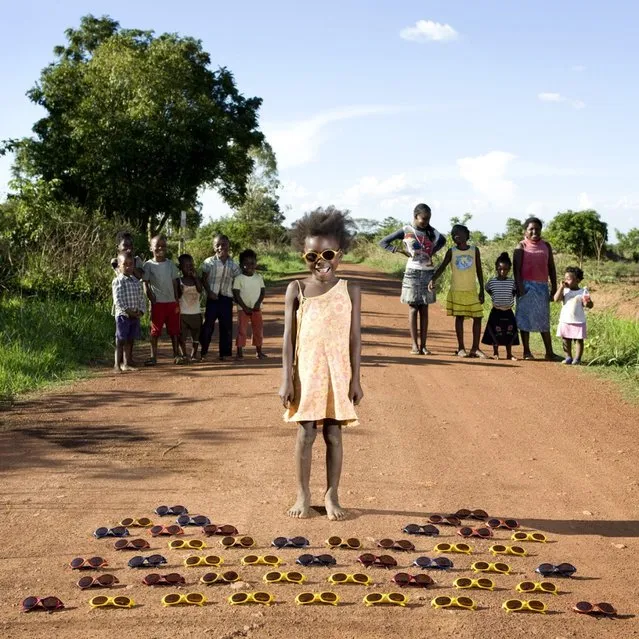
Maudy – Kalulushi, Zambia. Maudy was born in a hut in a small village close to Kalulushi, in Zambia. She grew up playing in the street with the other children in the village, who all attend the same school, where students ages 3 to 10 years old are in the same class. The village has no shops, restaurants or hotels, and just a few children are lucky enough to have toys. Maudy and her friends found a box full of sunglasses on the street, which quickly became their favorite toys. “Toy Stories” project. (Gabriele Galimberti)

Maudy – Kalulushi, Zambia. Maudy was born in a hut in a small village close to Kalulushi, in Zambia. She grew up playing in the street with the other children in the village, who all attend the same school, where students ages 3 to 10 years old are in the same class. The village has no shops, restaurants or hotels, and just a few children are lucky enough to have toys. Maudy and her friends found a box full of sunglasses on the street, which quickly became their favorite toys. “Toy Stories” project. (Photo and caption by Gabriele Galimberti)
Details
05 Dec 2013 07:54:00
Kyla Drumm, 5, waits after receiving the Pfizer-BioNTech coronavirus disease (COVID-19) vaccine in Skippack, Pennsylvania, U.S., November 3, 2021. (Photo by Hannah Beier/Reuters)

Kyla Drumm, 5, waits after receiving the Pfizer-BioNTech coronavirus disease (COVID-19) vaccine in Skippack, Pennsylvania, U.S., November 3, 2021. (Photo by Hannah Beier/Reuters)
Details
09 Nov 2021 07:18:00
Bella Hadid has wardrobe malfunction as she runs with leftovers from lunch with friends at Bar Pitti in New York, United States of America on June 2, 2018. (Photo by Peter Parker/Splash News and Pictures)

American model Bella Hadid has wardrobe malfunction as she runs with leftovers from lunch with friends at Bar Pitti in New York, United States of America on June 2, 2018. (Photo by Peter Parker/Splash News and Pictures)
Details
10 Jun 2018 00:05:00
A participant, riding a horse and dressed as a knight, presents flowers to women during an event marking Valentine's Day in central Moscow, Russia, February 14, 2016. (Photo by Maxim Zmeyev/Reuters)

A participant, riding a horse and dressed as a knight, presents flowers to women during an event marking Valentine's Day in central Moscow, Russia, February 14, 2016. (Photo by Maxim Zmeyev/Reuters)
Details
15 Feb 2016 10:34:00
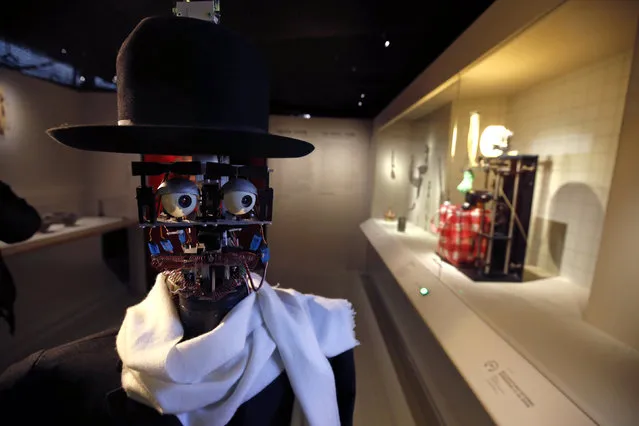
The Berenson robot strolls among visitors during the exhibition “Persona : Oddly Human” at the Quai Branly museum in Paris, France, February 23, 2016. The Berenson robot, developed in France in 2011, is the brainchild of anthropologist Denis Vidal and robotics engineer Philippe Gaussier. Its programming allows it to record reactions of museum visitors to certain pieces of art and then use the data to develop its own unique taste, which allows “Berenson” to judge whether or not it likes a certain work of art within an exhibition. (Photo by Philippe Wojazer/Reuters)

The Berenson robot strolls among visitors during the exhibition “Persona : Oddly Human” at the Quai Branly museum in Paris, France, February 23, 2016. The Berenson robot, developed in France in 2011, is the brainchild of anthropologist Denis Vidal and robotics engineer Philippe Gaussier. Its programming allows it to record reactions of museum visitors to certain pieces of art and then use the data to develop its own unique taste, which allows “Berenson” to judge whether or not it likes a certain work of art within an exhibition. (Photo by Philippe Wojazer/Reuters)
Details
25 Feb 2016 12:26:00
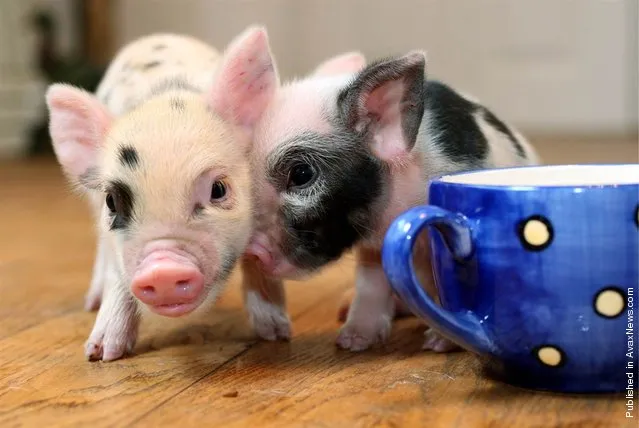
Micro pigs

Micro pigs have become so popular in England that they are almost impossible to get hold of. They are going for as much as $1,1000 apiece. (Photo by Geoff Robinson)
Details
13 Apr 2012 10:29:00
“I think as mothers we are all just trying our best”. – Gisele Bundchen. (Photo by Mads Nissen/AFP Photo)

“I think as mothers we are all just trying our best”. – Gisele Bundchen. (Photo by Mads Nissen/AFP Photo)
Details
31 Mar 2014 09:56:00