Loading...
Done
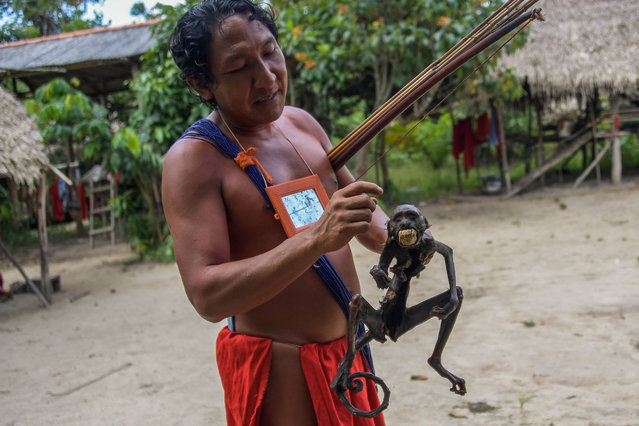
Chieftain Japarupi Waiapi shows a roasted monkey -part of Waiapi's diet, also based in Manioc and fruits- at the reserve in Amapa state in Brazil on October 13, 2017. When Waiapis walks into the Amazon forest surrounding their village, they do not see trees, but a kind of shopping mall providing medicine, food, shelter, tools and weapons  all under the eye of multiple spirits. (Photo by Apu Gomes/AFP Photo)

Chieftain Japarupi Waiapi shows a roasted monkey -part of Waiapi's diet, also based in Manioc and fruits- at the reserve in Amapa state in Brazil on October 13, 2017. When Waiapis walks into the Amazon forest surrounding their village, they do not see trees, but a kind of shopping mall providing medicine, food, shelter, tools and weapons all under the eye of multiple spirits. (Photo by Apu Gomes/AFP Photo)
Details
27 Oct 2017 08:39:00
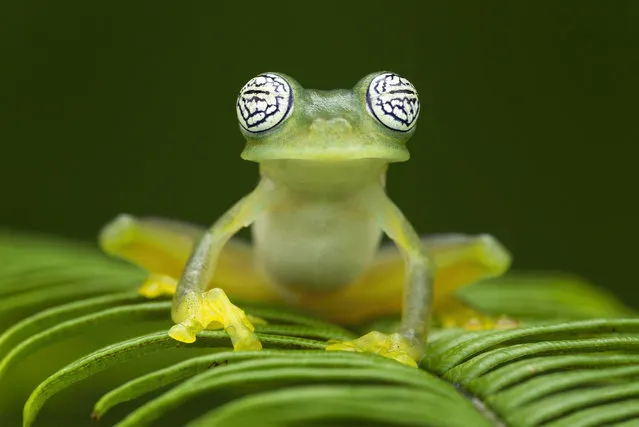
A ghost glass frog in the Chocó rainforest, Ecuador in November 2020. The marbled swirling “hypnotising” eyes are thought to be helpful in attracting a mate. (Photo by David Weiller/WENN)

A ghost glass frog in the Chocó rainforest, Ecuador in November 2020. The marbled swirling “hypnotising” eyes are thought to be helpful in attracting a mate. (Photo by David Weiller/WENN)
Details
19 May 2022 04:36:00
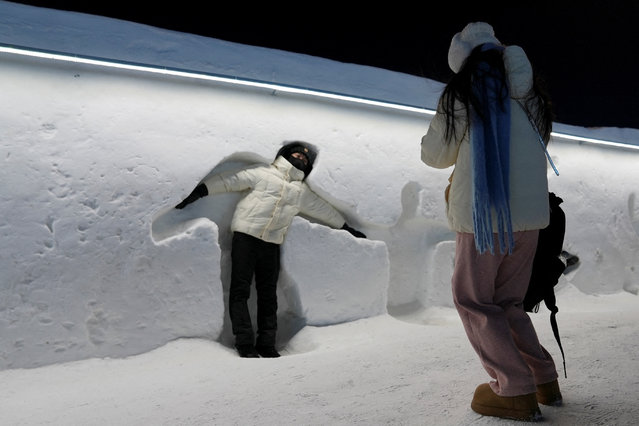
A visitor poses for pictures at the Harbin International Ice and Snow Festival in Harbin, Heilongjiang province, China on January 5, 2025. (Photo by Xiaoyu Yin/Reuters)

A visitor poses for pictures at the Harbin International Ice and Snow Festival in Harbin, Heilongjiang province, China on January 5, 2025. (Photo by Xiaoyu Yin/Reuters)
Details
13 Jan 2025 02:40:00
Daughter being told off by her mother. (Photo by Peter Dazeley/Getty Images)

Daughter being told off by her mother. (Photo by Peter Dazeley/Getty Images)
Details
07 Dec 2016 12:27:00
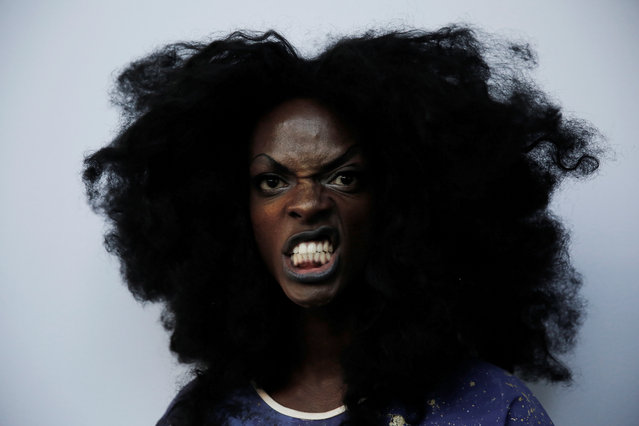
A visitor poses for a picture during Sao Paulo Fashion Week in Sao Paulo, Brazil, March 16, 2017. (Photo by Nacho Doce/Reuters)

A visitor poses for a picture during Sao Paulo Fashion Week in Sao Paulo, Brazil, March 16, 2017. (Photo by Nacho Doce/Reuters)
Details
06 Jan 2018 09:10:00


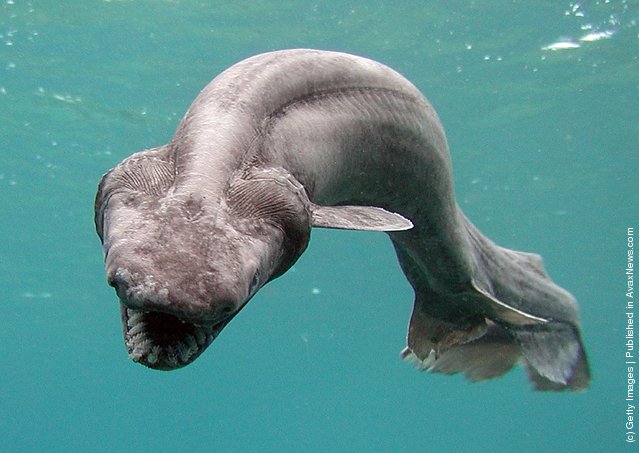
“The frilled shark (Chlamydoselachus anguineus) is one of two extant species of shark in the family Chlamydoselachidae, with a wide but patchy distribution in the Atlantic and Pacific Oceans. This uncommon species is found over the outer continental shelf and upper continental slope, generally near the bottom though there is evidence of substantial upward movements. It has been caught as deep as 1,570 m (5,150 ft), whereas in Suruga Bay, Japan it is most common at depths of 50–200 m (160–660 ft). Exhibiting several “primitive” features, the frilled shark has often been termed a «living fossil»”. – Wikipedia

Photo: A 1.6 meter long Frill shark swims in a tank after being found by a fisherman at a bay in Numazu, on January 21, 2007 in Numazu, Japan. The frill shark, also known as a Frilled shark usually lives in waters of a depth of 600 meters and so it is very rare that this shark is found alive at sea-level. It's body shape and the number of gill are similar to fossils of sharks which lived 350,000,000 years ago. (Photo by Awashima Marine Park/Getty Images)

Details
05 May 2011 10:01:00
White House Communications Director and presidential advisor Hope Hicks arrives at the U.S. Capitol Visitors Center February 27, 2018 in Washington, DC. Hicks is scheduled to testify behind closed doors to the House Intelligence Committee in its ongoing investigation into Russia's interference in the 2016 election. (Photo by Chip Somodevilla/Getty Images)

White House Communications Director and presidential advisor Hope Hicks arrives at the U.S. Capitol Visitors Center February 27, 2018 in Washington, DC. Hicks is scheduled to testify behind closed doors to the House Intelligence Committee in its ongoing investigation into Russia's interference in the 2016 election. (Photo by Chip Somodevilla/Getty Images)
Details
02 Mar 2018 07:15:00
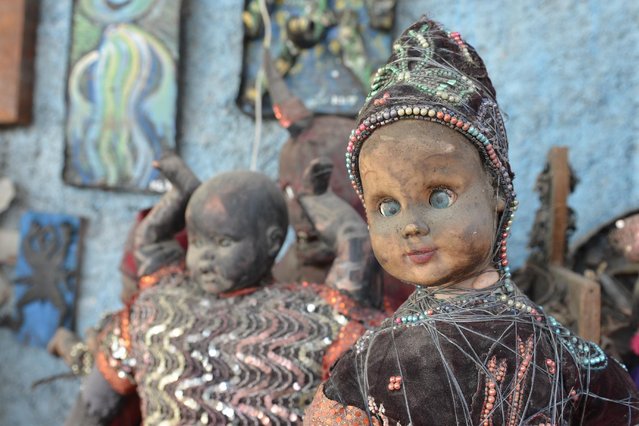
In this April 2, 2016 photo, dusty sculptures made of cast-off baby dolls sit in an open-air museum and art workshop off a trash-strewn street cutting through some of the poorest neighborhoods in Port-au-Prince, Haiti. They were created by Haitian artists called Atis Rezistans who have become celebrated in the international art world by creating sculptures out of scrapped car parts, old wood, discarded toys and even human skulls found scattered outside crumbling mausoleums. (Photo by David McFadden/AP Photo)

In this April 2, 2016 photo, dusty sculptures made of cast-off baby dolls sit in an open-air museum and art workshop off a trash-strewn street cutting through some of the poorest neighborhoods in Port-au-Prince, Haiti. They were created by Haitian artists called Atis Rezistans who have become celebrated in the international art world by creating sculptures out of scrapped car parts, old wood, discarded toys and even human skulls found scattered outside crumbling mausoleums. (Photo by David McFadden/AP Photo)
Details
12 Apr 2016 11:10:00