A model presents a creation from the Dolce & Gabbana Fall/Winter 2024 collection during Fashion Week in Milan, Italy, on February 24, 2024. (Photo by Claudia Greco/Reuters)
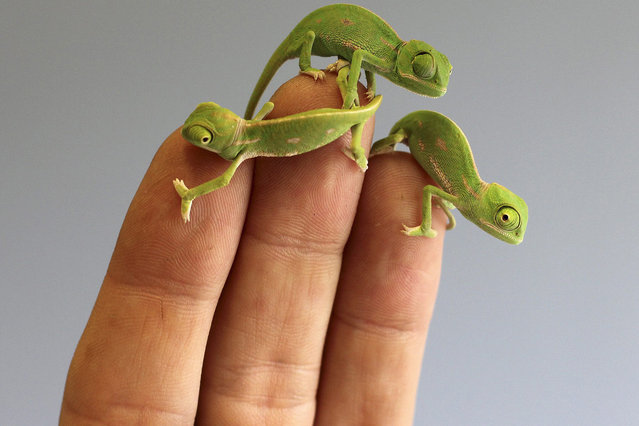
A handout image released by the Taronga Zoo shows Veiled Chameleon hatchlings at Taronga Zoo in Sydney, Australia, 11 March 2015. Taronga has welcomed more than 20 baby chameleons, with the last of three clutches of eggs hatching this week. Veiled Chameleons, or Chamaeleo calyptratus, are native to Saudi Arabia and Yemen and can live up to five years. (Photo by EPA/Taronga Zoo)
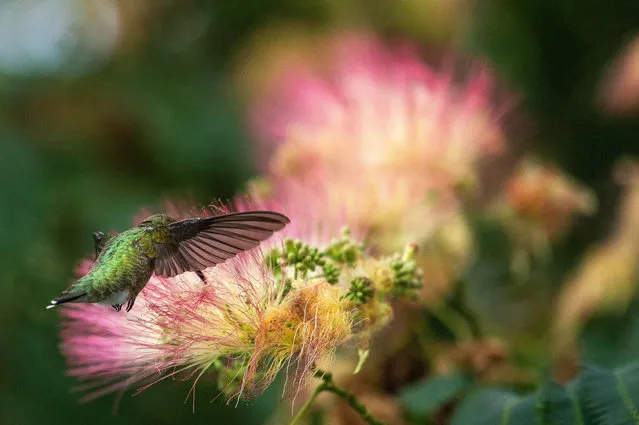
A hummingbird feeds on the nectar from a Mimosa tree in Saugus, Massachusetts on July 30, 2020. (Photo by Joseph Prezioso/ZUMA Wire/Rex Features/Shutterstock)
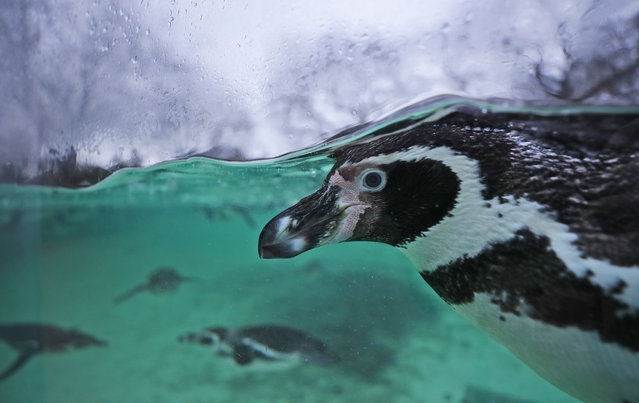
A Humboldt penguin swims in a pool during the annual stock take at ZSL London Zoo in London, Thursday, January 2, 2020. Caring for more than 500 different species, ZSL London Zoo's keepers face the challenging task of tallying up every animal large and small, every mammal, bird, reptile, fish and invertebrate at the Zoo. (Photo by Frank Augstein/AP Photo)
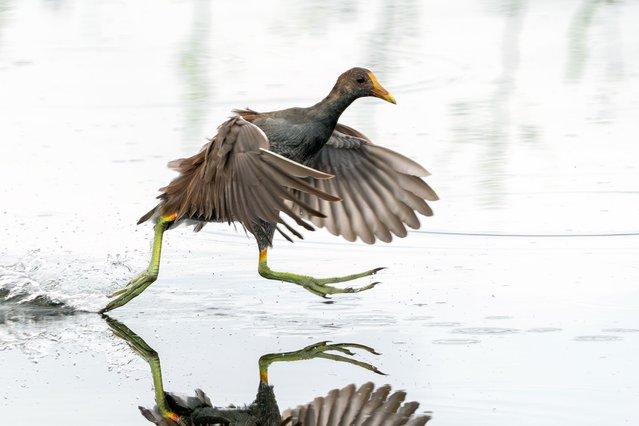
A common gallinule runs across the water to escape a nearby alligator at Green Cay Nature Center in Boynton Beach, Florida on September 4, 2025. Unlike most waterbirds, gallinules have long toes that allow them to walk on floating vegetation. The species is known for its loud, cackling calls that often echo through wetlands. (Photo by Ronen Tivony/NurPhoto/Rex Features/Shutterstock)
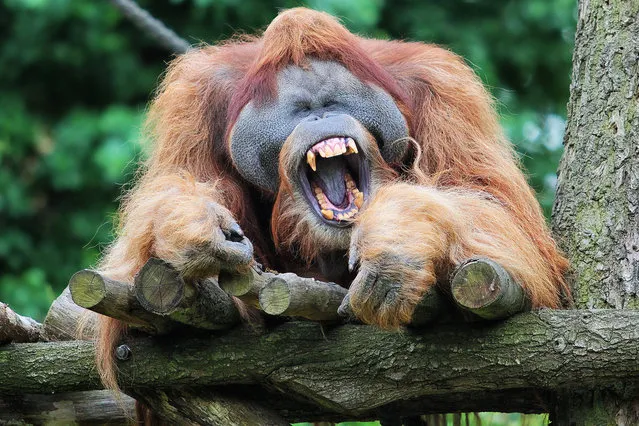
This huge male orangutan is having a right old laugh as he squints his eyes and shows his huge teeth. The orangutan, called Bimbo, was relaxing on a platform around 5m high in his enclosure when he broke out into a laugh. But his happy smile soon disappeared when another orangutan came over to see what was going on. Bimbo – the only male in the group of five apes at Leipzig Zoo, in Germany - appears to be laughing in much the same way as a human would. (Photo by Martina Radtke/Solent News)
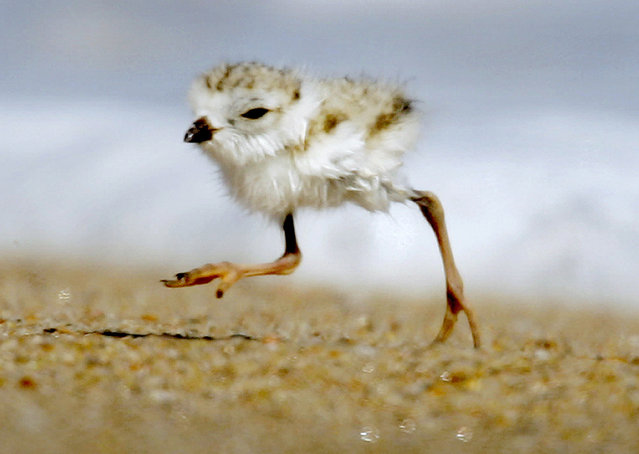
In this July 12, 2007 file photo, a two-day-old piping plover runs along a beach in the Quonochontaug Conservation Area in Westerly, R.I. (Photo by Steven Senne/AP Photo)