Loading...
Done


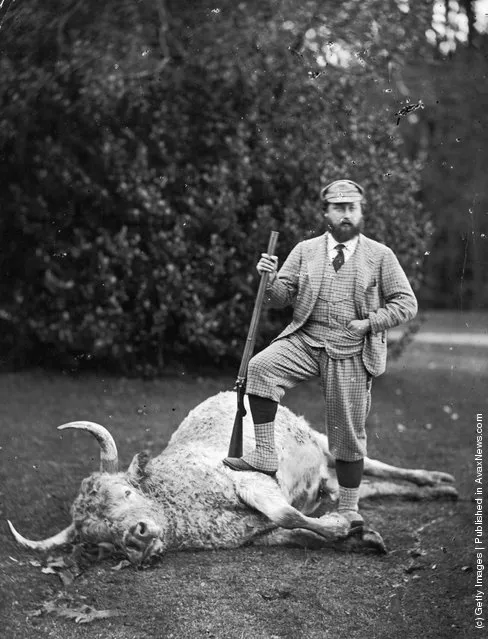
Edward, Prince of Wales (1840–1910), later King Edward VII, stands over the carcass of a wild Chillingham bull, shot by himself during a visit to Chillingham Castle, Northumberland, circa 1879. (Photo by Hulton Archive/Getty Images)
Details
05 Apr 2011 09:25:00
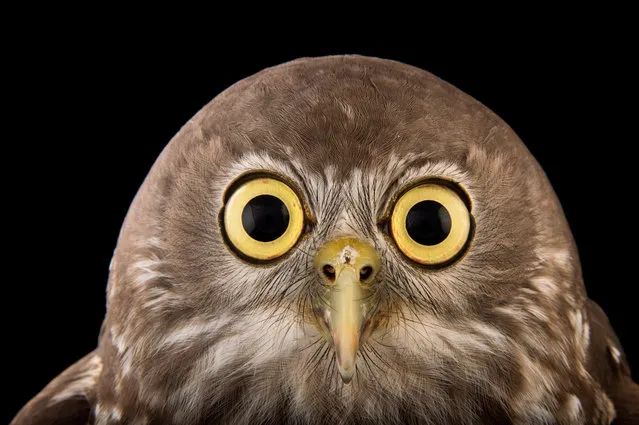
The National Geographic Photo Ark is a travelling exhibition of photographer Joel Sartore’s quest to create a photo archive of biodiversity around the world. So far, Sartore has captured studio portraits of more than 6,000 species – a number that he hopes to double. On 1 July, the ark will open at Melbourne zoo – the first time it has been exhibited in the southern hemisphere. More than 50 portraits will be on display, including many of Australian endangered animals being protected by programs at the zoo itself. These captions have been edited from text supplied by Melbourne zoo. Here: Barking owl. So-named because its call sounds like a barking dog, these birds are native to Australia, Indonesia and Papua New Guinea. In Victoria they are listed as an endangered species, and in 2003 there were estimated to be fewer than 50 breeding pairs. The main threat to the species in Victoria is loss of habitat, especially large trees with hollows in which they can nest and on which many of their prey depend. Apart from a bark, they may utter a chilling scream when they feel threatened. (Photo by Joel Sartore/National Geographic Photo Ark/The Guardian)

The National Geographic Photo Ark is a travelling exhibition of photographer Joel Sartore’s quest to create a photo archive of biodiversity around the world. So far, Sartore has captured studio portraits of more than 6,000 species – a number that he hopes to double. On 1 July, the ark will open at Melbourne zoo – the first time it has been exhibited in the southern hemisphere. More than 50 portraits will be on display, including many of Australian endangered animals being protected by programs at the zoo itself. These captions have been edited from text supplied by Melbourne zoo. Here: Barking owl. (Photo by Joel Sartore/National Geographic Photo Ark/The Guardian)
Details
01 Jul 2017 07:45:00
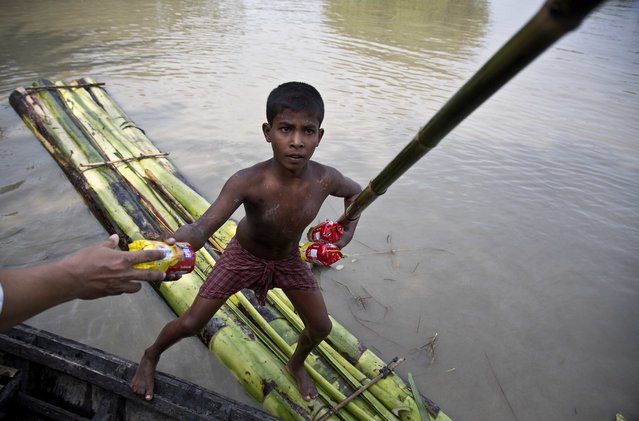
A flood affected boy on a makeshift banana raft collects biscuit packets distributed by a government official from a boat in Pokoria village, east of Gauhati, north eastern Assam state, India, Monday, August 14, 2017. Heavy monsoon rains have unleashed landslides and floods that killed dozens of people in recent days and displaced millions more across northern India, southern Nepal and Bangladesh. (Photo by Anupam Nath/AP Photo)

A flood affected boy on a makeshift banana raft collects biscuit packets distributed by a government official from a boat in Pokoria village, east of Gauhati, north eastern Assam state, India, Monday, August 14, 2017. Heavy monsoon rains have unleashed landslides and floods that killed dozens of people in recent days and displaced millions more across northern India, southern Nepal and Bangladesh. (Photo by Anupam Nath/AP Photo)
Details
22 Aug 2017 07:48:00
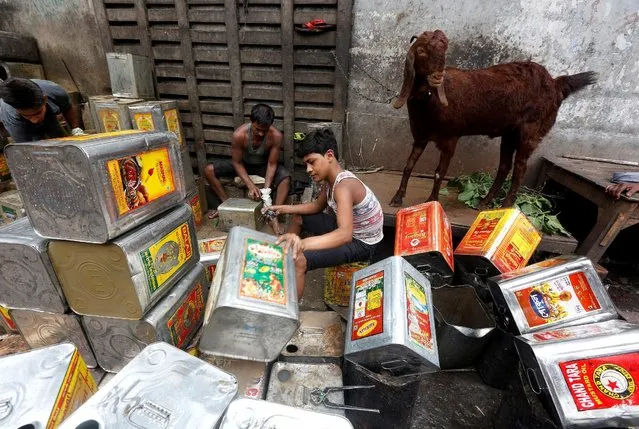
Workers clean empty cooking oil containers at a roadside recycling workshop in Kolkata, India, July 13, 2016. (Photo by Rupak De Chowdhuri/Reuters)

Workers clean empty cooking oil containers at a roadside recycling workshop in Kolkata, India, July 13, 2016. (Photo by Rupak De Chowdhuri/Reuters)
Details
18 Jul 2016 12:16:00
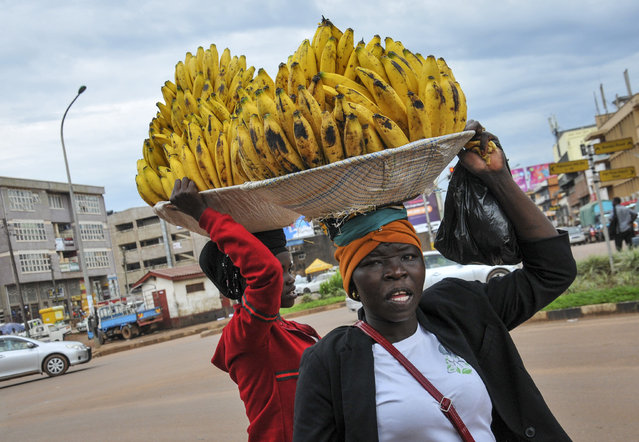
Women sell bananas in the street, after traders in markets were prohibited from selling any non-food items in an attempt to halt the spread of the new coronavirus, in Kampala, Uganda Thursday, March 26, 2020. (Photo by Ronald Kabuubi/AP Photo)

Women sell bananas in the street, after traders in markets were prohibited from selling any non-food items in an attempt to halt the spread of the new coronavirus, in Kampala, Uganda Thursday, March 26, 2020. (Photo by Ronald Kabuubi/AP Photo)
Details
14 Apr 2020 00:01:00
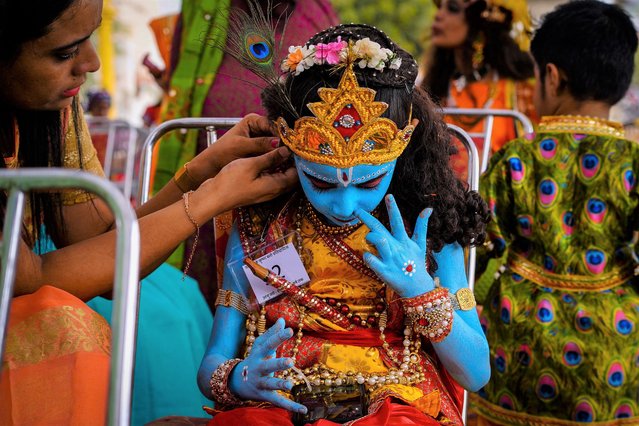
A child dressed as Hindu god Krishna watches a mobile phone as a woman gives finishing touches to his costume on the occasion of “Janmashtami” festival marking the birth of Krishna in Ajmer on August 30, 2021. (Photo by Himanshu Sharma/AFP Photo)

A child dressed as Hindu god Krishna watches a mobile phone as a woman gives finishing touches to his costume on the occasion of “Janmashtami” festival marking the birth of Krishna in Ajmer on August 30, 2021. (Photo by Himanshu Sharma/AFP Photo)
Details
07 Sep 2021 08:31:00


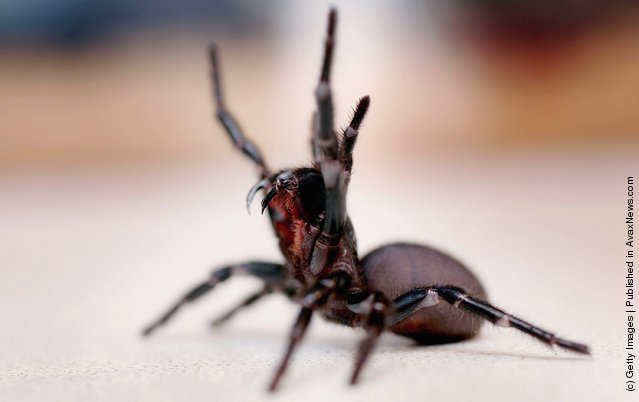
A Funnel Web spider is pictured at the Australian Reptile Park January 23, 2006 in Sydney, Australia. The Funnel Web is one of Australia's deadliest animals, with a venom that is packed with at least 40 different toxic proteins. A bite from a Funnel Web causes massive electrical over-load in the body's nervous system. Finally, fatalities occur from either heart attack or a pulmonary oedema, where the capillaries around the lungs begin to leak fluid and the patient effectively drowns. Death can come as quickly as two hours after a bite if no medical treatment is sought. Due to advances in anti-venom, there has been no death from a Funnel Web bite in Australia since 1980. Australia is home to some of the most deadly and poisonous animals on earth. (Photo by Ian Waldie/Getty Images)
Details
25 Apr 2011 07:49:00
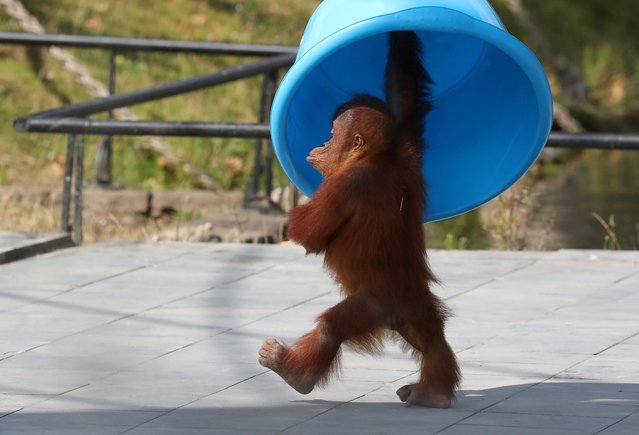
Three-year-old orangutan from Sumatra, Berani, is pictured at the Pairi Daiza wildlife park, zoo and botanical garden in Brugelette, Belgium on August 2, 2019. (Photo by Yves Herman/Reuters)

Three-year-old orangutan from Sumatra, Berani, is pictured at the Pairi Daiza wildlife park, zoo and botanical garden in Brugelette, Belgium on August 2, 2019. (Photo by Yves Herman/Reuters)
Details
17 Jan 2020 00:03:00