Loading...
Done
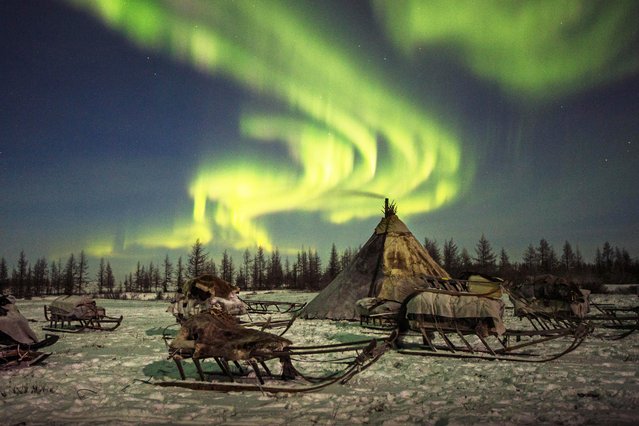
An empty camp is shown beneath a colourful sky in Siberia, December 2016. (Photo by Timothy Allen/Barcroft Productions)

A British photographer has captured life at the “edge of the world”. Timothy Allen, best known for his work on BBC's Human Planet, trekked through the freezing Siberian wilderness for 16 days as he joined part of an 800km migration of reindeer in the Yamal-Nenets region – a name that roughly translates to “edge of the world”. The stunning pictures feature the nomadic Nenets tribe, who drink blood to survive in -45°C temperatures. Timothy's epic journey, which will be revealed in an eight-minute documentary on Animal Planet USA, saw him travel across the bleak terrain of the frozen Ob River with the Nenets people in December last year. Here: An empty camp is shown beneath a colourful sky in Siberia, December 2016. (Photo by Timothy Allen/Barcroft Productions)
Details
19 Sep 2017 07:48:00
Woman on phone in hotel room. (Photo by DreamPictures/Getty Images)

Woman on phone in hotel room. (Photo by DreamPictures/Getty Images)
Details
21 Nov 2016 10:53:00
Jessica, Milford, New Hampshire: “Sometimes life throws you in all sorts of directions. The most important part about life is to remember you are exactly where you need to be”. (Photo by Barbara Peacock/Recipient of the Getty Images Grant for Editorial Photography 2017)

Barbara Peacock is one of five recipients of the Getty Images annual Grants for Editorial Photography programme, which gives photojournalists an award of $10,000 as well as the agency’s support in pursuing projects of their choosing. American Bedroom is an ongoing series of portraits in which she explores the complexities and idiosyncrasies of contemporary American life. Here: Jessica, Milford, New Hampshire: “Sometimes life throws you in all sorts of directions. The most important part about life is to remember you are exactly where you need to be”. (Photo by Barbara Peacock/Recipient of the Getty Images Grant for Editorial Photography 2017)
Details
19 Sep 2017 07:44:00
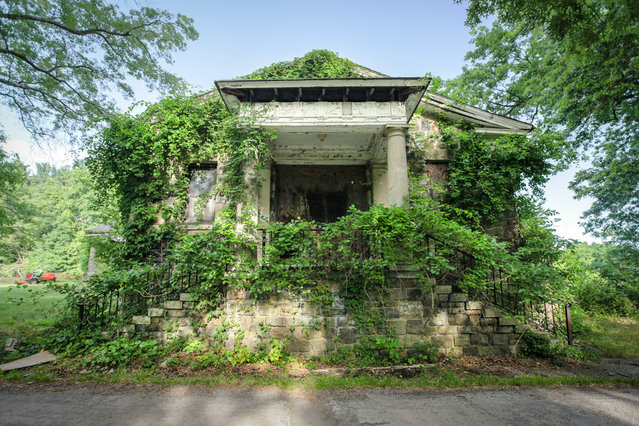
Letchworth Village is located just an hour's drive from NYC in Thiells, NY.  It was founded in 1912 to house the city's developmentally disabled as a ”state institution for the epileptic and feeble-minded”. (Photo by Will Ellis)

From Manhattan and Brooklyn's trendiest neighborhoods to the far-flung edges of theouter boroughs, Will Ellis has spent the last three years photographing and researching the lost and lonely corners of the United States' most populous city. His photo book Abandoned NYC is packed with 150 color images of sixteen of New York's most beautiful and mysterious abandoned spaces, paired with detailed essays on the fascinating history of these forgotten sites. Here: Letchworth Village is located just an hour's drive from NYC in Thiells, NY. It was founded in 1912 to house the city's developmentally disabled as a ”state institution for the epileptic and feeble-minded”. (Photo by Will Ellis)
Details
31 Mar 2015 12:31:00
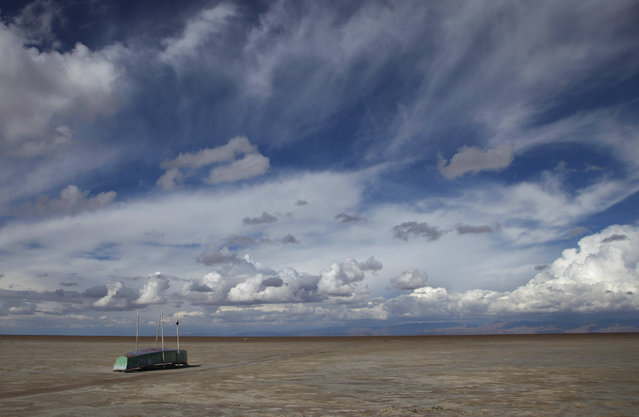
In this January 12, 2016 photo, an abandoned boat lies on the dried up lake bed of Lake Poopo, on the outskirts of Untavi, Bolivia. Drought caused by the recurrent El Nino meteorological phenomenon is considered the main driver of the lake's demise. Along with glacial melting, authorities say another factor is the diversion of water from Poopo's tributaries, mostly for mining but also for agriculture. (Photo by Juan Karita/AP Photo)

In this January 12, 2016 photo, an abandoned boat lies on the dried up lake bed of Lake Poopo, on the outskirts of Untavi, Bolivia. Drought caused by the recurrent El Nino meteorological phenomenon is considered the main driver of the lake's demise. Along with glacial melting, authorities say another factor is the diversion of water from Poopo's tributaries, mostly for mining but also for agriculture. (Photo by Juan Karita/AP Photo)
Details
21 Jan 2016 12:33:00
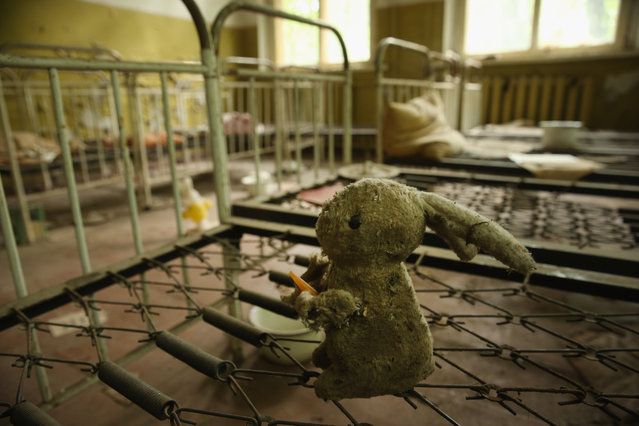
A stuffed rabbit doll sits among children's beds standing in the abandoned kindergarten of Kopachi village located inside the Chernobyl Exclusion Zone on September 29, 2015 near Chornobyl, Ukraine. Kopachi, a village that before 1986 had a population of 1,114, lies only a few kilometers south of the former Chernobyl nuclear power plant, where in 1986 workers inadvertantly caused reactor number four to explode, creating the worst nuclear accident in history. Radiation fallout was so high that authorities bulldozed and buried all of Kopachi's structures except for the kindergarten. (Photo by Sean Gallup/Getty Images)

A stuffed rabbit doll sits among children's beds standing in the abandoned kindergarten of Kopachi village located inside the Chernobyl Exclusion Zone on September 29, 2015 near Chornobyl, Ukraine. Kopachi, a village that before 1986 had a population of 1,114, lies only a few kilometers south of the former Chernobyl nuclear power plant, where in 1986 workers inadvertantly caused reactor number four to explode, creating the worst nuclear accident in history. (Photo by Sean Gallup/Getty Images)
Details
27 Apr 2016 09:28:00
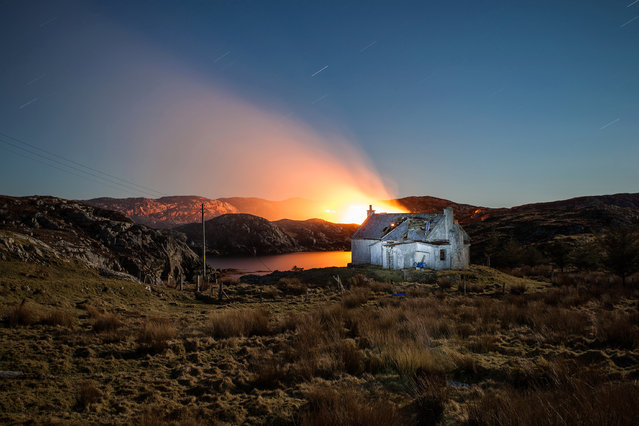
“Peat Fire”. Taken in March 2013 on the east coast of Harris. The fire is from muir-burning, when farmers burn off grasses and heather to improve grazing for their sheep. (Photo by John Maher/The Guardian)

Photographer John Maher, once the drummer with punk bank Buzzcocks, travelled to the Outer Hebrides to photograph abandoned crofters’ cottages – many of which, like this one, have seemingly been untouched since. Here: “Peat Fire”. Taken in March 2013 on the east coast of Harris. The fire is from muir-burning, when farmers burn off grasses and heather to improve grazing for their sheep. (Photo by John Maher/The Guardian)
Details
19 Aug 2016 11:39:00
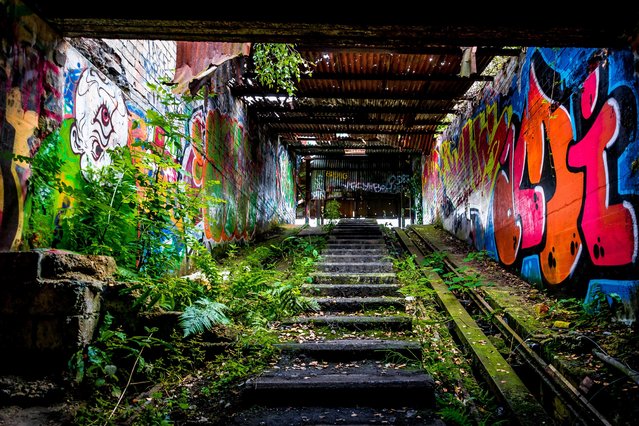
A railway siding in Wiltshire, UK where ammunition was transferred by tunnel to an underground storage facility. (Photo by MediaDrumWorld.com)

The series of shots show the bare steel infrastructure of the Bushfield army training camp near Winchester which was in operation during World War Two and was used to train Royal Green Jackets recruits in the sixties. The spectacular images were taken by an urban explorer who wished to remain anonymous. Here: A railway siding in Wiltshire, UK where ammunition was transferred by tunnel to an underground storage facility. (Photo by MediaDrumWorld.com)
Details
11 Jan 2017 14:18:00