Loading...
Done
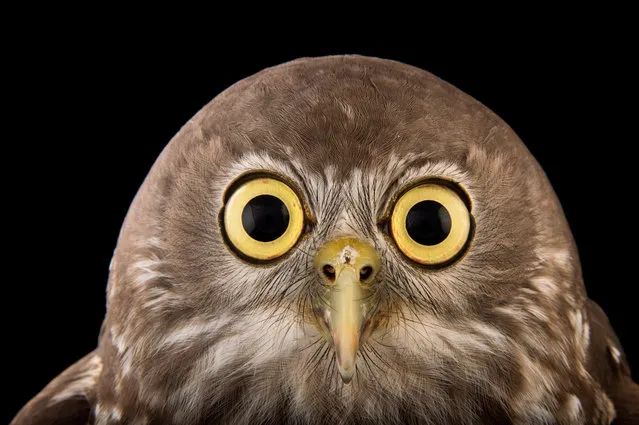
The National Geographic Photo Ark is a travelling exhibition of photographer Joel Sartore’s quest to create a photo archive of biodiversity around the world. So far, Sartore has captured studio portraits of more than 6,000 species – a number that he hopes to double. On 1 July, the ark will open at Melbourne zoo – the first time it has been exhibited in the southern hemisphere. More than 50 portraits will be on display, including many of Australian endangered animals being protected by programs at the zoo itself. These captions have been edited from text supplied by Melbourne zoo. Here: Barking owl. So-named because its call sounds like a barking dog, these birds are native to Australia, Indonesia and Papua New Guinea. In Victoria they are listed as an endangered species, and in 2003 there were estimated to be fewer than 50 breeding pairs. The main threat to the species in Victoria is loss of habitat, especially large trees with hollows in which they can nest and on which many of their prey depend. Apart from a bark, they may utter a chilling scream when they feel threatened. (Photo by Joel Sartore/National Geographic Photo Ark/The Guardian)

The National Geographic Photo Ark is a travelling exhibition of photographer Joel Sartore’s quest to create a photo archive of biodiversity around the world. So far, Sartore has captured studio portraits of more than 6,000 species – a number that he hopes to double. On 1 July, the ark will open at Melbourne zoo – the first time it has been exhibited in the southern hemisphere. More than 50 portraits will be on display, including many of Australian endangered animals being protected by programs at the zoo itself. These captions have been edited from text supplied by Melbourne zoo. Here: Barking owl. (Photo by Joel Sartore/National Geographic Photo Ark/The Guardian)
Details
01 Jul 2017 07:45:00
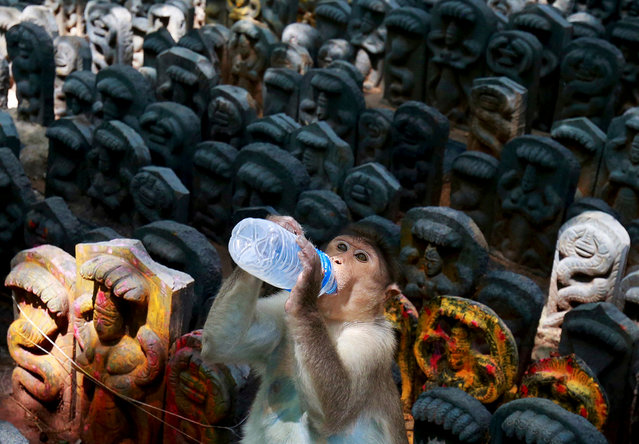
A bonnet macaque sits on consecrated idols of snakes as it drinks milk offered by a devotee during the Hindu festival of Nag Panchami, which is celebrated by worshipping snakes to honour the serpent god, inside a temple on the outskirts of Bengaluru, India, July 27, 2017. (Photo by Abhishek N. Chinnappa/Reuters)

A bonnet macaque sits on consecrated idols of snakes as it drinks milk offered by a devotee during the Hindu festival of Nag Panchami, which is celebrated by worshipping snakes to honour the serpent god, inside a temple on the outskirts of Bengaluru, India, July 27, 2017. (Photo by Abhishek N. Chinnappa/Reuters)
Details
28 Jul 2017 10:02:00
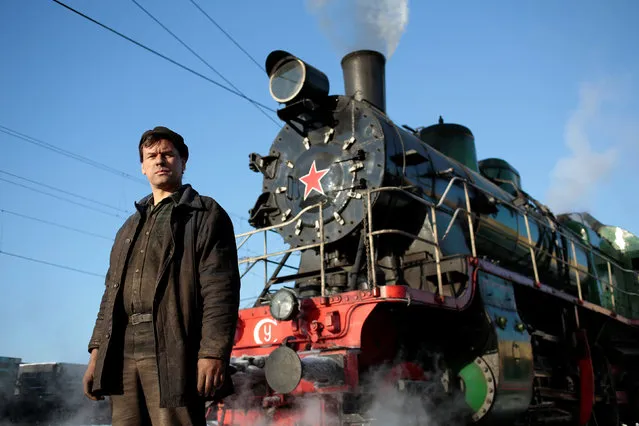
Alexei Gruk, 45, mechanic and supporter of presidential candidate Pavel Grudinin, poses for a picture in St. Petersburg, Russia, January 31, 2018. “The most important thing for me is that our foreign policy stays the same”, said Gruk. “To hell with the sanctions… So what if they don’t bring foreign stuff here anymore? As if that means we have to give up. I don't care”. (Photo by Anton Vaganov/Reuters)

Most Russians intending to vote for Vladimir Putin in Sunday's election say stability is at the root of their faith in their candidate – though many young voters believe it's time for a change of leader. Putin, 65, is expected to win a fourth term in office with 69 percent of the vote, according to the latest survey by a state-run pollster. Reuters correspondents and photographers who travelled around the country talking to voters ahead of the March 18 election found nothing to contradict expectation of an emphatic Putin victory. (Photo by Anton Vaganov/Reuters)
Details
15 Mar 2018 00:01:00
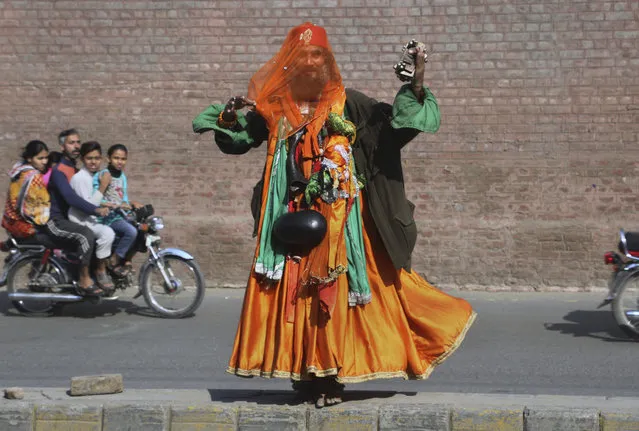
A Muslim dervish sings a traditional Sufi song near a rally for the Mawlid al-Nabi holiday, marking the birthday of Islam's prophet, Muhammad, in Lahore, Pakistan, Sunday, November 10, 2019. To mark the holiday, thousands take part in religious processions, ceremonies and distribute free meals to the poor. (Photo by K.M. Chaudary/AP Photo)

A Muslim dervish sings a traditional Sufi song near a rally for the Mawlid al-Nabi holiday, marking the birthday of Islam's prophet, Muhammad, in Lahore, Pakistan, Sunday, November 10, 2019. To mark the holiday, thousands take part in religious processions, ceremonies and distribute free meals to the poor. (Photo by K.M. Chaudary/AP Photo)
Details
13 Dec 2019 00:01:00
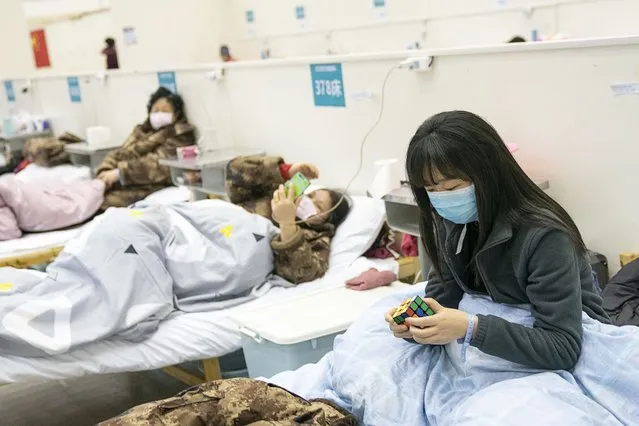
A patient solves a rubik's cube at a temporary hospital converted from “Wuhan Livingroom” in central China's Hubei Province on February 10, 2020. In face of the outbreak of the novel coronavirus pneumonia epidemic, Wuhan authorities have transformed public venues such as exhibition centers and gymnasiums into temporary hospitals. The hospitals have a large capacity of treating patients with mild symptoms and play an important role in isolating the source of infection and cutting off the routes of infection during epidemic prevention. The first batch of patients was hospitalized on Feb. 5. (Photo by Chine Nouvelle/SIPA Press/Rex Features/Shutterstock)

A patient solves a rubik's cube at a temporary hospital converted from “Wuhan Livingroom” in central China's Hubei Province on February 10, 2020. In face of the outbreak of the novel coronavirus pneumonia epidemic, Wuhan authorities have transformed public venues such as exhibition centers and gymnasiums into temporary hospitals. The hospitals have a large capacity of treating patients with mild symptoms and play an important role in isolating the source of infection and cutting off the routes of infection during epidemic prevention. The first batch of patients was hospitalized on Feb. 5. (Photo by Chine Nouvelle/SIPA Press/Rex Features/Shutterstock)
Details
17 Feb 2020 00:07:00
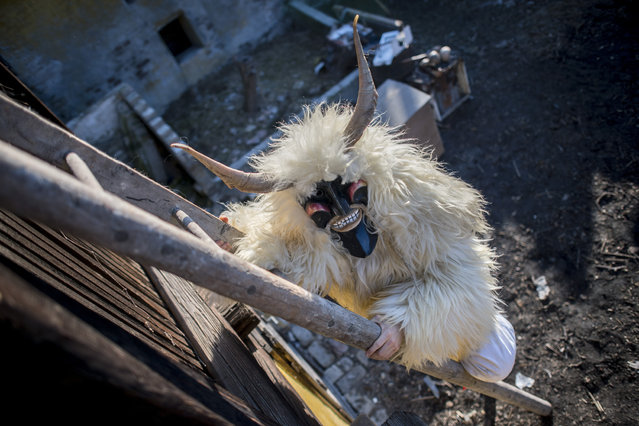
A man wears a busho mask and a costume made of sheep pelt while climbing up a ladder outside a barn in Mohacs, Hungary, 20 February 2020, on the first day of carnival. The traditional Busho carnival, which marks the end of winter, dates back to the 16th century. According to local legend, members of an ethnic South Slavic group living in Mohacs at the time dressed up in similar costumes and wore wooden masks to scare away Ottoman invaders, who mistook them for demons. (Photo by Tamas Soki/EPA/EFE)

A man wears a busho mask and a costume made of sheep pelt while climbing up a ladder outside a barn in Mohacs, Hungary, 20 February 2020, on the first day of carnival. The traditional Busho carnival, which marks the end of winter, dates back to the 16th century. According to local legend, members of an ethnic South Slavic group living in Mohacs at the time dressed up in similar costumes and wore wooden masks to scare away Ottoman invaders, who mistook them for demons. (Photo by Tamas Soki/EPA/EFE)
Details
23 Feb 2020 00:07:00
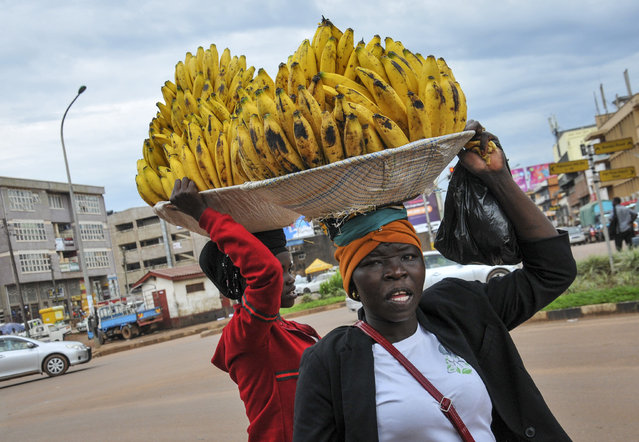
Women sell bananas in the street, after traders in markets were prohibited from selling any non-food items in an attempt to halt the spread of the new coronavirus, in Kampala, Uganda Thursday, March 26, 2020. (Photo by Ronald Kabuubi/AP Photo)

Women sell bananas in the street, after traders in markets were prohibited from selling any non-food items in an attempt to halt the spread of the new coronavirus, in Kampala, Uganda Thursday, March 26, 2020. (Photo by Ronald Kabuubi/AP Photo)
Details
14 Apr 2020 00:01:00
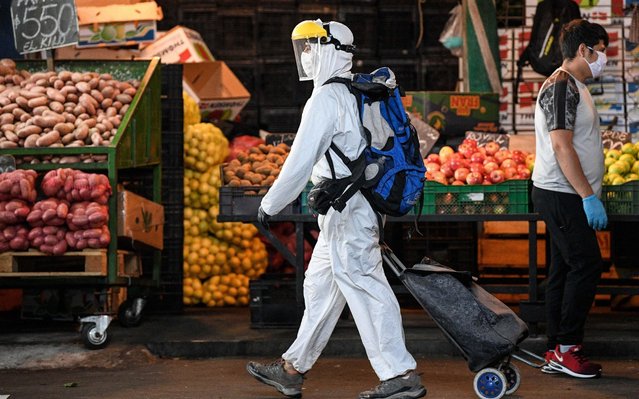
A citizen wearing protective suit shops at a market in Santiago, Chile, April 16, 2020 Chile has taken stringent measures to contain the virus, including imposing a night time curfew, suspending classes, closing non-essential businesses, and mandating the use of face masks on all public transit. (Photo by Jorge Villegas/Xinhua News Agency)

A citizen wearing protective suit shops at a market in Santiago, Chile, April 16, 2020 Chile has taken stringent measures to contain the virus, including imposing a night time curfew, suspending classes, closing non-essential businesses, and mandating the use of face masks on all public transit. (Photo by Jorge Villegas/Xinhua News Agency)
Details
20 Apr 2020 00:07:00