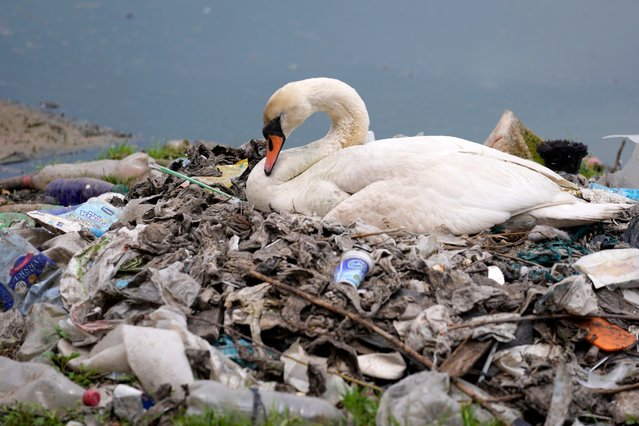
A swan sits on her eggs on nest made of rubbish found in the Danube river in Belgrade, Serbia on Monday, May 10, 2022. (Photo by Darko Vojinovic/AP Photo)
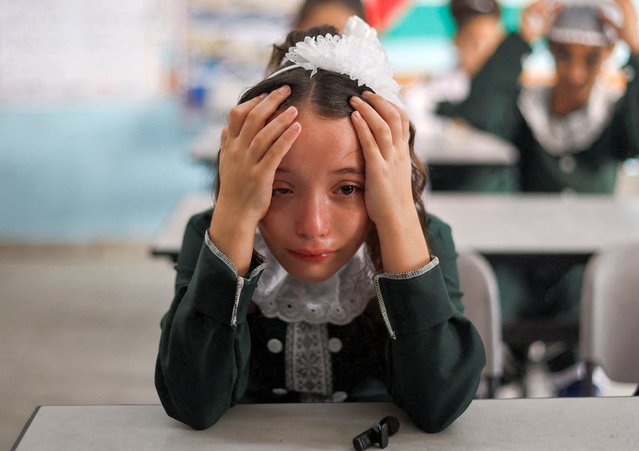
A classmate of Palestinian student Lian Al Shaer, 10, who was killed in recent Israel-Gaza fighting, reacts to Al Shaer's picture as a new school year begins, in Khan Younis in the southern Gaza Strip on August 29, 2022. (Photo by Ibraheem Abu Mustafa/Reuters)
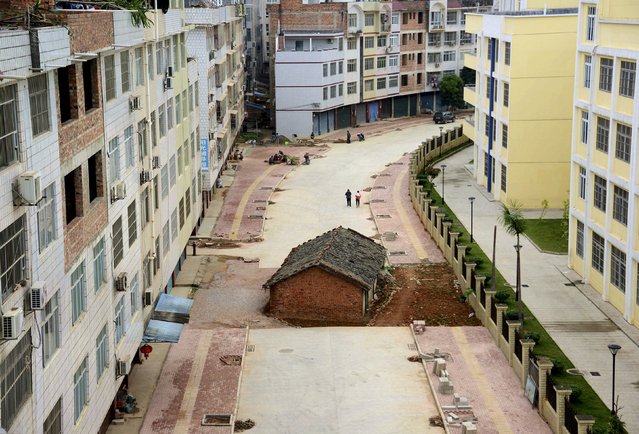
A “nail house”, the last building in the area, sits in the middle of a road under construction in Nanning, Guangxi Zhuang Autonomous Region April 10, 2015. According to local media, the owner of the house didn't reach an agreement with the local authority about compensation of the demolition. (Photo by Reuters/Stringer)
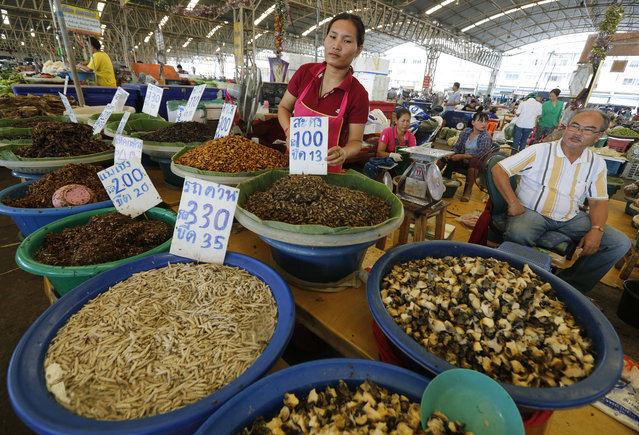
Thai vendors stand next to edible insects for sale at Talad Thai market in Pathum Thani province on the outskirts of Bangkok, Thailand, 15 July 2013. Insects have long been on the menu in Thailand, but academics and the United Nation's Food and Agriculture Organization (FAO) officials are hoping they will become a more common global source of protein and nutrients to meet the need for growing world food requirements in the future. (Photo by Narong Sangnak/EPA)
The zombies, cowgirls, and witches were out in force Saturday night on Clematis Street as thousands of people came to Moonfest to celebrate Halloween. They came from Broward County, Boynton Beach, Wellington, Port St. Lucie, and as far away as Germany and Sweden. Photo: Joe Smith, 60, Boca Raton. (Photo by Thomas Cordy/The Palm Beach Post)
Beda Haemmerli drives his 1936 Ford Indy race car (front) through a steep turn during the Indianapolis in Oerlikon race demonstration at the Offene Rennbahn cycling track in Zurich's Oerlikon suburb, Switzerland July 24, 2018. (Photo by Arnd Wiegmann/Reuters)
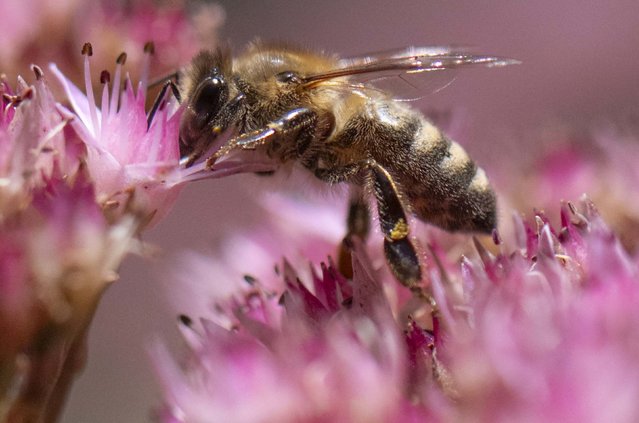
A bee searches for nectar on a flower in Frankfurt am Main, Germany, on Friday, September 19, 2025. (Photo by Boris Roessler/dpa/picture alliance/Getty Images)
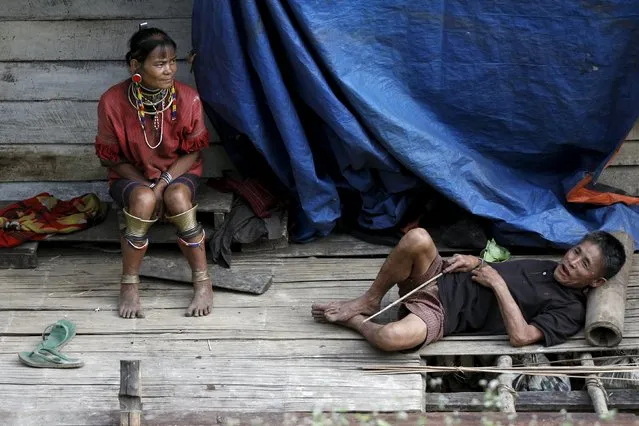
An ethnic Kayaw couple Mu Htoo and her husband Htaw Eili rest at their home at Htaykho village in the Kayah state, Myanmar September 12, 2015. With about 30,000 members, the Kayaw are one of the smallest ethnic minorities among Myanmar's 135 groups. Their village has for decades been off-limits, as armed rebels fought the military before a recent ceasefire stopped the bloody conflict here. The rebels in the area have put down their guns and taken to the hills to grow rice and corn, but slash-and-burn cultivation methods mean they struggle to find new places to farm. (Photo by Soe Zeya Tun/Reuters)