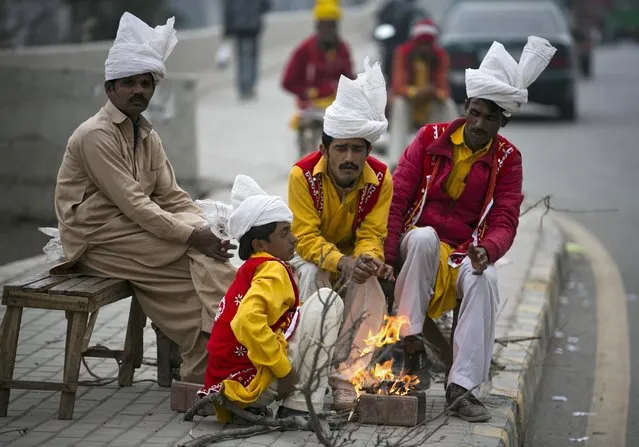
Pakistani street performers sit around fire waiting for customers on a chilly evening in Rawalpindi, Pakistan, Wednesday, February 10, 2016. (Photo by B.K. Bangash/AP Photo)
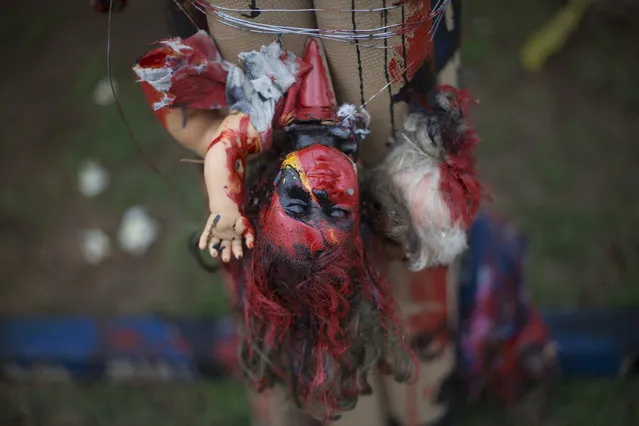
A doll forms part of a sculpture as part of an exhibit titled The Sea Isn't Made for Fish at Rio de Janeiro Federal University in Rio de Janeiro, Brazil, Monday, June 1, 2015. Art students have taken advantage of a material they have in endless supply trash to create an exhibition that aims to draw attention to the fetid state of the citys Guanabara Bay, where the Olympic sailing events are to be held next year. (AP Photo/Silvia Izquierdo)
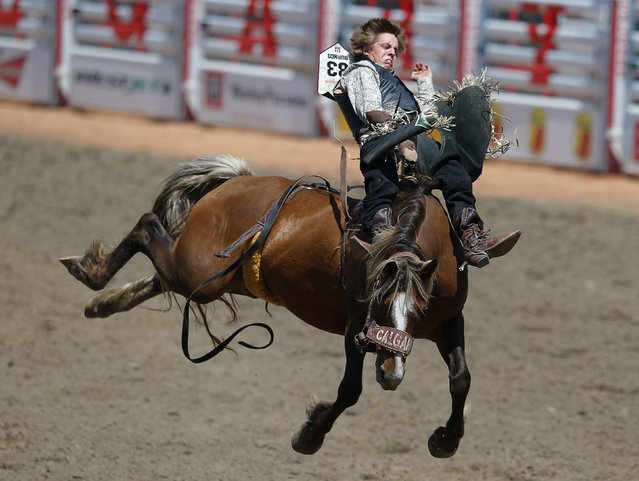
Spur Lacasse of Cochrane, Alberta rides the horse Rebel Warrior in the novice bareback event during the Calgary Stampede rodeo in Calgary, Alberta, in this July 12, 2014 file photo. (Photo by Todd Korol/Reuters)
Gisele Marie, a Muslim woman and professional heavy metal musician, plays her Gibson Flying V electric guitar during a concert in Sao Paulo December 16, 2014. Based in Sao Paulo, Marie, 42, is the granddaughter of German Catholics, and converted to Islam several months after her father passed away in 2009. Marie, who wears the Burka, has been fronting her brothers' heavy metal band “Spectrus” since 2012. (Photo by Nacho Doce/Reuters)
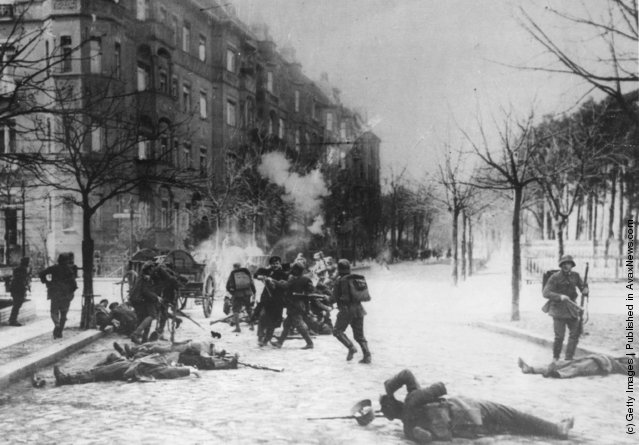
Street fighting in Berlin between Government troops and Spartacists, during the Spartacist uprising which followed Germany's defeat in World War I. (Photo by Keystone/Getty Images). 1919
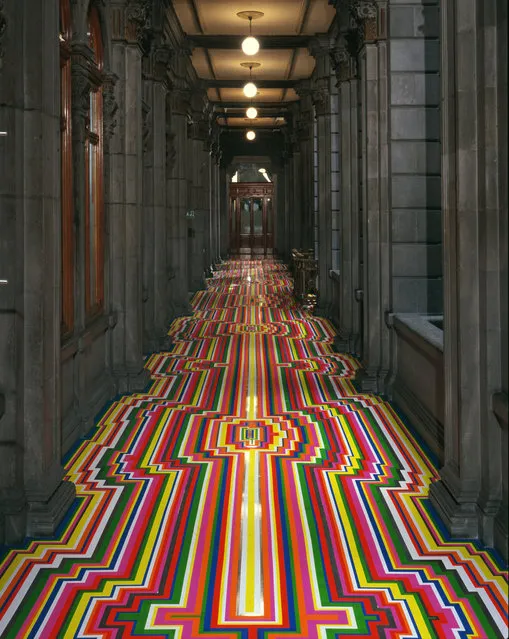
lasgow-based artist Jim Lambie can transform any space into a visual delight with his geometric tape designs. Using everyday vinyl tape, he creates angles and lines of contrasting colors that suggest movement and optical illusions. He can convert a once empty and quiet room into a space filled with energy. As viewers enter a converted space, they instantly have a visual interaction with the artwork.
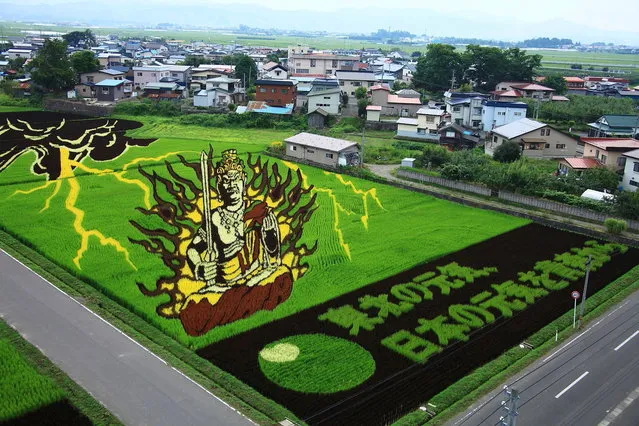
Tanbo Art is the strategic planting of four varieties of rice which have different colored leaves in order to create a giant image in the rice paddy. This type of aesthetic planting began in the Japanese village of Inakadate in 1993 in order to celebrate the village’s over 2000 year history of rice farming. The practice has spread to other rice cultivating communities in Japan and even other countries such as Thailand and South Korea.