Loading...
Done


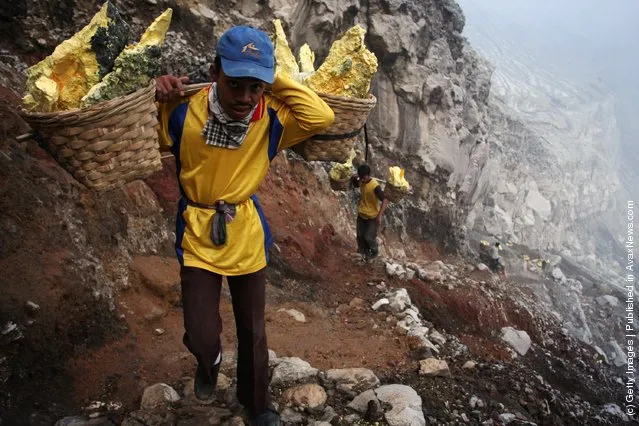
Traditional miners carry sulphur on the Ijen volcano complex on May 25, 2009 outside Banyuwangi, East Java, Indonesia. Miners carry the solidified yellow sulphur blocks from the crater floor to the rim for as many hours a day as they can tolerate, paid by the kilogram of sulphur they extract. The average wage is USD $.05 per kilogram of sulphur and a worker, depending on his strength and stamina, carry on average 3 baskets of 70-80kg per day, earning him around USD $11. (Photo by Ulet Ifansasti/Getty Images)
Details
08 Jul 2011 10:53:00
Gothic enthusiasts pose during the annual Wave-Gotik-Treffen music festival on May 26, 2012 in Leipzig, Germany

Gothic enthusiast poses during the annual Wave-Gotik-Treffen music festival on May 26, 2012 in Leipzig, Germany. The event began in the 1990s and has since grown into one of the biggest gatherings of Goth scene followers in Europe with around 20,000 participants. (Photo by Adam Berry)
Details
28 May 2012 10:10:00
A model walks the runway at the Hakaan Spring Summer 2012 fashion show during Paris Fashion Week

A model walks the runway at the Hakaan Spring Summer 2012 fashion show during Paris Fashion Week on October 4, 2011 in Paris, France. (Photo by Nathalie Lagneau/Catwalking/Getty Images)
Details
06 Oct 2011 13:01:00
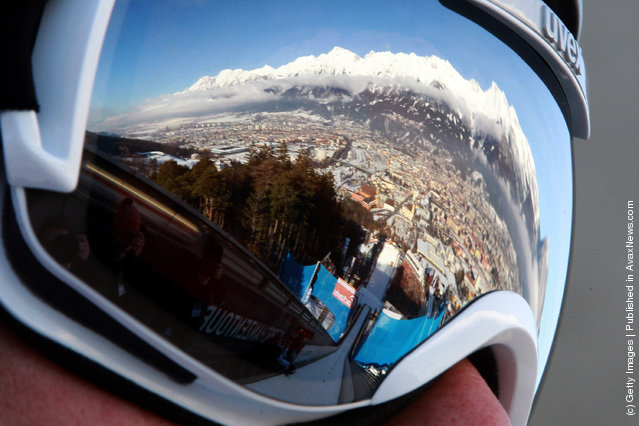
A reflection of the Alps mountain Nordkette is seen in the ski googles of Anders Bardal of Norway

A reflection of the Alps mountain “Nordkette” is seen in the ski googles of Anders Bardal of Norway during the training round of the FIS Ski Jumping World Cup event at the 60th Four Hills ski jumping tournament at Bergisel on January 3, 2012 in Innsbruck, Austria. (Photo by Alexander Hassenstein/Bongarts/Getty Images)
Details
04 Jan 2012 14:00:00
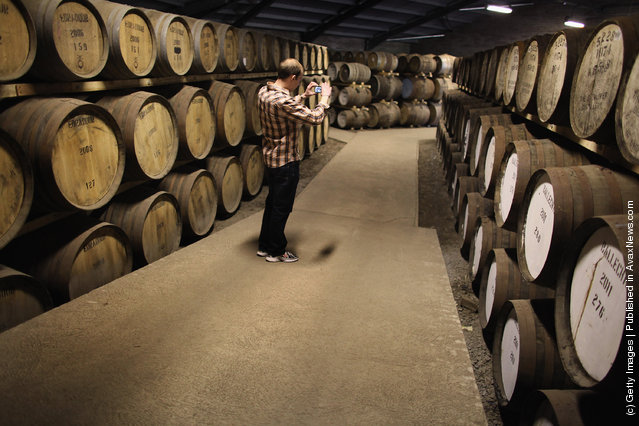
Tourists pay a visit to  Edradour distillery on March 26, 2012 in Pitlochry, United Kingdom

Tourists pay a visit to Edradour distillery on March 26, 2012 in Pitlochry, United Kingdom. (Photo by Jeff J. Mitchell/Getty Images)
Details
28 Mar 2012 10:25:00
A boy plays in a swollen creek under a bridge in Manila on October 16, 2016. Typhoon Sarika lashed the main Philippine island of Luzon on October 16, flattening homes and toppling trees and power pylons as more than 12,000 people fled to safer ground, officials said. Shanties built beside a river, under a creek are the usual victims of floodings. (Photo by Noel Celis/AFP Photo)

A boy plays in a swollen creek under a bridge in Manila on October 16, 2016. Typhoon Sarika lashed the main Philippine island of Luzon on October 16, flattening homes and toppling trees and power pylons as more than 12,000 people fled to safer ground, officials said. Shanties built beside a river, under a creek are the usual victims of floodings. (Photo by Noel Celis/AFP Photo)
Details
17 Oct 2016 10:00:00
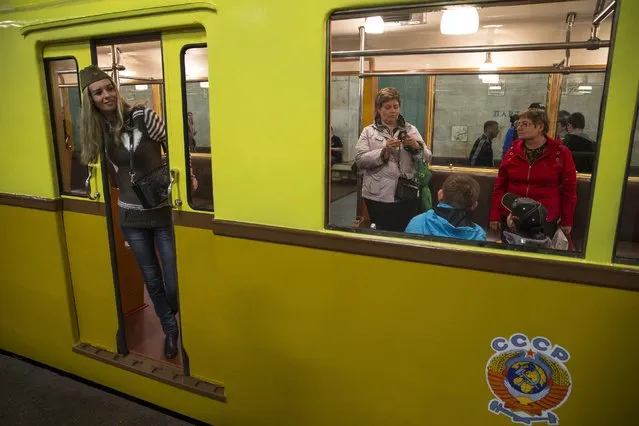
People make pictures in a Soviet-era vintage subway car, with a Soviet railways emblem on the side of it, parked in the Partizanskaya subway station in Moscow, Russia, Friday, May 15, 2015. (Photo by Pavel Golovkin/AP Photo)

People make pictures in a Soviet-era vintage subway car, with a Soviet railways emblem on the side of it, parked in the Partizanskaya subway station in Moscow, Russia, Friday, May 15, 2015. Vintage Soviet-era metro cars were exhibited at the Partizanskaya subway station as part of festivities marking the 80th anniversary of the Moscow subway on Friday. (Photo by Pavel Golovkin/AP Photo)
Details
17 May 2015 11:45:00
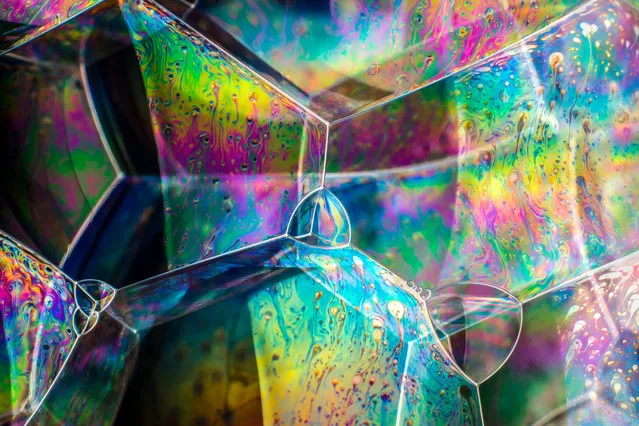
Soap Bubble Structures by Kym Cox. Bubbles optimise space and minimise their surface area for a given volume of air. This phenomenon makes them a useful tool in many areas of research, in particular, materials science and ‘packing’ – how things fit together. Bubble walls drain under gravity, thin at the top, thick at the bottom, which interferes with travelling lightwaves to create bands of colour. Black spots show the wall is too thin for interference colours, indicating the bubble is about to burst. (Photo by Kym Cox/2019 Science Photographer of the Year/RPS)

Soap Bubble Structures by Kym Cox. Bubbles optimise space and minimise their surface area for a given volume of air. This phenomenon makes them a useful tool in many areas of research, in particular, materials science and “packing” – how things fit together. Bubble walls drain under gravity, thin at the top, thick at the bottom, which interferes with travelling lightwaves to create bands of colour. Black spots show the wall is too thin for interference colours, indicating the bubble is about to burst. (Photo by Kym Cox/2019 Science Photographer of the Year/RPS)
Details
15 Aug 2019 00:03:00