Loading...
Done
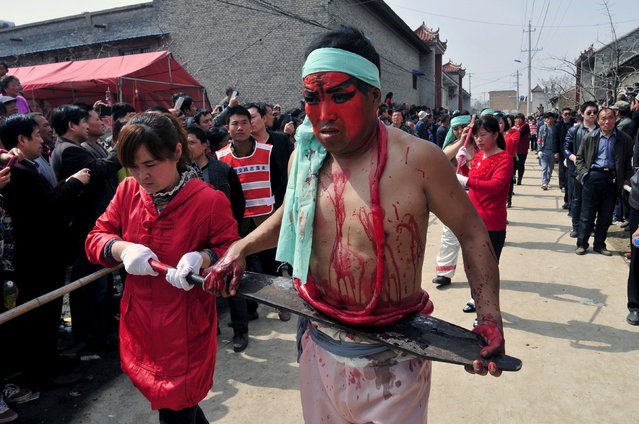
A folk performer (front R) with make-up and props takes part in a “Blood Shehuo” parade, during a performance in Linyi county, Shanxi province March 21, 2015. “Shehuo” is the common name of Chinese traditional activities consisting of folk performances in northern China. The "Blood Shehuo" performers use make-up and props to re-enact scenes of horror in classic Chinese novels like Water Margin. (Photo by Reuters/Stringer)

A folk performer (front R) with make-up and props takes part in a “Blood Shehuo” parade, during a performance in Linyi county, Shanxi province March 21, 2015. “Shehuo” is the common name of Chinese traditional activities consisting of folk performances in northern China. The “Blood Shehuo” performers use make-up and props to re-enact scenes of horror in classic Chinese novels like Water Margin. (Photo by Reuters/Stringer)
Details
23 Mar 2015 10:33:00
Actors dressed as a “Yeti” attend a promotional event for Travel Channel's “Expedition Unknown: Hunt for the Yeti” in Manhattan, New York City, U.S., October 4, 2016. (Photo by Brendan McDermid/Reuters)

Actors dressed as a “Yeti” attend a promotional event for Travel Channel's “Expedition Unknown: Hunt for the Yeti” in Manhattan, New York City, U.S., October 4, 2016. (Photo by Brendan McDermid/Reuters)
Details
05 Oct 2016 10:07:00
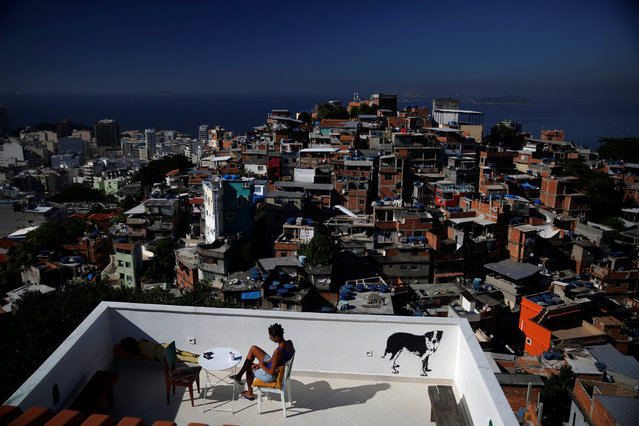
A woman sits on a terrace at Tiki hostel in Cantagalo favela, in Rio de Janeiro, Brazil, April 16, 2016. (Photo by Pilar Olivares/Reuters)

A woman sits on a terrace at Tiki hostel in Cantagalo favela, in Rio de Janeiro, Brazil, April 16, 2016. Hostels in a few of Rio's more than 1,000 slums serve not only as a cheap housing alternative for the more adventurous among the estimated 500,000 foreign tourists expected to arrive for the Olympics in August. The establishments also open up the rich culture of the city's shantytowns for travellers, giving them a glimpse into once “no-go” areas where about one-fifth of Rio's population lives. (Photo by Pilar Olivares/Reuters)
Details
04 May 2016 12:18:00