Loading...
Done
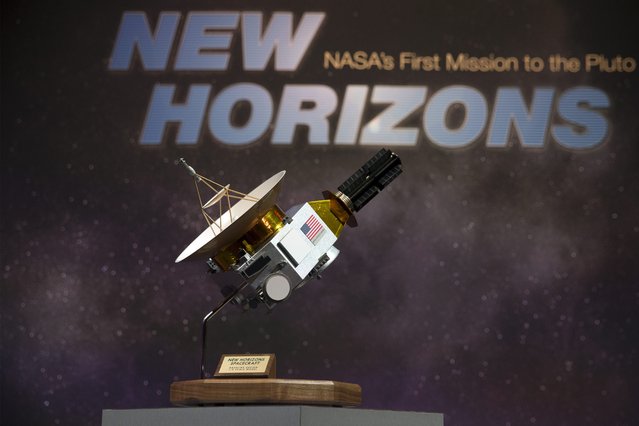
A model of the New Horizons spacecraft is seen at a live television program on NASA television celebrating the spacecraft's closest proximity to Pluto, at Johns Hopkins University Applied Physics Laboratory, site of the mission operations center, in Laurel, Maryland, USA, 14 July 2015. (Photo by Michael Reynolds/EPA)

A model of the New Horizons spacecraft is seen at a live television program on NASA television celebrating the spacecraft's closest proximity to Pluto, at Johns Hopkins University Applied Physics Laboratory, site of the mission operations center, in Laurel, Maryland, USA, 14 July 2015. At approximately 7:49 am ET (11:49 am GMT), 14 July, New Horizons was scheduled to be as close to Pluto as the spacecraft will get; about 7,800 miles (12,500 kilometers) above the surface, following a journey of more than nine years and three billion miles. This is the first mission to the Pluto System and the Kuiper Belt. (Photo by Michael Reynolds/EPA)
Details
15 Jul 2015 10:08:00
Chris Keegan By Cosmic Creatures

Looking up at the sky and forming images from the stars has been going on for just about as long as human life has existed, but that was only what could be seen from the Earth. Digital illustrator Chris Keegan has taken constellations to a whole new level with the use of images from NASA’s Chandra X-ray Observatory.
Details
10 Jun 2015 09:50:00
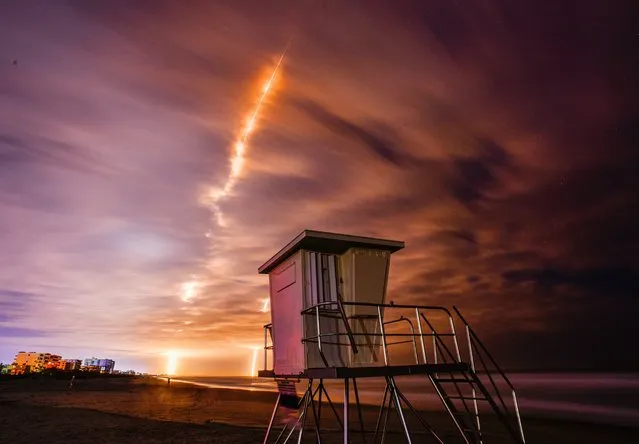
SpaceX and NASA Launch of the PACE spacecraft atop a Falcon 9 rocket from Launch Complex 40 at Cape Canaveral Space Force Station in Brevard County, Florida on February 8, 2024. Photo shows launch and booster landing back at CCSFS about 7 minutes 30 seconds after launch. In the foreground is one the new modular lifeguard stands at Minuteman Causeway, replacing the old wooden tower. (Photo by Malcolm Denemark/Florida Today via USA Today Network)

SpaceX and NASA Launch of the PACE spacecraft atop a Falcon 9 rocket from Launch Complex 40 at Cape Canaveral Space Force Station in Brevard County, Florida on February 8, 2024. Photo shows launch and booster landing back at CCSFS about 7 minutes 30 seconds after launch. In the foreground is one the new modular lifeguard stands at Minuteman Causeway, replacing the old wooden tower. (Photo by Malcolm Denemark/Florida Today via USA Today Network)
Details
19 Feb 2024 08:45:00
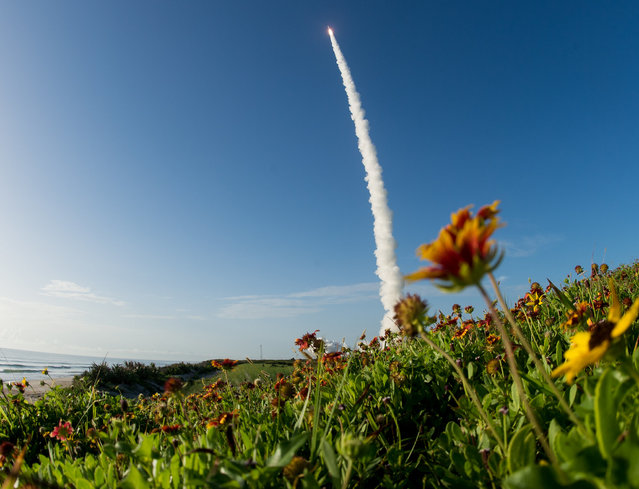
This NASA photo shows a United Launch Alliance Atlas V rocket with NASA’s Mars 2020 Perseverance rover onboard as it launches from Space Launch Complex 41 at Cape Canaveral Air Force Station, on July 30, 2020, from NASA’s Kennedy Space Center in Florida. The Perseverance rover is part of NASA’s Mars Exploration Program, a long-term effort of robotic exploration of the Red Planet. (Photo by Joel Kowsky/NASA)

This NASA photo shows a United Launch Alliance Atlas V rocket with NASA’s Mars 2020 Perseverance rover onboard as it launches from Space Launch Complex 41 at Cape Canaveral Air Force Station, on July 30, 2020, from NASA’s Kennedy Space Center in Florida. The Perseverance rover is part of NASA’s Mars Exploration Program, a long-term effort of robotic exploration of the Red Planet. (Photo by Joel Kowsky/NASA)
Details
05 Aug 2020 00:01:00
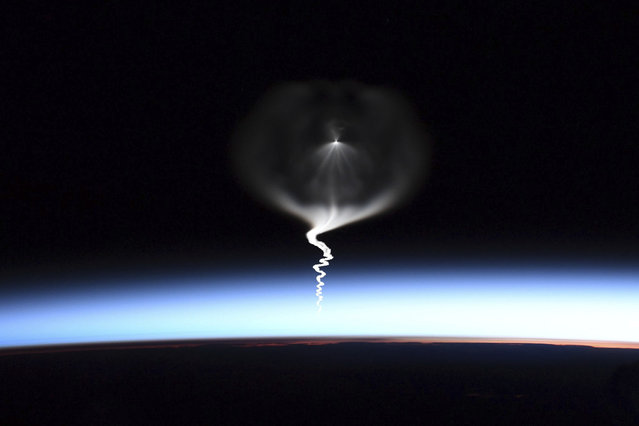
This photo provided by NASA astronaut Christina Koch shows the launch of a Russian Soyuz rocket, as seen from the International Space Station on Wednesday, September 25, 2019. (Photo by Christina Koch/NASA via AP Photo)

This photo provided by NASA astronaut Christina Koch shows the launch of a Russian Soyuz rocket, as seen from the International Space Station on Wednesday, September 25, 2019. (Photo by Christina Koch/NASA via AP Photo)
Details
27 Sep 2019 00:07:00
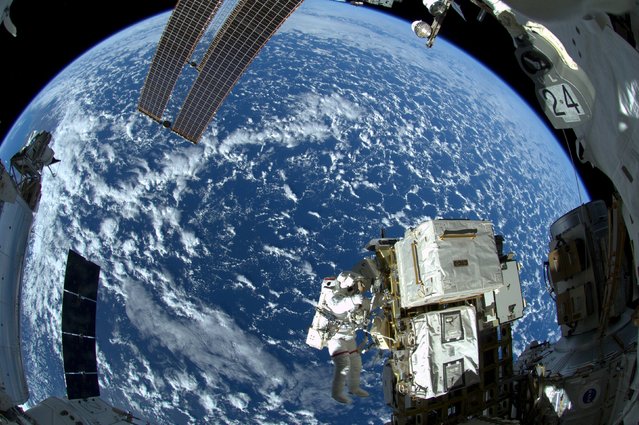
NASA astronaut Reid Wiseman and European Space Agency astronaut Alexander Gerst (not shown) works outside the space station's Quest airlock in the first of three spacewalks for the Expedition 41 crew aboard the International Space Station in this NASA image released October 8, 2014. (Photo by Reuters/NASA)

NASA astronaut Reid Wiseman and European Space Agency astronaut Alexander Gerst (not shown) works outside the space station's Quest airlock in the first of three spacewalks for the Expedition 41 crew aboard the International Space Station in this NASA image released October 8, 2014. (Photo by Reuters/NASA)
Details
05 Nov 2015 08:02:00
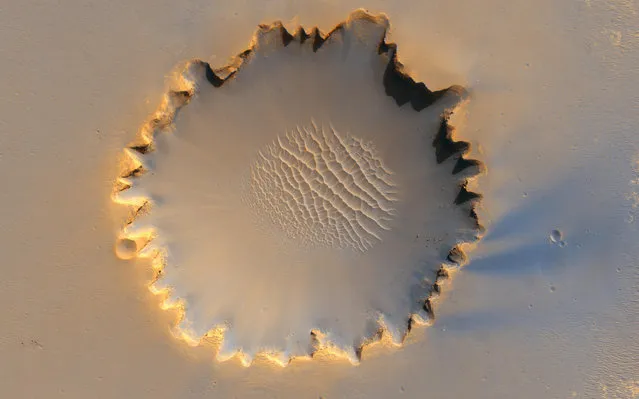
NASA's rover Opportunity visits Victoria Crater, viewed from orbit by the High Resolution Imaging Science Experiment on NASA's Mars Reconnaissance Orbiter in october of 2006. Opportunity is a small dot on the crater's lip, at top right. Opportunity first reached the crater's rim on September 27, 2006. (Photo by NASA/JPL-Caltech/University of Arizona/The Atlantic)

“NASA's Mars rover Opportunity just celebrated its ninth anniversary on Mars – a mission that was originally meant to last just 90 days...” – The Atlantic. Photo: NASA's rover Opportunity visits Victoria Crater, viewed from orbit by the High Resolution Imaging Science Experiment on NASA's Mars Reconnaissance Orbiter in october of 2006. Opportunity is a small dot on the crater's lip, at top right. Opportunity first reached the crater's rim on September 27, 2006. (Photo by NASA/JPL-Caltech/University of Arizona via The Atlantic)


Details
14 Feb 2013 10:58:00
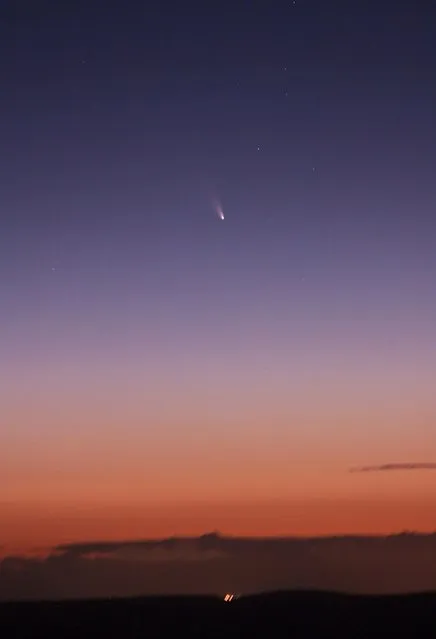
This image provided by NASA shoaws the comet PANSTARRS as seen from Mount Dale, Western Australia on March 5, 2013. According to NASA on March 10, it will make its closest approach to the sun about 28 million miles (45 million kilometers) away. As it continues its nightly trek across the sky, the comet may get lost in the sun's glare but should return and be visible to the naked eye by March 12. (Photo by AP Photo/NASA)

It’s time to start watching for Comet PANSTARRS, one of two comets to get excited about in 2013. Photo: This image provided by NASA shoaws the comet PANSTARRS as seen from Mount Dale, Western Australia on March 5, 2013. According to NASA on March 10, it will make its closest approach to the sun about 28 million miles (45 million kilometers) away. As it continues its nightly trek across the sky, the comet may get lost in the sun's glare but should return and be visible to the naked eye by March 12. (Photo by AP Photo/NASA)
Details
13 Mar 2013 08:03:00