Loading...
Done
Young “scissors” dancers pose after performing in a national scissors dance competition at Lima's Exposition Park, May 18, 2014. The Danza de las tijeras, or scissors dance, is a traditional dance from the Peruvian southern region of the Andes, in which two or more performers take turns dancing while accompanied with music from a harp and a violin. Dancers would display various skills and moves, which include cutting the air with the use of a scissors. (Photo by Enrique Castro-Mendivil/Reuters)

Young “scissors” dancers pose after performing in a national scissors dance competition at Lima's Exposition Park, May 18, 2014. The Danza de las tijeras, or scissors dance, is a traditional dance from the Peruvian southern region of the Andes, in which two or more performers take turns dancing while accompanied with music from a harp and a violin. Dancers would display various skills and moves, which include cutting the air with the use of a scissors. (Photo by Enrique Castro-Mendivil/Reuters)
Details
20 May 2014 10:54:00
Paul Zizka in “Galactic Gateway”, Bow Lake, Banff National Park, May 11, 2013. (Photo by Paul Zizka/Caters News)

“These are the stunning shots of one photographer who is putting everyday “selfies” to shame. Paul Zizka, 34, began experimenting with night photography just two years ago and immediately became fascinated with the spectacular scenes he discovered. To create something more unique he started adding himself into the shot – as well as showing others the beautiful surroundings he had been exploring. Using lengthy exposure, the photographer felt that featuring himself in some of his shots – the night sky illuminating the mountains around him – created a relationship between the central figure in the image and the nature around him”. – Caters News. Photo: Paul Zizka in “Galactic Gateway”, Bow Lake, Banff National Park, May 11, 2013. (Photo by Paul Zizka/Caters News)
Details
22 May 2014 04:38:00
Londoners walking through Potters Field Park were surprised to see a “money tree” blooming with £9820 in £10 notes, the average amount a working British family has in savings, on July 24, 2014 in London, England. The tree was planted by Sunlife to encourage the nation to start saving at least £10 a month for a brighter future. (Photo by Tristan Fewings/Getty Images for SunLife)

Londoners walking through Potters Field Park were surprised to see a “money tree” blooming with £9820 in £10 notes, the average amount a working British family has in savings, on July 24, 2014 in London, England. The tree was planted by Sunlife to encourage the nation to start saving at least £10 a month for a brighter future. (Photo by Tristan Fewings/Getty Images for SunLife)
Details
25 Jul 2014 11:50:00
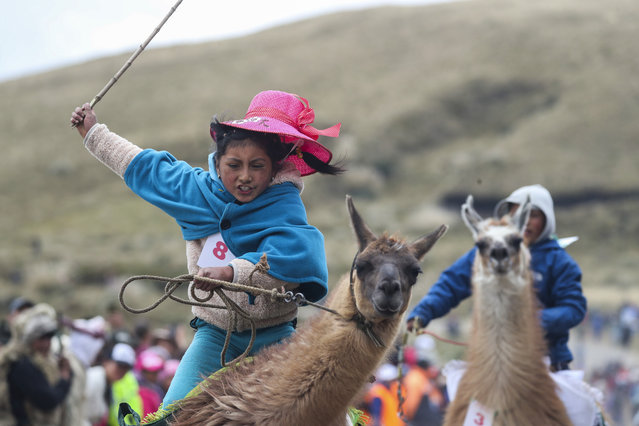
Milena Jami whips her llama to win the first place in the a race for children of ages seven and eight at the Llanganates National Park, Ecuador, Saturday, February 8, 2020. Wooly llamas, an animal emblematic of the Andean mountains in South America, become the star for a day each year when Ecuadoreans dress up their prized animals for children to ride them in 500-meter races. (Photo by Dolores Ochoa/AP Photo)

Milena Jami whips her llama to win the first place in the a race for children of ages seven and eight at the Llanganates National Park, Ecuador, Saturday, February 8, 2020. Wooly llamas, an animal emblematic of the Andean mountains in South America, become the star for a day each year when Ecuadoreans dress up their prized animals for children to ride them in 500-meter races. (Photo by Dolores Ochoa/AP Photo)
Details
11 Feb 2020 00:07:00
A Maasai woman arrives with collected firewoods at a village nearby Selenkay Conservancy, a community-owned conservation area running by a private company, in Amboseli, Kenya, on June 22, 2022. The camp's ten luxurious tents see tourists flocking again, after the shutdown linked to Covid-19. They observe in small groups elephants, giraffes, antelopes or lions on 5,000 hectares, located on the edge of Amboseli National Park, in the south of the country, and have a glimpse of the life of the Masai, the owners of the land. (Photo by Yasuyoshi Chiba/AFP Photo)

A Maasai woman arrives with collected firewoods at a village nearby Selenkay Conservancy, a community-owned conservation area running by a private company, in Amboseli, Kenya, on June 22, 2022. The camp's ten luxurious tents see tourists flocking again, after the shutdown linked to Covid-19. They observe in small groups elephants, giraffes, antelopes or lions on 5,000 hectares, located on the edge of Amboseli National Park, in the south of the country, and have a glimpse of the life of the Masai, the owners of the land. (Photo by Yasuyoshi Chiba/AFP Photo)
Details
22 Jul 2022 04:32:00
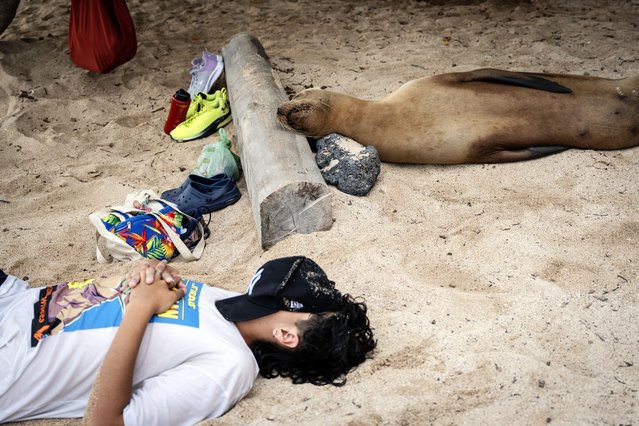
Sea lion is seen among people on a beach in San Cristobal island, part of Galapagos archipelago on February 11, 2025. Located in Ecuadorone of South America's most fascinating countriesthe Galapagos National Park spans 13 main islands and numerous islets, captivating biologists, environmental scientists, and tourists with its rich ecology. (Photo by Ozge Elif Kizil/Anadolu via Getty Images)

Sea lion is seen among people on a beach in San Cristobal island, part of Galapagos archipelago on February 11, 2025. Located in Ecuadorone of South America's most fascinating countriesthe Galapagos National Park spans 13 main islands and numerous islets, captivating biologists, environmental scientists, and tourists with its rich ecology. (Photo by Ozge Elif Kizil/Anadolu via Getty Images)
Details
13 Apr 2025 03:15:00
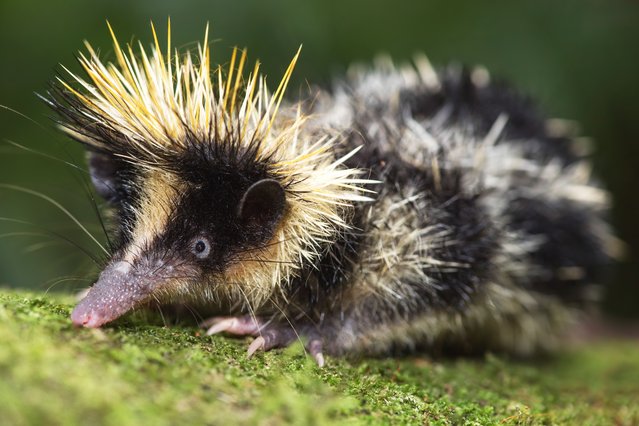
This spiky tenrec was spotted in Madagascar’s Mantadia National Park in the last decade of September 2025. Mostly nocturnal and rarely seen, it puffs out its spines when threatened. Spiky tenrecs are excellent swimmers — unlike most spiny mammals, some species of tenrec can forage in streams and rivers, using their spines for protection while hunting aquatic insects and small prey. (Photo by Dale Morris/Solent News & Photo Agency)

This spiky tenrec was spotted in Madagascar’s Mantadia National Park in the last decade of September 2025. Mostly nocturnal and rarely seen, it puffs out its spines when threatened. Spiky tenrecs are excellent swimmers — unlike most spiny mammals, some species of tenrec can forage in streams and rivers, using their spines for protection while hunting aquatic insects and small prey. (Photo by Dale Morris/Solent News & Photo Agency)
Details
05 Oct 2025 04:02:00
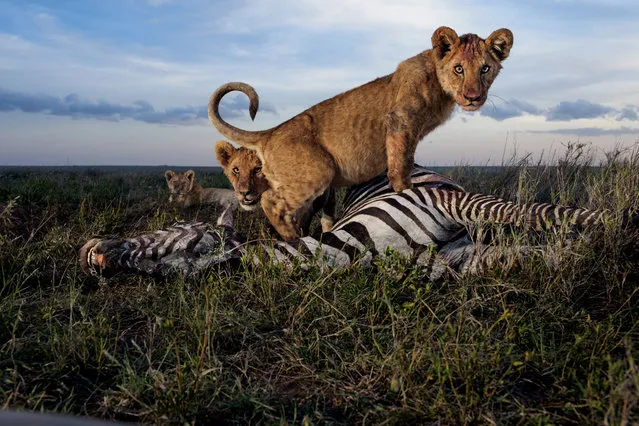
Cubs of the Simba East pride: too young to kill but old enough to crave meat. Adult females, and sometimes males, do the hunting. Zebras and wildebeests rank high as chosen prey in the rainy season. (Photo by Michael Nichols/National Geographic via The Atlantic)

“Serengeti National Park encompasses 5,700 square miles of grassy plains and woodlands near the northern border of Tanzania, and is home to more than 3,500 lions grouped into a couple dozen prides. Photographer Nick Nichols and videographer Nathan Williamson made several extended trips to the Serengeti between July 2011 and January 2013, determined to break new visual ground in their coverage of the Serengeti Lions”. Photo: Cubs of the Simba East pride: too young to kill but old enough to crave meat. Adult females, and sometimes males, do the hunting. Zebras and wildebeests rank high as chosen prey in the rainy season. (Photo by Michael Nichols/National Geographic via The Atlantic)
Details
09 Aug 2013 08:15:00