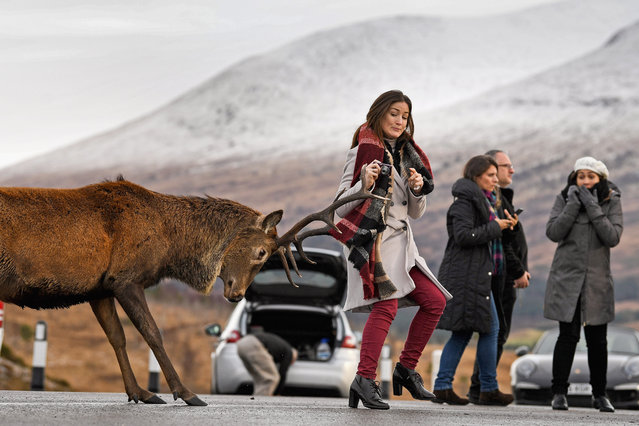
Tourists photograph a red dear stag visiting a car park near Glen Coe on December 1, 2017 in Glen Coe,Scotland. On the first day of the meteorological calendar, the UK was experiencing slightly warmer temperatures today with weather forecasters indicating that the recent cold spell is almost over. Yesterday's snow across eastern parts of England is expected to melt away over the course Friday as temperatures start to rise. (Photo by Jeff J. Mitchell/Getty Images)
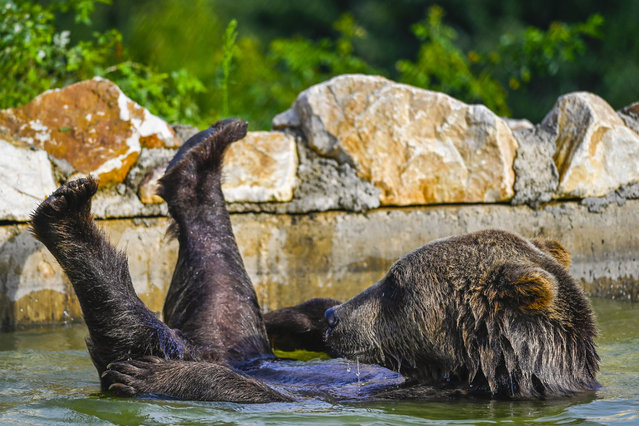
A brown bears cools off in a pool at the bear sanctuary near the village of Mramor, on August 18, 2020. The bear sanctuary was closed for visitors on August 18, as part of safety measures to curb the spread of the COVID-19 (novel coronavirus) disease. (Photo by Armend Nimani/AFP Photo)
Irish dancer Holly Venables on day three of the Cheltenham Racing Festival at Prestbury Park in Cheltenham, England on March 13, 2025. (Photo by David Fitzgerald/Sportsfile)
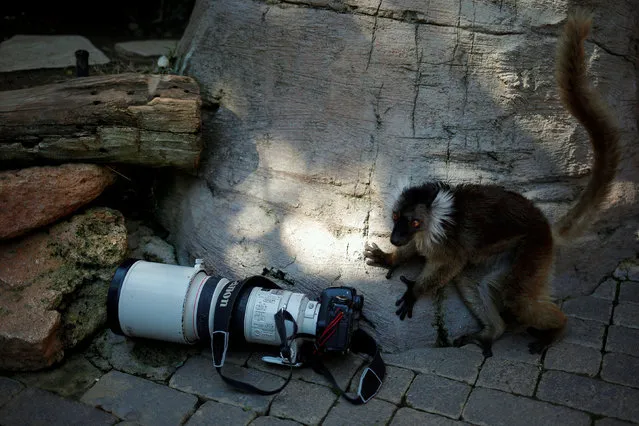
A female black lemur (Eulemur macaco), looks at a camera in its enclosure at Bioparc Fuengirola in Fuengirola, near Malaga, southern Spain, February 8, 2017. (Photo by Jon Nazca/Reuters)
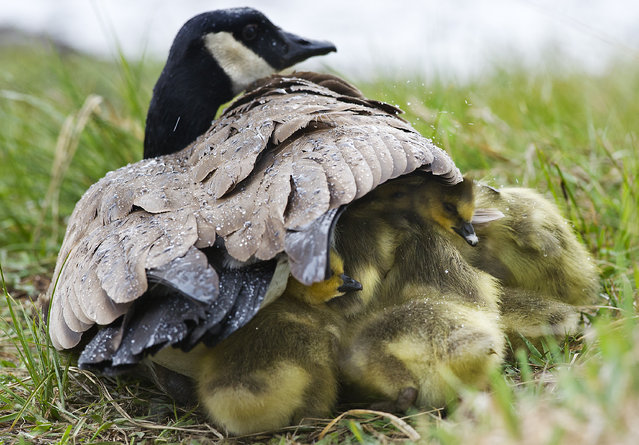
A gaggle of goslings huddle together under the protective wing of a parent along the bank of the Deschutes River as a heavy downpour passes through Bend, Oregon, late Wednesday, April, 20, 2106 afternoon. (Photo by Ryan Brennecke/The Bulletin via AP Photo)
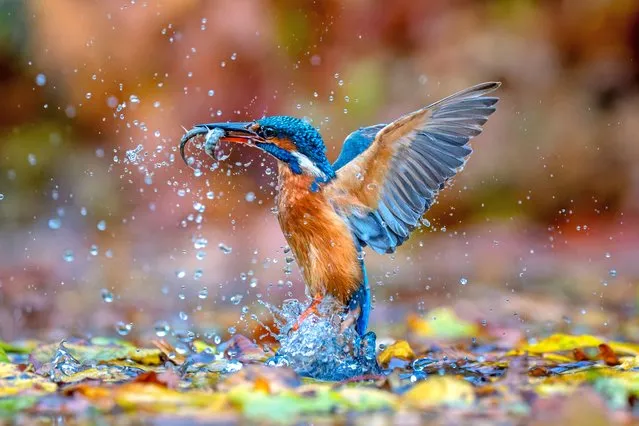
A kingfisher dives into the leafy water of the River Alde near Rendham, Suffolk in the second decade of November 2022 and catches two fish. Kingfishers must be able to see the fish they want to catch before making their dive, so for this bird to be successful when leaves covered the surface of the water shows its true skill for survival. (Photo by Ivor Ottley/Animal News Agency)
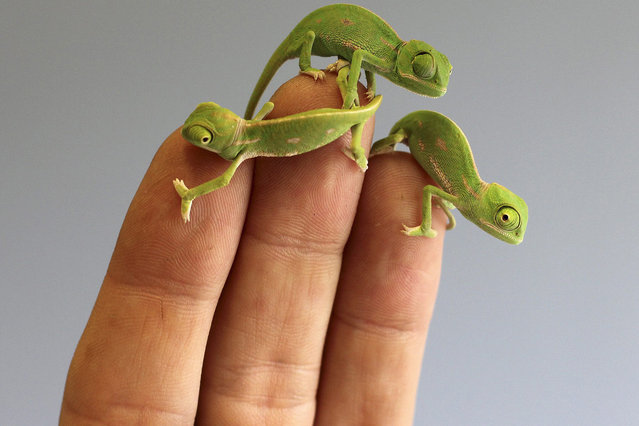
A handout image released by the Taronga Zoo shows Veiled Chameleon hatchlings at Taronga Zoo in Sydney, Australia, 11 March 2015. Taronga has welcomed more than 20 baby chameleons, with the last of three clutches of eggs hatching this week. Veiled Chameleons, or Chamaeleo calyptratus, are native to Saudi Arabia and Yemen and can live up to five years. (Photo by EPA/Taronga Zoo)