Loading...
Done
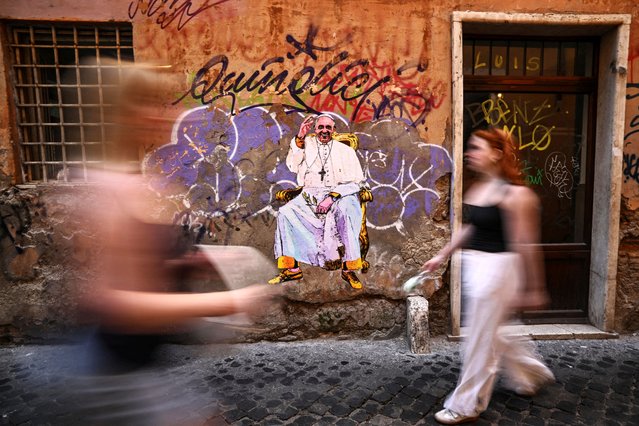
People walk near an artwork depicting Pope Francis, following the death of the pontiff, in Rome, Italy, on April 22, 2025. (Photo by Dylan Martinez/Reuters)

People walk near an artwork depicting Pope Francis, following the death of the pontiff, in Rome, Italy, on April 22, 2025. (Photo by Dylan Martinez/Reuters)
Details
23 Aug 2025 03:20:00
Mail truck tries to climb tree. Comm. Ave. Boston, 1927. (Photo by Leslie Jones)

Mail truck tries to climb tree. Comm. Ave. Boston, 1927. (Photo by Leslie Jones) P.S. All pictures are presented in high resolution. To see Hi-Res images – just TWICE click on any picture. In other words, click small picture – opens the BIG picture. Click BIG picture – opens VERY BIG picture (if available; this principle works anywhere on the site AvaxNews)
Details
26 Apr 2013 08:24:00
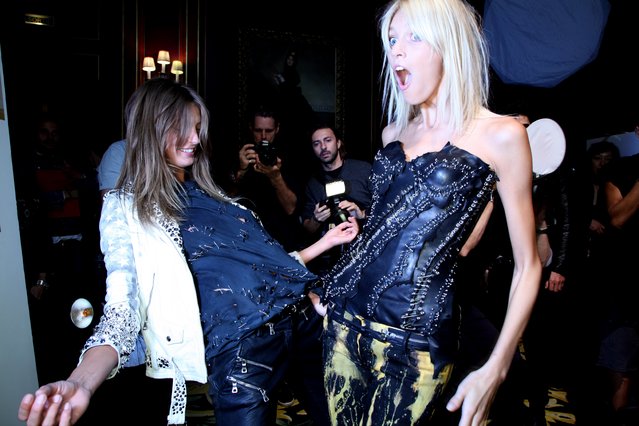
Karl Lagerfeld says: “It’s not all about emotions. It’s like Elisabeth Schwarzkopf, the famous opera singer, said, “If people imagined I had all the emotions I can express on stage I wouldn’t sing”. In the moment, you have to stay cool. Emotions come after and I’m not so much into emotions, I’m more into work”. Here: Balmain, Spring/Summer 2011. (Photo by Matt Lever)

Everton fan and legendary fashion photographer Matt Lever has captured the dizzying drama behind the scenes at catwalk shows since 1999. Here: Balmain, Spring/Summer 2011. (Photo by Matt Lever)
Details
26 Mar 2016 13:07:00
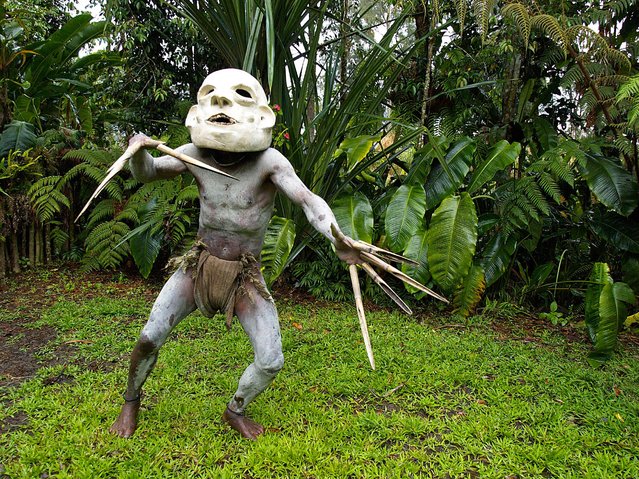
The mudmen come from the country’s western highlands, where there are virtually no roads, cars, electricity or shops. (Photo by Jeremy Hunter/Exclusivepix Media)

For centuries the Highlands peoples of Papua New Guinea fought over land, women and pigs. Sorcery and battle skills could elevate a clan to Bigmanship, where the bigger the “presentation”, the bigger the man. Clans therefore would paint their bodies and create fearsome masks as part of their psy. Here: These are the terrifying tribe of “mudmen” from a remote part of Papua New Guinea. (Photo by Jeremy Hunter/Exclusivepix Media)
Details
08 May 2017 08:12:00
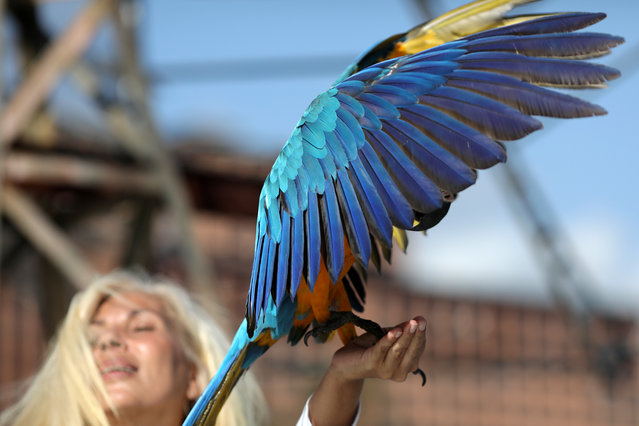
A macaw lands in Carmen Borges' hand while she stays at a rooftop of a building in Caracas, Venezuela, June 12, 2019. (Photo by Manaure Quintero/Reuters)

Looking for an escape from the daily realities of crisis-ridden Venezuela, Carmen Gomez finds solace receiving visitors on the roof of her Caracas apartment building every morning: groups of blue and gold macaws that arrive at daybreak. Here: A macaw lands in Carmen Borges' hand while she stays at a rooftop of a building in Caracas, Venezuela, June 12, 2019. (Photo by Manaure Quintero/Reuters)
Details
24 Jul 2019 00:03:00
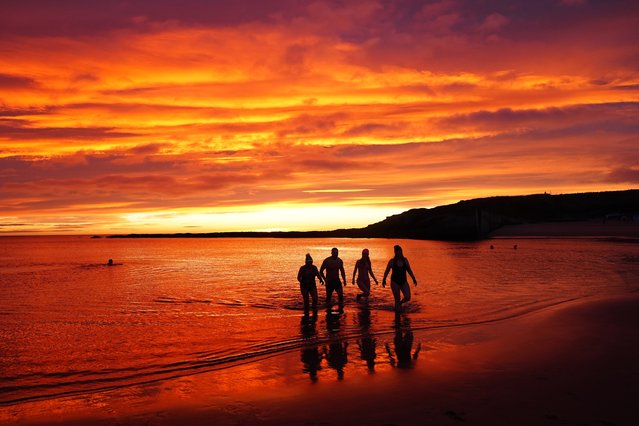
Early morning swimmers at Cullercoats Bay on the north east coast of England on Sunday, December 29, 2024. (Photo by Owen Humphreys/PA Images via Getty Images)

Early morning swimmers at Cullercoats Bay on the north east coast of England on Sunday, December 29, 2024. (Photo by Owen Humphreys/PA Images via Getty Images)
Details
22 Jan 2025 01:02:00
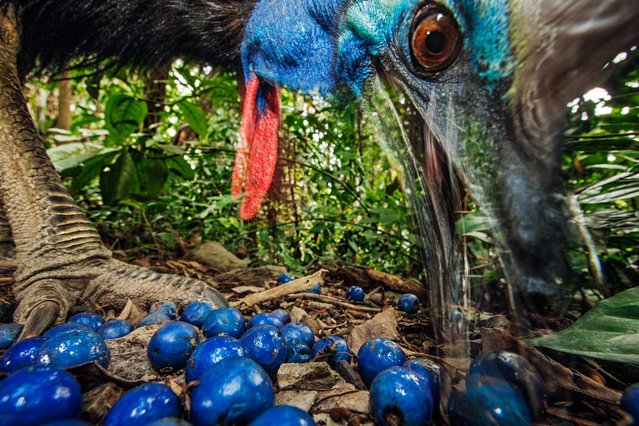
“Cassowaries are large, flightless birds related to emus and (more distantly) to ostriches, rheas, and kiwis”, writes Olivia Judson in the September issue of National Geographic magazine. (Photo by Christian Ziegler/National Geographic)

“Cassowaries are large, flightless birds related to emus and (more distantly) to ostriches, rheas, and kiwis”, writes Olivia Judson in the September issue of National Geographic magazine. How large? People-size: Adult males stand well over five foot five and top 110 pounds. Females are even taller, and can weigh more than 160 pounds. Dangerous when roused, they’re shy and peaceable when left alone. But even birds this big and tough are prey to habitat loss. The dense New Guinea and Australia rain forests where they live have dwindled. Today cassowaries might number 1,500 to 2,000. And because they help shape those same forests – by moving seeds from one place to another – “if they vanish”, Judson writes, “the structure of the forest would gradually change” too. (Photo by Christian Ziegler/National Geographic)
Details
06 Jan 2014 12:21:00
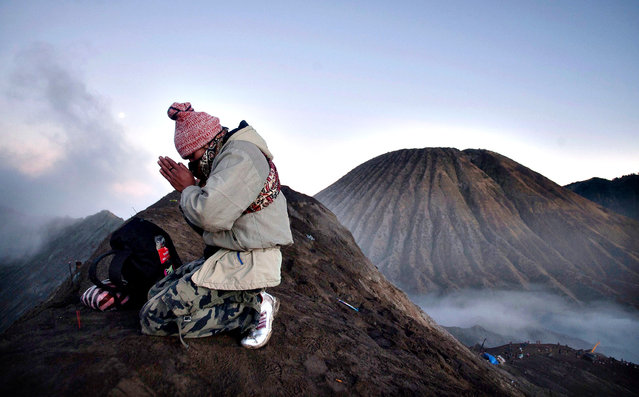
A Tengger tribesman prays at Mount Bromo during the annual Kasada ceremony in East Java on August 12, 2014. The Kasada ceremony is a festival held every 14th day of the Kasada month in the traditional Hindu lunar calender to honour Sang Hyang Widhi (God Almighty) and is based on the legend of Roro Anteng and Joko Seger from the Majapahit Kingdom, from which their Tengger tribe name originates. (Photo by Juni Kriswanto/AFP Photo)

A Tengger tribesman prays at Mount Bromo during the annual Kasada ceremony in East Java on August 12, 2014. The Kasada ceremony is a festival held every 14th day of the Kasada month in the traditional Hindu lunar calender to honour Sang Hyang Widhi (God Almighty) and is based on the legend of Roro Anteng and Joko Seger from the Majapahit Kingdom, from which their Tengger tribe name originates. Hundreds of worshippers from the Tengger tribe offer food and livestock as a symbolic sacrifice which they throw into the crater for the blessings of safety and prosperity to their familyies and community. (Photo by Juni Kriswanto/AFP Photo)
Details
16 Aug 2014 11:19:00