Loading...
Done
General view of the entrance to the Swarowski Crystal World museum on its reopening day following renovation, in the western Austrian village of Wattens April 30, 2015. (Photo by Dominic Ebenbichler/Reuters)

General view of the entrance to the Swarowski Crystal World museum on its reopening day following renovation, in the western Austrian village of Wattens April 30, 2015. (Photo by Dominic Ebenbichler/Reuters)
Details
01 May 2015 13:40:00
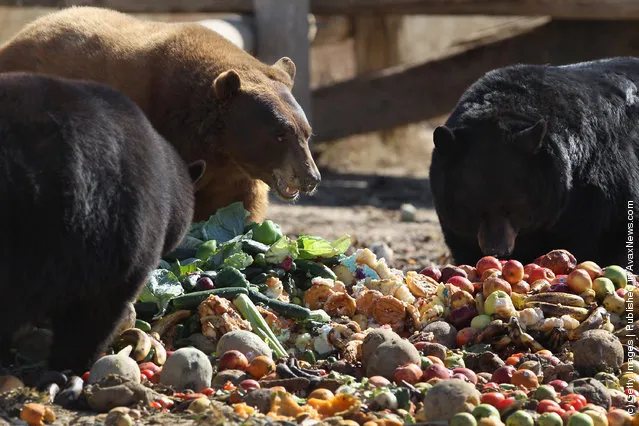
Rescued brown and black bears feed at The Wild Animal Sanctuary

“The Wild Animal Sanctuary is a U.S. organization that specializes in rescuing and caring for large predators which are being ill-treated, for which their owners can no longer care, or which might otherwise be euthanized. Created in 1980, The Wild Animal Sanctuary is situated on 720 acres (291 ha) of grassland near Keenesburg, Colorado North of Denver, and has helped over 1,000 animals since it first opened. As of 2010, it was home to over 290 animals”. – Wikipedia

Photo: Rescued brown and black bears feed at The Wild Animal Sanctuary on October 20, 2011 in Keenesburg, Colorado. (Photo by John Moore/Getty Images)

Details
27 Feb 2012 11:59:00


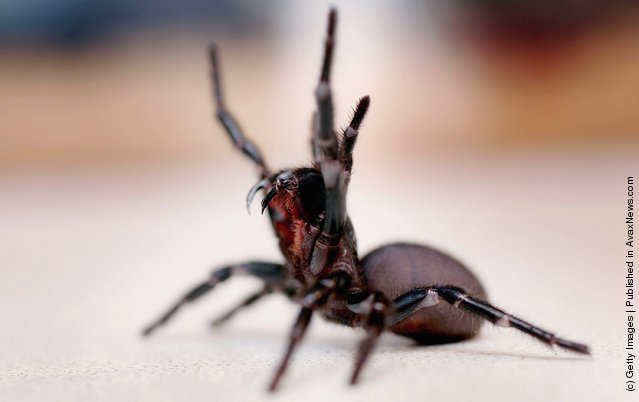
A Funnel Web spider is pictured at the Australian Reptile Park January 23, 2006 in Sydney, Australia. The Funnel Web is one of Australia's deadliest animals, with a venom that is packed with at least 40 different toxic proteins. A bite from a Funnel Web causes massive electrical over-load in the body's nervous system. Finally, fatalities occur from either heart attack or a pulmonary oedema, where the capillaries around the lungs begin to leak fluid and the patient effectively drowns. Death can come as quickly as two hours after a bite if no medical treatment is sought. Due to advances in anti-venom, there has been no death from a Funnel Web bite in Australia since 1980. Australia is home to some of the most deadly and poisonous animals on earth. (Photo by Ian Waldie/Getty Images)
Details
25 Apr 2011 07:49:00
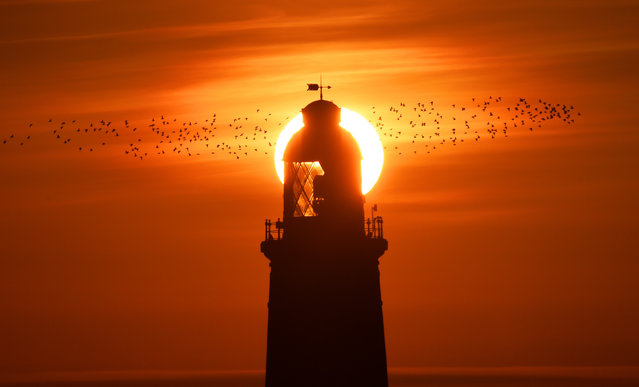
The sun rises over St Mary's Lighthouse in Whitley Bay on the Northumberland coast as a flock of Lapwing seabirds fly past on Wednesday, September 30, 2015. (Photo by Owen Humphreys/PA Wire)

The sun rises over St Mary's Lighthouse in Whitley Bay on the Northumberland coast as a flock of Lapwing seabirds fly past on Wednesday, September 30, 2015. (Photo by Owen Humphreys/PA Wire)
Details
04 Oct 2015 08:04:00
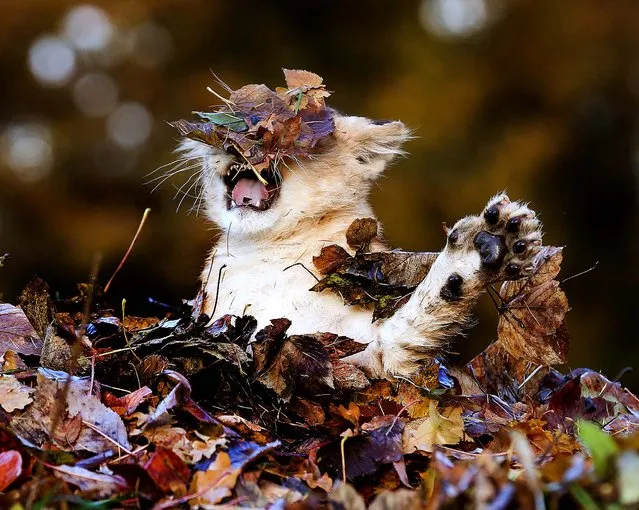
Karis, an eleven week old lion cub, plays in fallen leaves brushed up by keepers in her enclosure at Blair Drummond Safari Park, near Stirling, Scotland, on November 20, 2013. (Photo by Andrew Milligan/PA Wire)

Karis, an eleven week old lion cub, plays in fallen leaves brushed up by keepers in her enclosure at Blair Drummond Safari Park, near Stirling, Scotland, on November 20, 2013. (Photo by Andrew Milligan/PA Wire)
Details
23 Nov 2013 11:44:00
Alfred the frog looks almost as scary as the pumpkin he is perched on at London Zoo 26 October 2011. Keepers at the zoo have joined in the Halloween tradition by supplying pumpkin lunches to some of their animals, including the giant waxy monkey frog.  However Alfred is not quite the giant figure his species name suggests. (Photo by EPA/Zoological Society of London)

Alfred the frog looks almost as scary as the pumpkin he is perched on at London Zoo 26 October 2011. Keepers at the zoo have joined in the Halloween tradition by supplying pumpkin lunches to some of their animals, including the giant waxy monkey frog. However Alfred is not quite the giant figure his species name suggests – he actually measures up at around 4 inches (10 centimeters). (Photo by EPA/Zoological Society of London)
Details
31 Oct 2014 11:54:00
A Chinese woman wears a mask to protect from particles blown in during a sandstorm as she walks in the street on May 4, 2017 in Beijing, China. Sandstorms are common in northern China during the spring season and are caused when heavy winds from Mongolia in the north brings sand and pollutants that can blanket Chinese cities and cause air quality to deteriorate. (Photo by Kevin Frayer/Getty Images)

A Chinese woman wears a mask to protect from particles blown in during a sandstorm as she walks in the street on May 4, 2017 in Beijing, China. Sandstorms are common in northern China during the spring season and are caused when heavy winds from Mongolia in the north brings sand and pollutants that can blanket Chinese cities and cause air quality to deteriorate. (Photo by Kevin Frayer/Getty Images)
Details
12 May 2017 07:06:00
Participants compete in the Mud Day Race extreme run competition at El Goloso military base, outside Madrid, Spain, June 11, 2016. (Photo by Juan Medina/Reuters)

Participants compete in the Mud Day Race extreme run competition at El Goloso military base, outside Madrid, Spain, June 11, 2016. Thousands of athletes got covered in mud as they celebrated International Mud Day running a 13-kilometer obstacle course on a sunny Saturday with heatwave-like temperatures up to a 29 degrees Celcius (around 84 degrees Fahrenheit). (Photo by Juan Medina/Reuters)
Details
12 Jun 2016 10:45:00