Loading...
Done
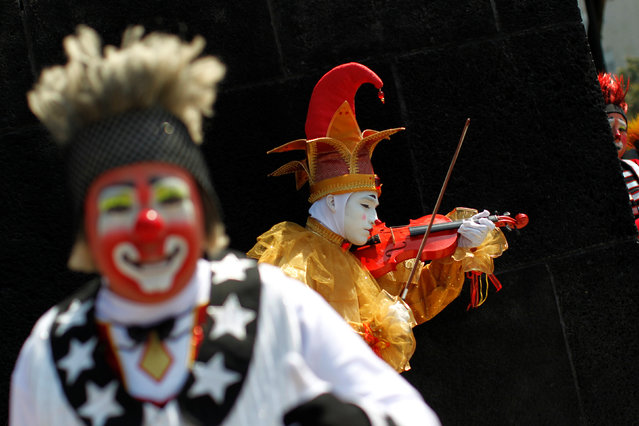
A clown plays the violin during the XXI Convention of Clowns, at the Jimenez Rueda Theatre, in Mexico City, Mexico, October 19, 2016. (Photo by Carlos Jasso/Reuters)

A clown plays the violin during the XXI Convention of Clowns, at the Jimenez Rueda Theatre, in Mexico City, Mexico, October 19, 2016. In the wake of the creepy clown sightings in several states of North and South Americas and Europe that caused widespread panic, professional clowns from across Latin America came together at an annual convention in Mexico to give a serious message: “We are clowns, not killers!”. Around 200 clowns took part in the 21st International Clown Convention, dressed in bright coloured clothes and makeup, and chanted the word as they clicked group pictures to counter the “creepy clown” craze. (Photo by Carlos Jasso/Reuters)
Details
20 Oct 2016 10:58:00
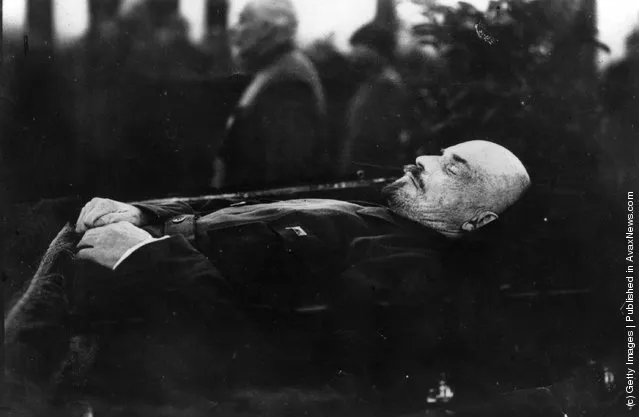
1924:  Vladimir Ilyich Lenin lying in state in the Kremlin

Photo: Vladimir Ilyich Lenin (1870 – 1924) lying in state in the Kremlin. (Photo by Hulton Archive/Getty Images). 1924

Important! For the same article in Russian language click here.

Something quite intriguing is happening within Russian-speaking internet during the last few – should you type a fully academic inquiry (at least, according to Russian academic requirements) in national search engines for "Lenin's mausoleum" – the first thing you get (even in top 10 searches) is website pages talking about black magic and occult. Website authors view this construction differently, but unconditionally agree on one thing: the mausoleum of the "leader of the world proletariat” – the essence of a magical artifact, a sort of “energy vampire”. It was built with a certain purpose: to drain the energy out of miserable Soviet citizens on one hand; and to poison the anthroposphere of one-sixth part of the earth with its vibes (the exact territory that was occupied by the former Soviet Union), depriving the Russian people of will to resist on the other hand. Complete nonsense? No doubt. Nevertheless, an intriguing one. Well, probably because some oddities do exist in mausoleum's history. These oddities are the thing we are going to discuss this time. First, let me refresh you memory on the subject.
Details
16 Oct 2011 11:27:00
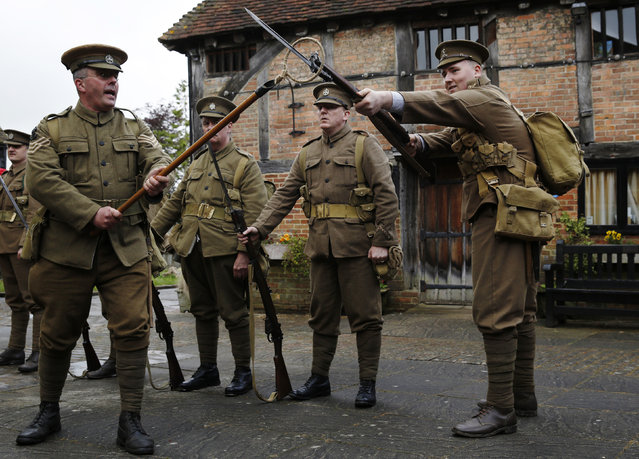
Factory landlord Lawrence Taylor (L), portraying a Colour Sergeant from the King's Royal Rifle Corps, part of the Rifles Living History Society, performs a drill with Connor Young (R) of the Queen's Own Royal West Kent Regiment Living History Group as they recreate the life of a First World War soldier at the Eden Valley Museum in Edenbridge in southeast England May 10, 2014. (Photo by Luke MacGregor/Reuters)

Factory landlord Lawrence Taylor (L), portraying a Colour Sergeant from the King's Royal Rifle Corps, part of the Rifles Living History Society, performs a drill with Connor Young (R) of the Queen's Own Royal West Kent Regiment Living History Group as they recreate the life of a First World War soldier at the Eden Valley Museum in Edenbridge in southeast England May 10, 2014. Lawrence has always had an interest in military history and specifically “The Rifles” – his veteran father's WWII regiment. When he became a re-enactor he chose not to re-enact WWII as many of the veterans are still alive, and he felt uncomfortable as he remembers his father would have flashbacks and nightmares about the war. United by a fascination with military history and a fondness for dressing up, groups such as the Rifles Living History Society and the Queen's Own Royal West Kent Regiment Living History Group get together to recreate aspects of life during the First World War. Reuters photographer Luke MacGregor photographed members of the groups, both as they took part in living history events and at their day jobs. (Photo by Luke MacGregor/Reuters)
Details
26 Aug 2014 10:12:00
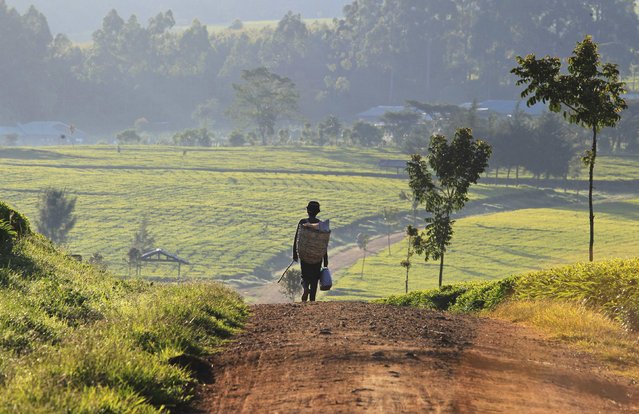
A man walks in the early morning to start his day picking tea leaves at a plantation in Nandi Hills, in Kenya's highlands region west of capital Nairobi, November 5, 2014. Emerald-coloured tea bushes blanketing the rolling hills of Nandi County have long provided a livelihood for small-scale farmers, helping make Kenya one of the world's biggest tea exporters. But ideal weather and bigger harvests, instead of producing bumper earnings, have led to a glut of Kenya's speciality black tea. (Photo by Noor Khamis/Reuters)

A man walks in the early morning to start his day picking tea leaves at a plantation in Nandi Hills, in Kenya's highlands region west of capital Nairobi, November 5, 2014. Emerald-coloured tea bushes blanketing the rolling hills of Nandi County have long provided a livelihood for small-scale farmers, helping make Kenya one of the world's biggest tea exporters. But ideal weather and bigger harvests, instead of producing bumper earnings, have led to a glut of Kenya's speciality black tea. (Photo by Noor Khamis/Reuters)

Details
17 Nov 2014 12:44:00
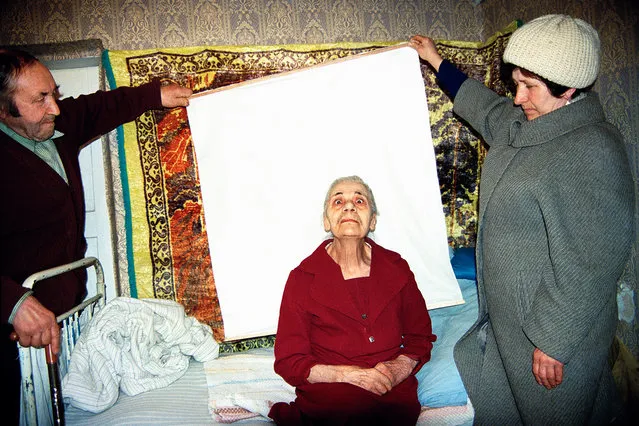
He was provided with black and white film, and would photograph as many as 60 people a day, against a portable white backdrop. But he also carried a wide-angle camera with expensive C-41 colour film, and took his own photo portraits. (Photo by Alexander Chekmenev/The Guardian)

In 1994, after the fall of the Soviet Union, all Ukrainians had to get a new passport – and photographer Alexander Chekmenev was on hand to take their photos. The snatched extra shots he took are remarkable in their honesty and tenderness. (Photo by Alexander Chekmenev/The Guardian)
Details
30 Dec 2016 10:22:00
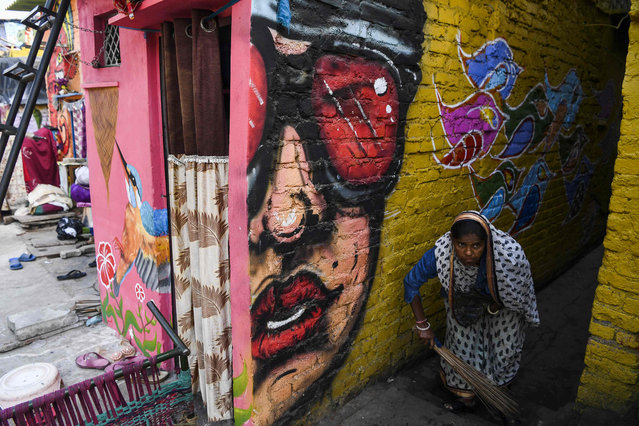
A woman sweeps an alleyway adorned with murals painted by artists from “Delhi Street Art” group at the Raghubir Nagar slum in New Delhi on December 2, 2019. (Photo by Sajjad Hussain/AFP Photo)

A woman sweeps an alleyway adorned with murals painted by artists from “Delhi Street Art” group at the Raghubir Nagar slum in New Delhi on December 2, 2019. A New Delhi slum has been given a colourful makeover thanks to a street artist collective, drawing art lovers and selfie-snappers to a rundown area that they would never normally visit. (Photo by Sajjad Hussain/AFP Photo)
Details
02 Jan 2020 00:05:00
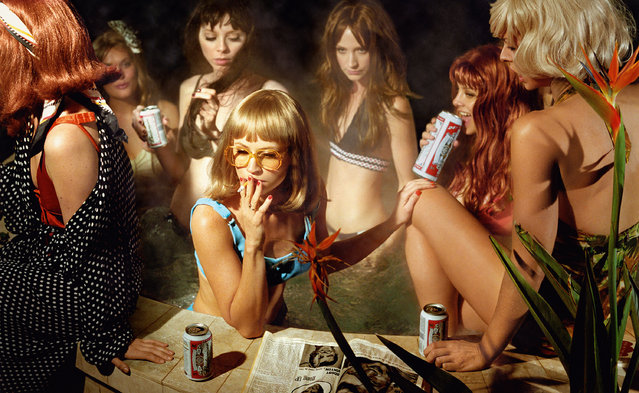
The American artist’s work encompasses fashion, photography and film with characteristically vivid colour and unsettling theatricality. Here: The Big Valley, Susie and Friends, 2008. (Photo by Alex Prager Studio/Lehmann Maupin Gallery)

Alex Prager is an American art photographer and filmmaker based in Los Angeles. Her photographs primarily use staged actors, models and extras to create “meticulously designed mise en scène”, often described as film-like and hyperreal. “Alex Prager: Silver Lake Drive” is at the Photographers’ Gallery, London, 15 June – 14 October 2018. Here: The Big Valley, Susie and Friends, 2008. (Photo by Alex Prager Studio/Lehmann Maupin Gallery)
Details
15 Jun 2018 00:01:00
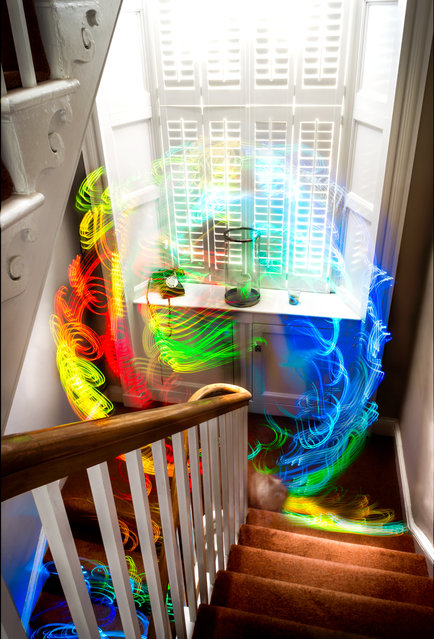
His goal with the project is to make the invisible visible. (Photo by Luis Hernan)

Luis Hernan was always curious about how wireless technologies like radio are transmitted through the air. So after finishing up his studies in architecture, computer science, and design, Hernan decided to research these invisible signals through a PhD at Newcastle University. Hernan set up a system that turned the wireless signals around him into colourful, ghostlike images using long-exposure photography, allowing people to see the strength of the signals around them. (Photo by Luis Hernan)
Details
13 Aug 2014 09:38:00