Loading...
Done


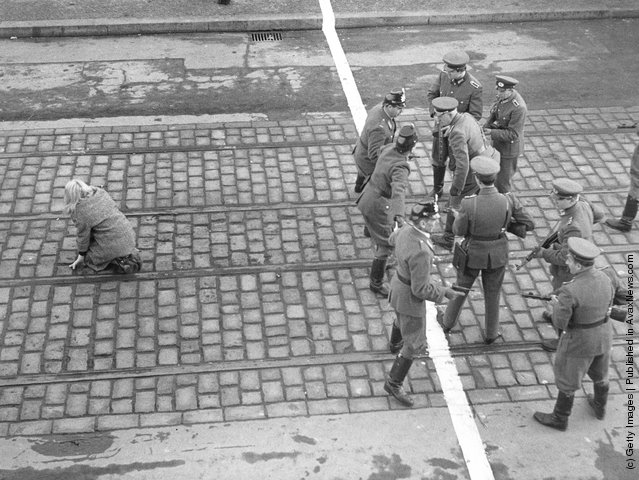
“The Berlin Wall (German: Berliner Mauer) was a barrier constructed by the German Democratic Republic (GDR, East Germany) starting on 13 August 1961, that completely cut off West Berlin from surrounding East Germany and from East Berlin. The barrier included guard towers placed along large concrete walls, which circumscribed a wide area (later known as the “death strip”) that contained anti-vehicle trenches, “fakir beds” and other defenses. The Soviet-dominated Eastern Bloc officially claimed that the wall was erected to protect its population from fascist elements conspiring to prevent the “will of the people” in building a socialist state in East Germany. However, in practice, the Wall served to prevent the massive emigration and defection that marked Germany and the communist Eastern Bloc during the post-World War II period”. – Wikipedia

Photo: West Berlin policemen and East German Volkspolizei face each other across the border in Berlin, circa 1955. (Photo by Three Lions/Hulton Archive/Getty Images)
Details
22 May 2011 10:49:00
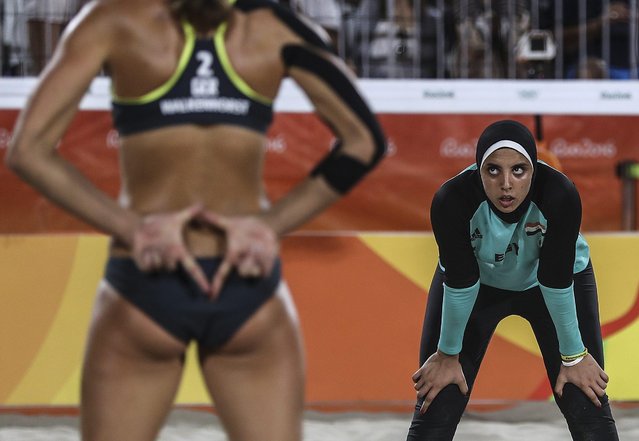
Kira Walkenhorst of Germany (L) signals as Doaa Elghobashy of Egypt (R) watches during the women's Beach Volleyball preliminary pool D game between Ludwig/Walkenhors of Germany and Elghobashy/Nada of Egypt the Rio 2016 Olympic Games at the Beach Volleyball Arena on Copacabana Beach in Rio de Janeiro, Brazil, 07 August 2016. (Photo by Antonio Lacerda/ANSA)

Kira Walkenhorst of Germany (L) signals as Doaa Elghobashy of Egypt (R) watches during the women's Beach Volleyball preliminary pool D game between Ludwig/Walkenhors of Germany and Elghobashy/Nada of Egypt the Rio 2016 Olympic Games at the Beach Volleyball Arena on Copacabana Beach in Rio de Janeiro, Brazil, 07 August 2016. (Photo by Antonio Lacerda/ANSA)
Details
09 Aug 2016 12:54:00
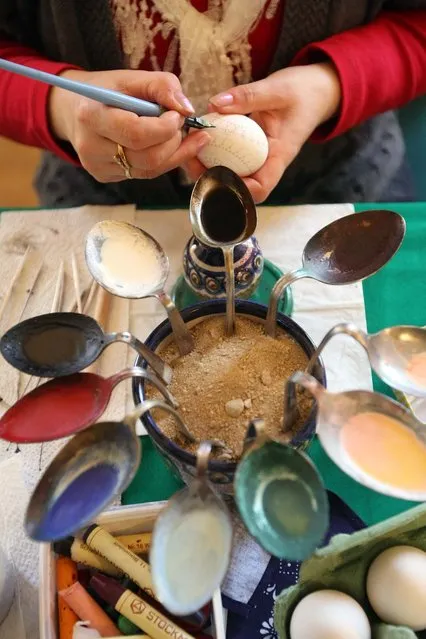
A Sorb egg painter decorates an Easter egg while using bent spoons full of melted wax as coloring at the annual Easter egg market on March 16, 2013 in Schleife, Germany. Easter is a particularly important time of year for Sorbs, a Slavic minority in eastern Germany, and the period includes the tradition of painting Easter eggs that include visual elements intended to ward off evil. Many Sorbs still speak Sorbian, a language closely related to Polish and Czech.  (Photo by Adam Berry)

A Sorb egg painter decorates an Easter egg while using bent spoons full of melted wax as coloring at the annual Easter egg market on March 16, 2013 in Schleife, Germany. Easter is a particularly important time of year for Sorbs, a Slavic minority in eastern Germany, and the period includes the tradition of painting Easter eggs that include visual elements intended to ward off evil. Many Sorbs still speak Sorbian, a language closely related to Polish and Czech. (Photo by Adam Berry)
Details
19 Mar 2013 06:41:00
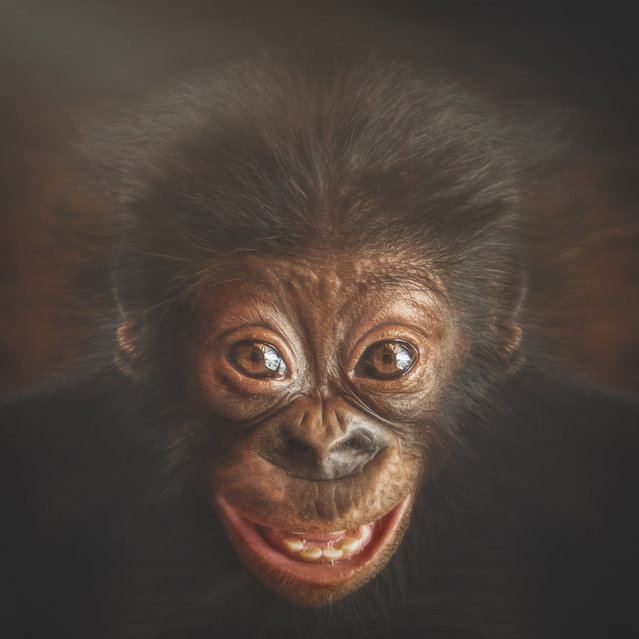
These portraits reveal the incredibly humanlike expressions of a variety of apes.Through piercing eyes and finite facial details, the intimate photographs show the animals looking angry, sad, delighted and pensive. They are the works of Manuela Kulpa – an IT consultant and keen photographer from near Cologne, Germany – who shot the apes predominantly at zoos across Austria, Belgium, the Czech Republic, Germany and the Netherlands. Here: Bonobo, Azibo. (Photo by Manuela Kulpa/Caters News)

These portraits reveal the incredibly humanlike expressions of a variety of apes.Through piercing eyes and finite facial details, the intimate photographs show the animals looking angry, sad, delighted and pensive. They are the works of Manuela Kulpa – an IT consultant and keen photographer from near Cologne, Germany – who shot the apes predominantly at zoos across Austria, Belgium, the Czech Republic, Germany and the Netherlands. Here: Bonobo, Azibo. (Photo by Manuela Kulpa/Caters News)
Details
26 Feb 2016 10:04:00
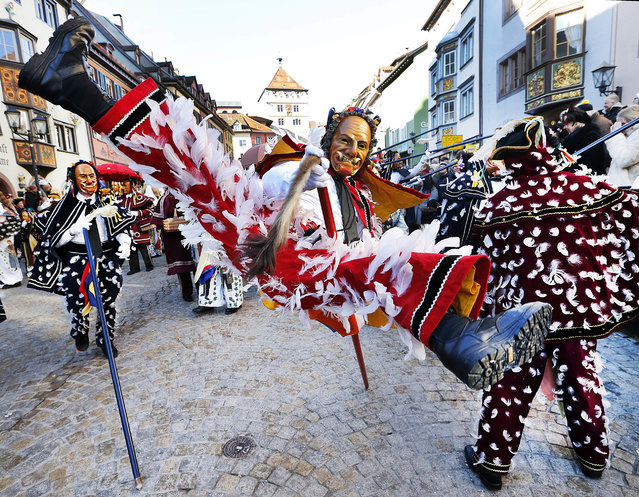
A “Federahannes”, a jester figure from Rottweil, participates in the “Narrensprung” (jester jump) parade in Rottweil, southern Germany, Monday, February 27, 2016. About 4000 jesters paraded through the city among thousands of spectators. The Rottweil Narrensprung is the highlight of the Swabian-Alemannic Fastnacht and one of the traditional pre-Lenten carnival parades in southwestern Germany. (Photo by Michael Probst/AP Photo)

A “Federahannes”, a jester figure from Rottweil, participates in the “Narrensprung” (jester jump) parade in Rottweil, southern Germany, Monday, February 27, 2016. About 4000 jesters paraded through the city among thousands of spectators. The Rottweil Narrensprung is the highlight of the Swabian-Alemannic Fastnacht and one of the traditional pre-Lenten carnival parades in southwestern Germany. (Photo by Michael Probst/AP Photo)
Details
04 Mar 2017 00:03:00
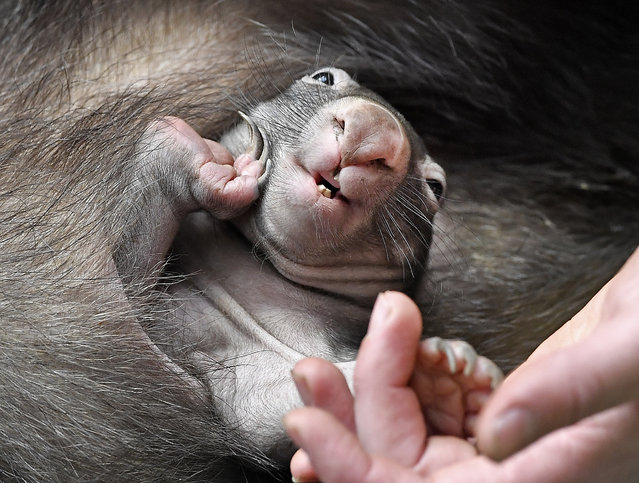
The little new born wombat baby APARI sitting in its mothers pouch at the zoo in Duisburg, Germany, Thursday, March 29, 2018. Wombat mother TINSEL once was found in the pouch of its dead mother on a street in Australia and was raised by zookeepers before she came to Germany. The zoo tried for 40 years in vain to breed a wombat, until APARI was born as the first one last week. (Photo by Martin Meissner/AP Photo)

The little new born wombat baby APARI sitting in its mothers pouch at the zoo in Duisburg, Germany, Thursday, March 29, 2018. Wombat mother TINSEL once was found in the pouch of its dead mother on a street in Australia and was raised by zookeepers before she came to Germany. The zoo tried for 40 years in vain to breed a wombat, until APARI was born as the first one last week. (Photo by Martin Meissner/AP Photo)
Details
01 Apr 2018 00:03:00
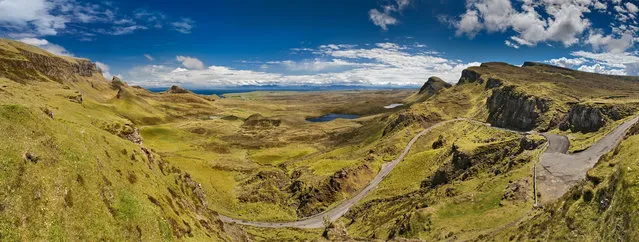
Island Of Skye, Scotland

A set of pictures taken by Kellie Netherwood on the northern-most island located in the Inner Hebrides of Scotland perfectly captures the spirit of the Scots: wild, free, and majestic. It is no wonder that Scottish people fought tooth and nail to gain their independence all throughout their history. The green fields, rocky hills, and the beautiful waterfalls all sing to the spirits of the Scots, instilling pride into everyone who considers this place to be their motherland. However, no matter what your origin may be, you cannot help being fascinated by the beauty of these landscapes, drawn to them as if by a powerful force. (Photo by Kellie Netherwood)
Details
17 Oct 2014 13:28:00
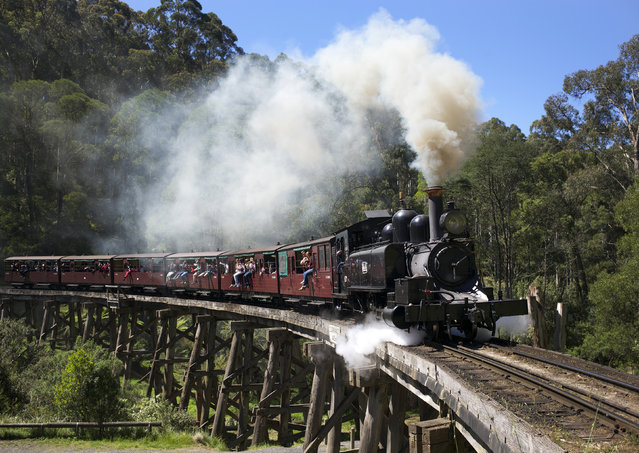
A Puffing Billy steam train hauled by locomotive 14A crosses the Monbulk Creek trestle after leaving Belgrave station near Melbourne, October 20, 2014. (Photo by Jason Reed/Reuters)

A Puffing Billy steam train hauled by locomotive 14A crosses the Monbulk Creek trestle after leaving Belgrave station near Melbourne, October 20, 2014. While the discovery of steam power 200 years ago powered the Industrial Revolution, the world long ago shunted most steam trains onto the sidings of history. (Photo by Jason Reed/Reuters)
Details
04 Nov 2014 12:21:00