Loading...
Done
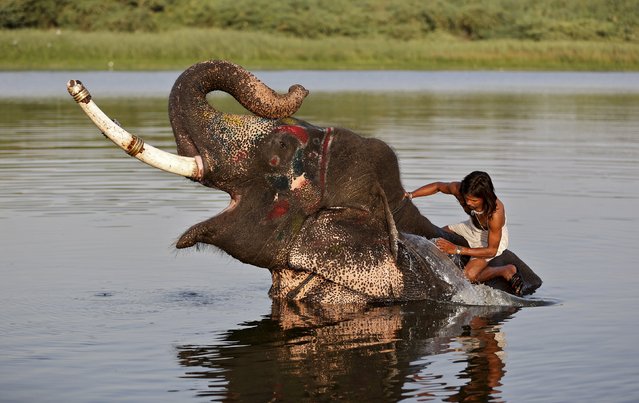
A mahout splashes water on his elephant in the river Sabarmati on a hot summer day in Ahmedabad, India, May 20, 2015. (Photo by Amit Dave/Reuters)

A mahout splashes water on his elephant in the river Sabarmati on a hot summer day in Ahmedabad, India, May 20, 2015. (Photo by Amit Dave/Reuters)
Details
21 May 2015 12:26:00
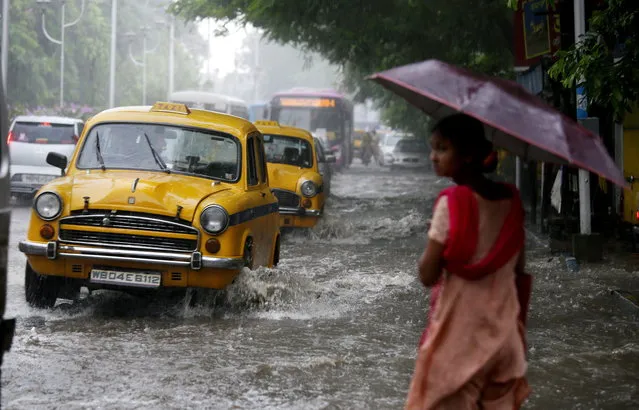
Indian commuters wade through floodwaters during the continuous rain shower in Calcutta, India, July 10, 2015. A monsoon shower hit the city and disrupted daily life. The Indian monsoon, takes place between May and September. (Photo by Piyal Adhikary/EPA)

Indian commuters wade through floodwaters during the continuous rain shower in Calcutta, India, July 10, 2015. A monsoon shower hit the city and disrupted daily life. The Indian monsoon, takes place between May and September. (Photo by Piyal Adhikary/EPA)
Details
11 Jul 2015 14:18:00
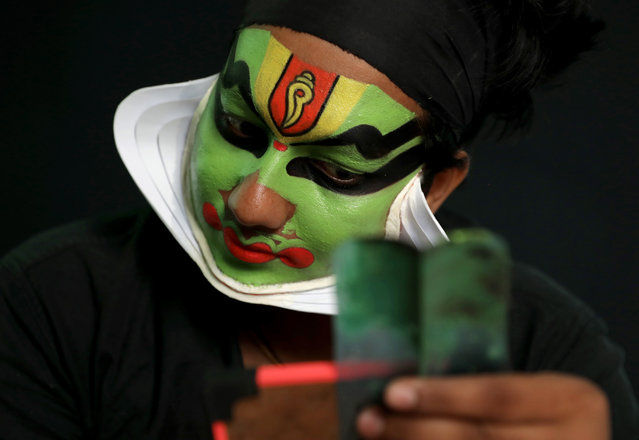
A South Indian dancer puts finishing touches to his make up as he gets ready to performs a traditional dance during a promotion event for Indian tourism in the Kerala state, in Kolkata, Eastern India, 28 January 2020. (Photo by Piyal Adhikary/EPA/EFE)

A South Indian dancer puts finishing touches to his make up as he gets ready to performs a traditional dance during a promotion event for Indian tourism in the Kerala state, in Kolkata, Eastern India, 28 January 2020. (Photo by Piyal Adhikary/EPA/EFE)
Details
30 Jan 2020 00:07:00
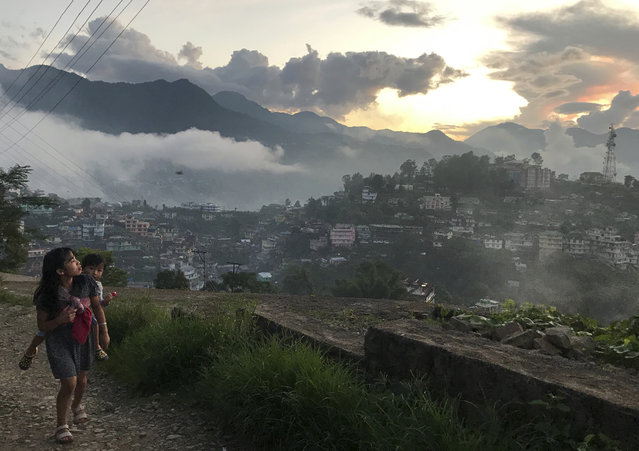
A Naga girl carries a child and walks up a slope during sunset in Kohima, capital of the northeastern Indian state of Nagaland, Thursday, September 19, 2019. Nagas are indigenous people living in several northeastern Indian states and across the border in Myanmar. (Photo by Yirmiyan Arthur/AP Photo)

A Naga girl carries a child and walks up a slope during sunset in Kohima, capital of the northeastern Indian state of Nagaland, Thursday, September 19, 2019. Nagas are indigenous people living in several northeastern Indian states and across the border in Myanmar. (Photo by Yirmiyan Arthur/AP Photo)
Details
28 Sep 2019 00:01:00
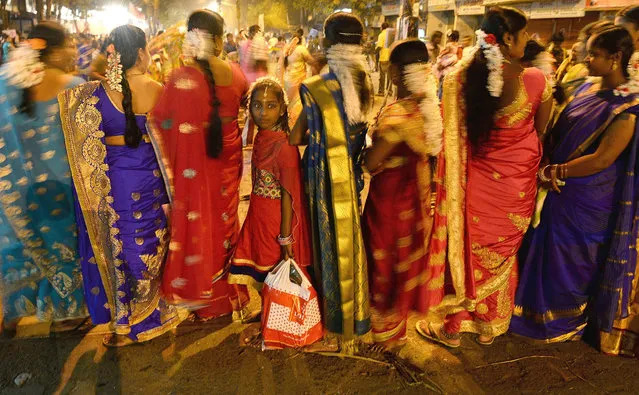
Indian Hindu devotees wait to take part in an event to mark Pongal in Mumbai on January 15, 2016. Pongal, which coincides with the Hindu festival Makara Sankranthi, is a thanksgiving and harvest celebrated throughout India and specifically by those from the Indian state of Tamil Nadu. (Photo by Indranil Mukherjee/AFP Photo)

Indian Hindu devotees wait to take part in an event to mark Pongal in Mumbai on January 15, 2016. Pongal, which coincides with the Hindu festival Makara Sankranthi, is a thanksgiving and harvest celebrated throughout India and specifically by those from the Indian state of Tamil Nadu. (Photo by Indranil Mukherjee/AFP Photo)
Details
19 Jan 2016 08:06:00
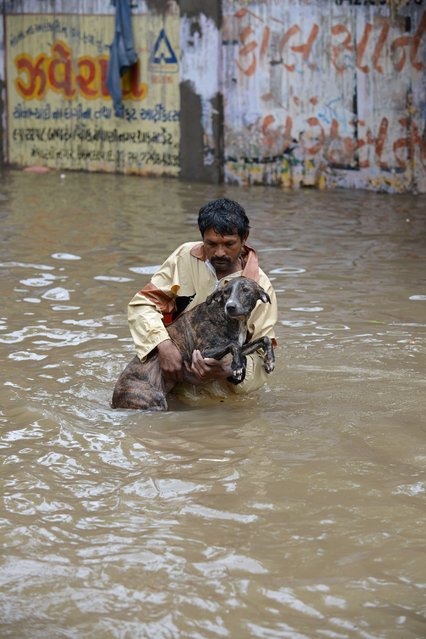
An Indian resident assists a dog as he wades through floodwaters in Ahmedabad on July 30, 2014. Rains lashed Ahmedabad and many regions of India's western Gujarat state, wth the Indian Metrological Department warning of heavy rains for the next 48 hours. (Photo by Sam Panthaky/AFP Photo)

An Indian resident assists a dog as he wades through floodwaters in Ahmedabad on July 30, 2014. Rains lashed Ahmedabad and many regions of India's western Gujarat state, wth the Indian Metrological Department warning of heavy rains for the next 48 hours. (Photo by Sam Panthaky/AFP Photo)
Details
31 Jul 2014 09:58:00
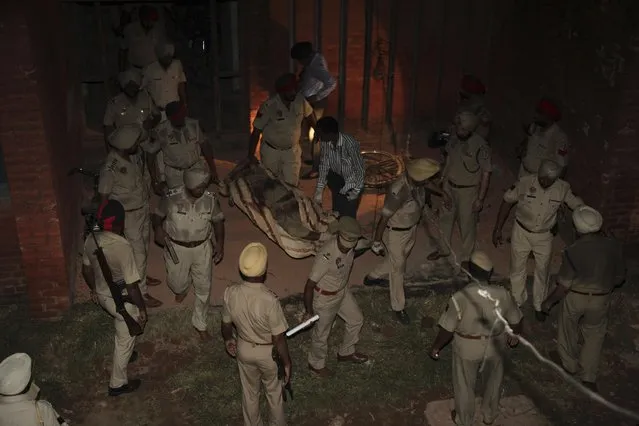
Indian policemen carry the body of one of their colleagues killed in a rebel attack in the town of Dinanagar, in the northern state of Punjab, India, Monday, July 27, 2015. Indian forces fought an extended gunbattle Monday with militants who attacked a moving bus and stormed into a police station in a northern town bordering Pakistan. (Photo by Channi Anand/AP Photo)

Indian policemen carry the body of one of their colleagues killed in a rebel attack in the town of Dinanagar, in the northern state of Punjab, India, Monday, July 27, 2015. Indian forces fought an extended gunbattle Monday with militants who attacked a moving bus and stormed into a police station in a northern town bordering Pakistan. (Photo by Channi Anand/AP Photo)
Details
28 Jul 2015 12:56:00
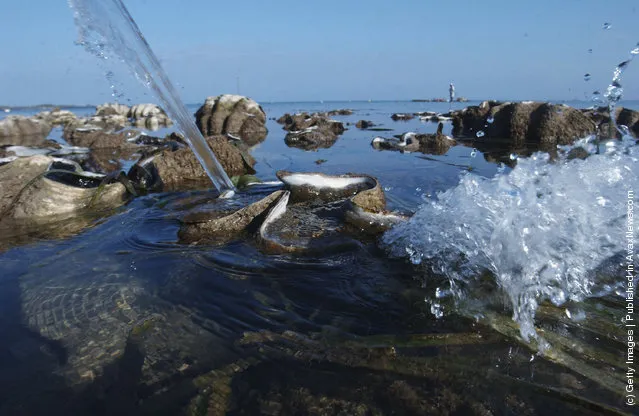
Tridacna Gigas, or Giant Clams

“The giant clam, Tridacna gigas (known as pā’ua in Cook Islands Māori), is the largest living bivalve mollusc. T. gigas is one of the most endangered clam species. It was mentioned as early as 1825 in scientific reports. One of a number of large clam species native to the shallow coral reefs of the South Pacific and Indian oceans, they can weigh more than 200 kilograms (440 lb) measure as much as 120 cm (47 in) across, and have an average lifespan in the wild of 100 years or more”. – Wikipedia

Photo: Tridacna Gigas, or Giant Clams spew water as a traditional fisherman passes by a small sanctuary on January 23, 2004 near Bolinao in the Northern Philippines. The clams, prime builders for coral reefs and providing shelter for spawning fish and other marine life, are exposed by low tides in the sanctuary. Overfishing and pollution throughout the country are not only threatening food security, but are also starting to choke one of the few working clam sanctuaries in the world. (Photo by David Greedy/Getty Images)
Details
01 Oct 2011 13:10:00