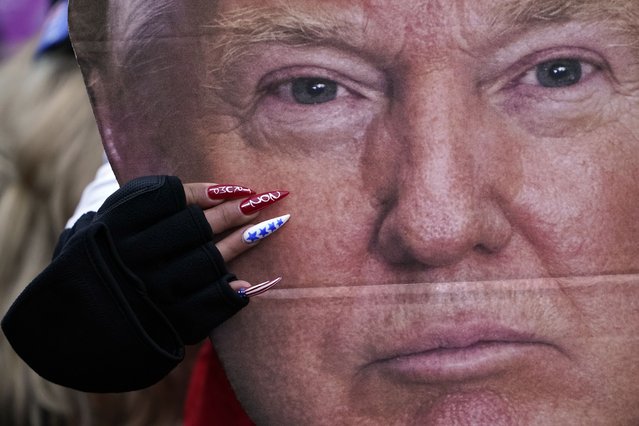
A woman holds a cutout of President Donald Trump's face at a rally in Washington in support of Trump called the “Save America Rally” on January 6, 2021. (Photo by Jacquelyn Martin/AP Photo)
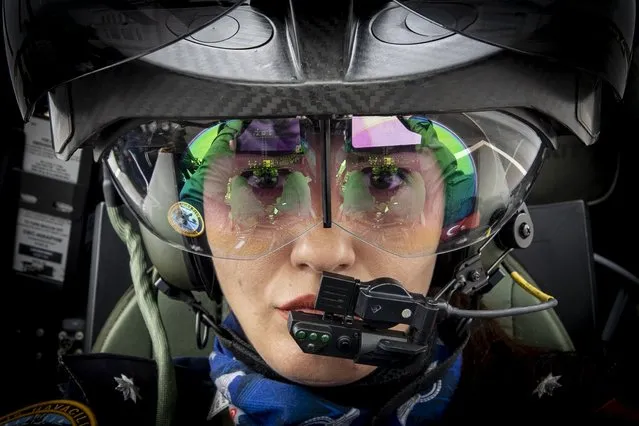
The first female attack helicopter pilot of Türkiye's Atak helicopter, Deputy Commissioner Özge Karabulut, undisclosed location, Türkiye, January 6, 2022. (Photo by Anadolu Agency via Getty Images)
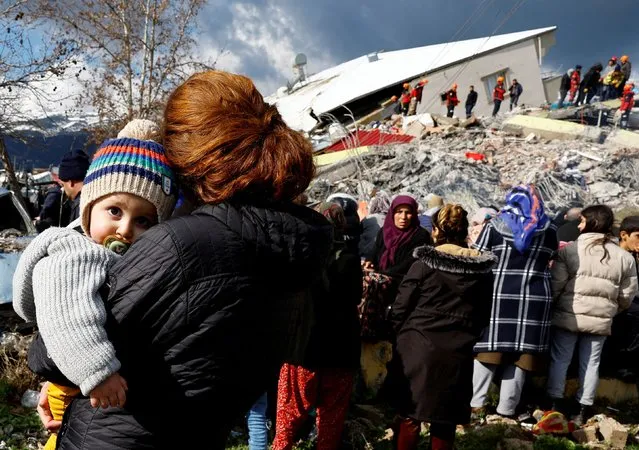
A woman holds a child as she stands near rubble and damages following an earthquake in Gaziantep, Turkey on February 7, 2023. (Photo by Suhaib Salem/Reuters)
A reveller surfs on top of the crowd during the Wacken Open Air 2022 heavy metal festival in Wacken, Germany on August 4, 2022. (Photo by Thilo Schmuelgen/Reuters)
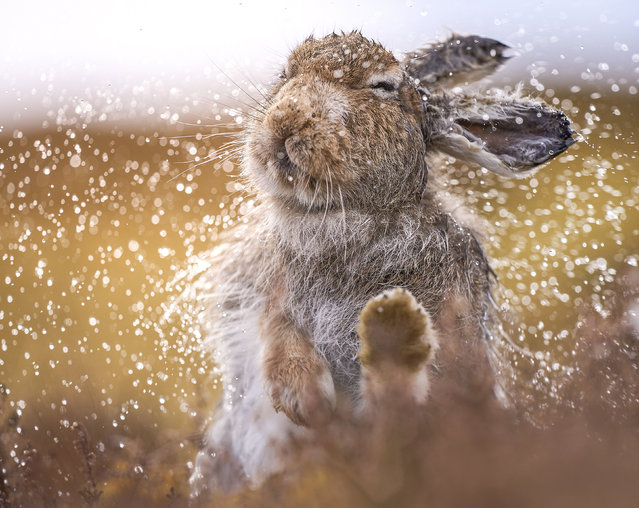
A mountain hare shakes off rain from its fur, in Findhorn Valley, Moray, Scotland in the second decade of August 2024. In summer, the hare’s coat is a grey-brown colour with a tinge of blue, making them hard to spot against the heather moorland. In winter, it changes to almost completely white for camouflage in the snow. (Photo by Will Hall/Solent News)
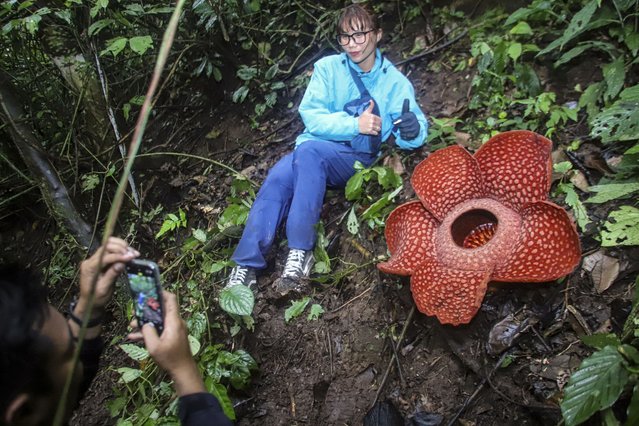
A woman poses for a photo with the Rafflesia Arnoldii flower at Palupuah Forest, Agam District, West Sumatra, Indonesia on September 16, 2024. Palupuh forest is located at an altitude of 975 meters above sea level, with temperatures reaching 18-20 degrees Celsius. According to The West Sumatera Nature Conservation Agency (BKSDA), in the province of West Sumatra there are 36 points where this endangered flower grows. (Photo by Adi Prima/Anadolu via Getty Images)
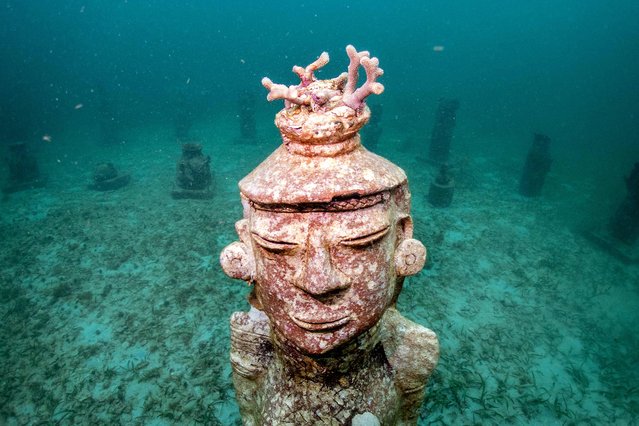
Coral grows in a sculpture at the MUSZIF underwater museum in Isla Fuerte, Bolivar department, Colombia, on May 22, 2024. In the Colombian Caribbean an underwater museum protects coral reefs threatened by tourism and climate change. (Photo by Luis Acosta/AFP Photo)
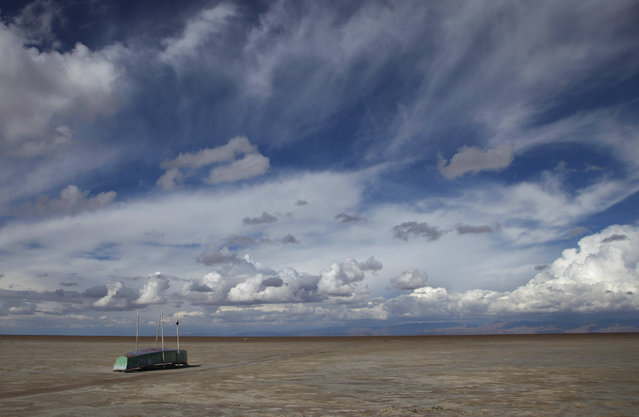
In this January 12, 2016 photo, an abandoned boat lies on the dried up lake bed of Lake Poopo, on the outskirts of Untavi, Bolivia. Drought caused by the recurrent El Nino meteorological phenomenon is considered the main driver of the lake's demise. Along with glacial melting, authorities say another factor is the diversion of water from Poopo's tributaries, mostly for mining but also for agriculture. (Photo by Juan Karita/AP Photo)