Loading...
Done
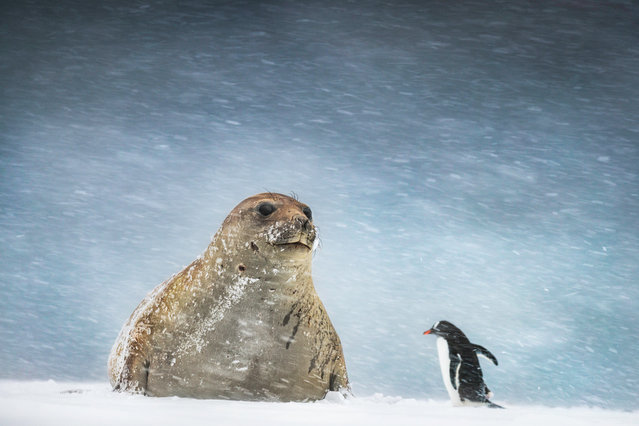
This photo of an elephant seal and Gentoo penguin shot by Andrew James in Yankee Harbour, Antarctica. (Photo by Andrew James/Travel Photographer of the Year)

This photo of an elephant seal and Gentoo penguin shot by Andrew James in Yankee Harbour, Antarctica. (Photo by Andrew James/Travel Photographer of the Year)
Details
12 Apr 2019 00:05:00
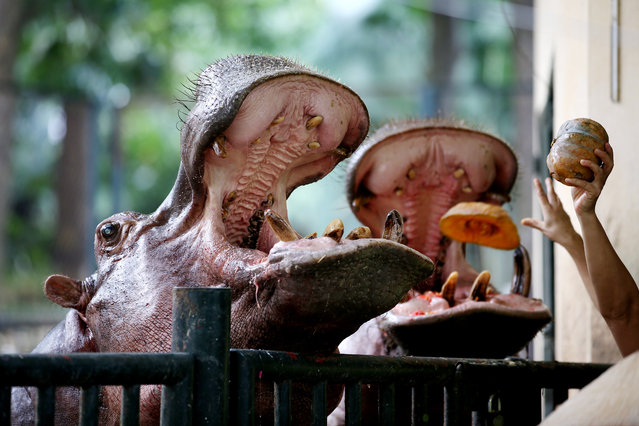
Two hippopotamus are fed with pumpkins at the Hanoi Zoo, in Hanoi, Vietnam, 25 October 2018. The zoo has been the home for more than 800 animals of over 90 different species, including three hippopotamus, since it was built in 1976. (Photo by Luong Thai Linh/EPA/EFE)

Two hippopotamus are fed with pumpkins at the Hanoi Zoo, in Hanoi, Vietnam, 25 October 2018. The zoo has been the home for more than 800 animals of over 90 different species, including three hippopotamus, since it was built in 1976. (Photo by Luong Thai Linh/EPA/EFE)
Details
28 Oct 2018 09:52:00
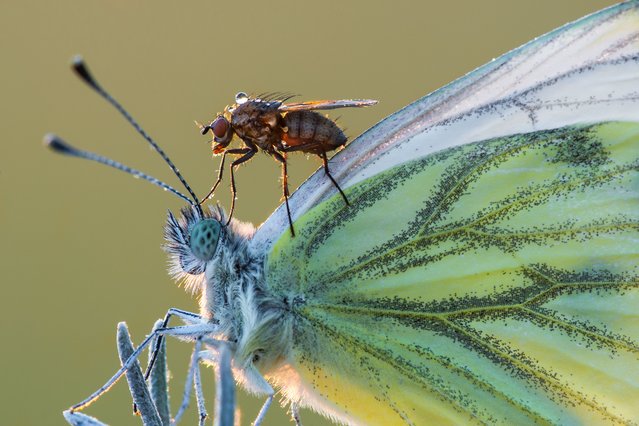
A fly rides a butterly, July 2016. (Photo by Petar Sabol Sharpeye/Rex Features/Shutterstock)

A fly rides a butterly, July 2016. (Photo by Petar Sabol Sharpeye/Rex Features/Shutterstock)
Details
15 Oct 2016 11:09:00
Four pillars of light from the 4 Laser Guide Star Facility on ESO's Very Large Telescope (VLT) are shown reaching into the Chilean night sky in this image from ESO Photo Ambassador Fred Kamphues, on September 2, 2016. The lasers are a key part of the adaptive optics system on the VLT. Adaptive optics allows astronomers to drastically reduce the atmospheric distortion present at even the best sites in the world for astronomy, including Paranal in Chile, the home of the VLT. (Photo by F. Kamphues/ESO)

Four pillars of light from the 4 Laser Guide Star Facility on ESO's Very Large Telescope (VLT) are shown reaching into the Chilean night sky in this image from ESO Photo Ambassador Fred Kamphues, on September 2, 2016. The lasers are a key part of the adaptive optics system on the VLT. Adaptive optics allows astronomers to drastically reduce the atmospheric distortion present at even the best sites in the world for astronomy, including Paranal in Chile, the home of the VLT. (Photo by F. Kamphues/ESO)
Details
23 Feb 2017 00:06:00
Rob Switzer 34 proposed to Joli 33 whilst they were on holiday in Moscow, Russia. (Photo by Dipkiss Travels/Caters News Agency)

A loved-up couple have captured the moments they shared a dip-kiss in different locations around the world. Rob, 34, and Joli Switzer, 33, from Maryland, embark on a minimum of four international holidays per year to ensure that they get their unique dip-kiss photograph. Here: Rob Switzer 34 proposed to Joli 33 whilst they were on holiday in Moscow, Russia. (Photo by Dipkiss Travels/Caters News Agency)
Details
21 Apr 2018 00:03:00
Musso paddles in with Jengo. (Photo by Taylor Jones/The Palm Beach Post)

About a dozen dogs traded in their leashes for life vests Saturday for the chance to ride the waves at Jupiter beach as part of a canine surfing competition to raise money for an animal rescue group. Photo: Musso paddles in with Jengo. (Photo by Taylor Jones/The Palm Beach Post)
Details
07 Jul 2013 10:00:00
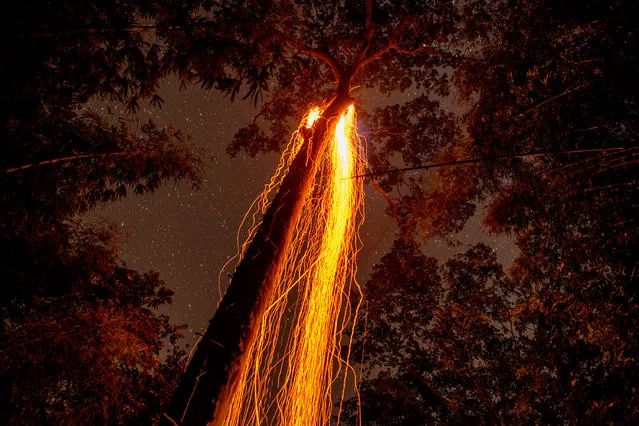
Bees are sensitive to light, which makes them follow the glowing embers down to the ground. (Photo by Hasnoor Hussain/The Guardian)

During the spring harvest season, a group of traditional Malaysian honey hunters travel to the rainforest near the Thai border to collect honeycombs from giant bees – and risk their lives climbing 200ft trees. Here: Bees are sensitive to light, which makes them follow the glowing embers down to the ground. (Photo by Hasnoor Hussain/The Guardian)
Details
22 Oct 2016 10:26:00
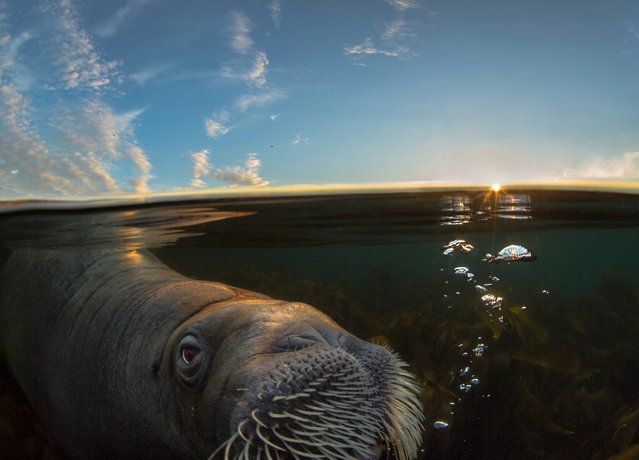
The Wildscreen festival is the world’s biggest celebration of screen-based natural history storytelling which takes place every two years in Bristol. Here: “Walrus in Midnight Sun”. Walrus feed mostly on bivalves in productive, shallow and often sandy habitats in the Arctic. This individual, though, arrived on a beach outside Tromsø, northern Norway, and found comfort on a stranded dead sperm whale. After two weeks he approached Audun, and only half a metre away he stretched his tusk forward and touched his hand gently. “This was one of the most memorable moments of my life”, Rikardsen says. He named the 500kg male Buddy. After two months, the dead whale was decomposed and Buddy suddenly disappeared. (Photo by Audun Rikardsen/Wildscreen 2016)

The Wildscreen festival is the world’s biggest celebration of screen-based natural history storytelling which takes place every two years in Bristol. Here: “Walrus in Midnight Sun”. Walrus feed mostly on bivalves in productive, shallow and often sandy habitats in the Arctic. This individual, though, arrived on a beach outside Tromsø, northern Norway, and found comfort on a stranded dead sperm whale. After two weeks he approached Audun, and only half a metre away he stretched his tusk forward and touched his hand gently. “This was one of the most memorable moments of my life”, Rikardsen says. He named the 500kg male Buddy. After two months, the dead whale was decomposed and Buddy suddenly disappeared. (Photo by Audun Rikardsen/Wildscreen 2016)
Details
07 Oct 2016 10:02:00