Loading...
Done
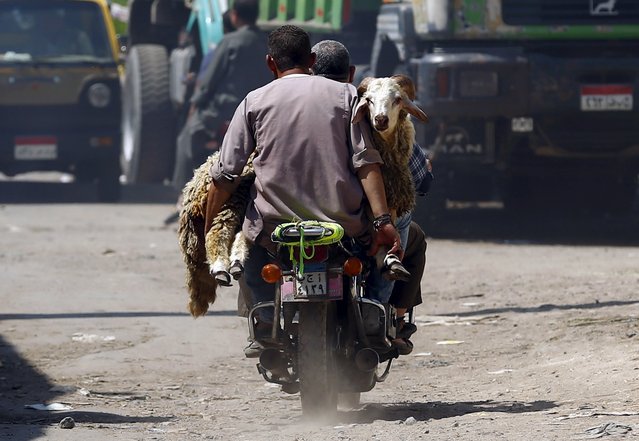
Men transport a sheep on their motorcycle after buying it at an old cattle market named “Al Emam Market” ahead of the Muslim festival Eid al-Adha in Cairo, Egypt, September 19, 2015. Muslims across the world are preparing to celebrate the annual festival of Eid al-Adha or the Festival of Sacrifice, which marks the end of the annual hajj pilgrimage, by slaughtering goats, sheep. (Photo by Amr Abdallah Dalsh/Reuters)

Men transport a sheep on their motorcycle after buying it at an old cattle market named “Al Emam Market” ahead of the Muslim festival Eid al-Adha in Cairo, Egypt, September 19, 2015. Muslims across the world are preparing to celebrate the annual festival of Eid al-Adha or the Festival of Sacrifice, which marks the end of the annual hajj pilgrimage, by slaughtering goats, sheep, cows and camels in commemoration of the Prophet Abraham's readiness to sacrifice his son to show obedience to Allah. (Photo by Amr Abdallah Dalsh/Reuters)
Details
22 Sep 2015 08:05:00
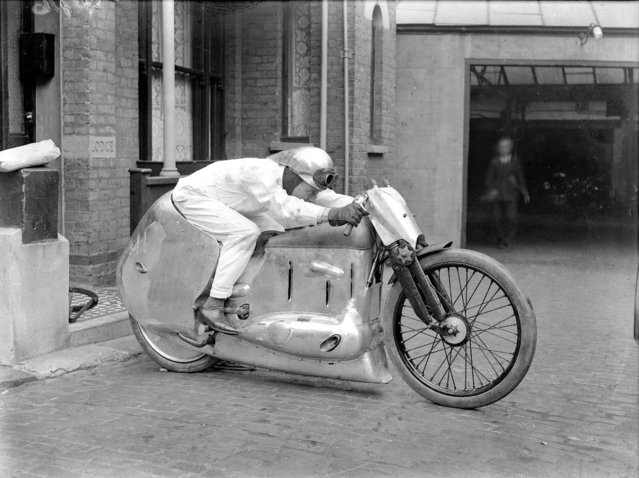
Handout photo issued by Easyart of an experimental motorcycle as an archive of weird and wacky innovations has been unearthed by an amateur historian as he trawled through a collection of images spanning the last 100 years. (Photo by Easyart/PA Wire)

Handout photo issued by Easyart of an experimental motorcycle as an archive of weird and wacky innovations has been unearthed by an amateur historian as he trawled through a collection of images spanning the last 100 years. (Photo by Easyart/PA Wire)
Details
06 Oct 2014 09:01:00
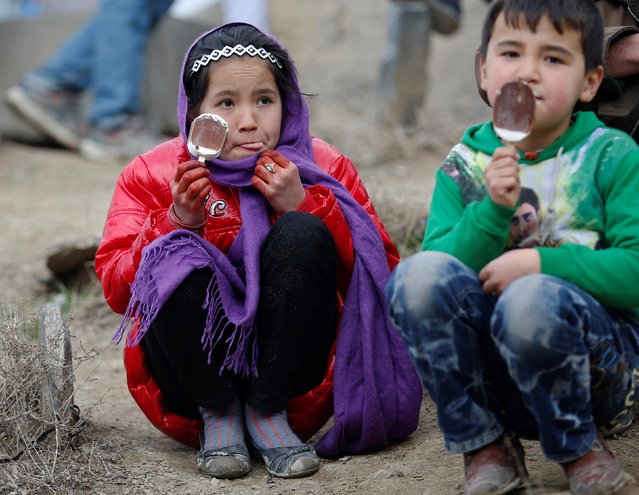
Afghan children have ice cream during the Afghan New Year (Newroz) celebration in Kabul March 21, 2014. (Photo by Ahmad Masood/Reuters)

Afghan children have ice cream during the Afghan New Year (Newroz) celebration in Kabul March 21, 2014. Afghanistan uses the Persian calendar which runs from the vernal equinox. The calendar takes as its start date the time when the Prophet Mohammad moved from Mecca to Medina in 621 AD. The current Persian year is 1393. (Photo by Ahmad Masood/Reuters)
Details
24 Mar 2014 08:19:00
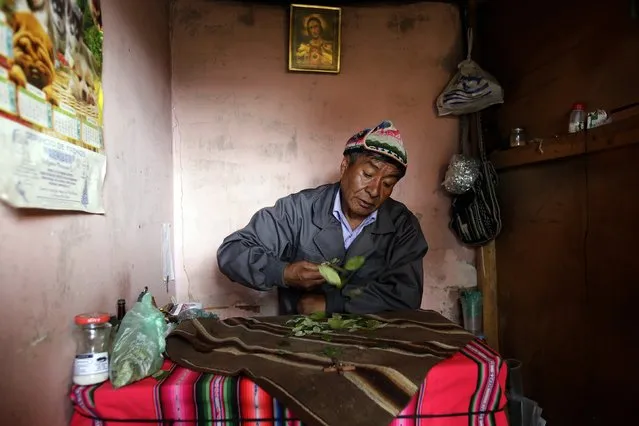
Aymara witchdoctor Ricardo Quispe, also called “Lord of the Lake”, throws coca leaves during a ritual to predict the future, at the witches market of El Alto, on the outskirts of La Paz, December 31, 2014. Dozens of witch doctors tend to a warren of stalls in El Alto, making offerings to give thanks, to promise luck at work or in love, or to call up spirits and banish curses at the end of the year. (Photo by David Mercado/Reuters)

Aymara witchdoctor Ricardo Quispe, also called “Lord of the Lake”, throws coca leaves during a ritual to predict the future, at the witches market of El Alto, on the outskirts of La Paz, December 31, 2014. Dozens of witch doctors tend to a warren of stalls in El Alto, making offerings to give thanks, to promise luck at work or in love, or to call up spirits and banish curses at the end of the year. (Photo by David Mercado/Reuters)
Details
01 Jan 2015 14:05:00
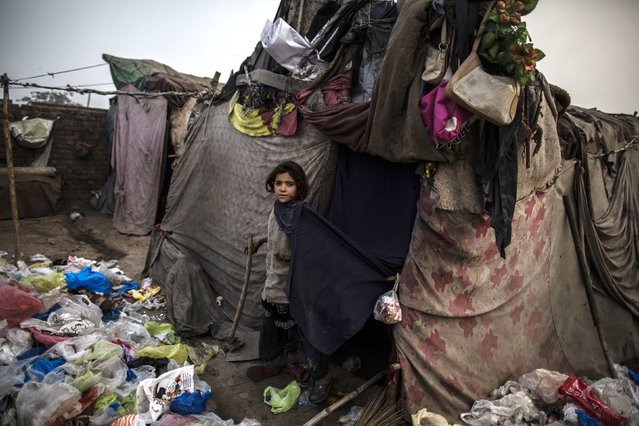
An Afghan refugee girl stands near her parents' makeshift shelter in a slum on the outskirts of Lahore January 12, 2015. (Photo by Zohra Bensemra/Reuters)

An Afghan refugee girl stands near her parents' makeshift shelter in a slum on the outskirts of Lahore January 12, 2015. (Photo by Zohra Bensemra/Reuters)
Details
13 Jan 2015 14:00:00
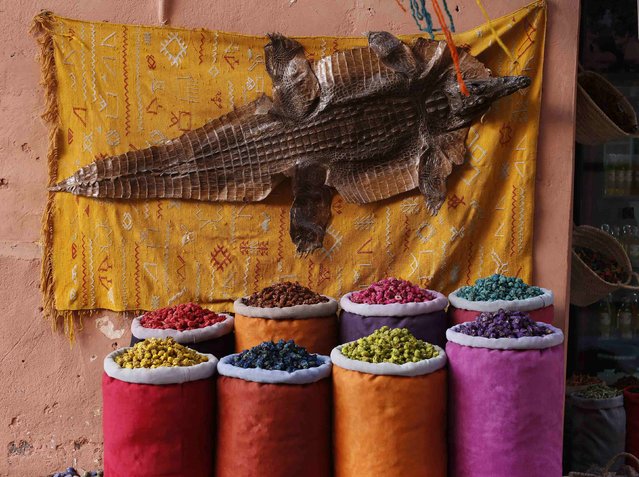
Crocodile skin is seen at a workshop in the old Medina of Marrakesh December 13, 2014. (Photo by Youssef Boudlal/Reuters)

Crocodile skin is seen at a workshop in the old Medina of Marrakesh December 13, 2014. (Photo by Youssef Boudlal/Reuters)
Details
19 Feb 2015 14:48:00
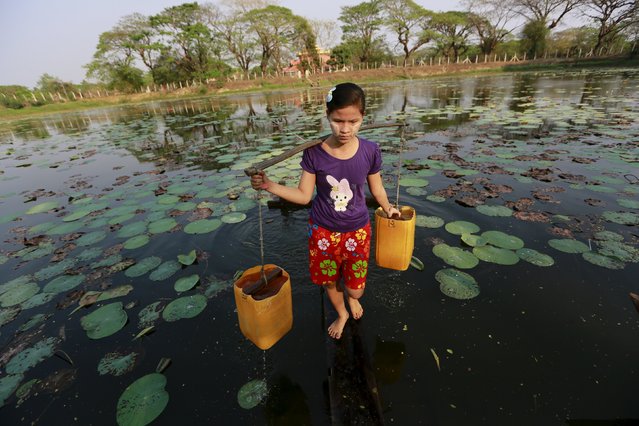
A girl collects drinking water at Dala river outside Yangon, Myanmar March 3, 2016. (Photo by Soe Zeya Tun/Reuters)

A girl collects drinking water at Dala river outside Yangon, Myanmar March 3, 2016. Some 650 million people, or one in 10 of the world's population, have no access to safe water, putting them at risk of infectious diseases and premature death. Dirty water and poor sanitation can cause severe diarrhoeal diseases in children, killing 900 under-five a day across the world, according to United Nations estimates. (Photo by Soe Zeya Tun/Reuters)
Details
18 Mar 2016 12:27:00
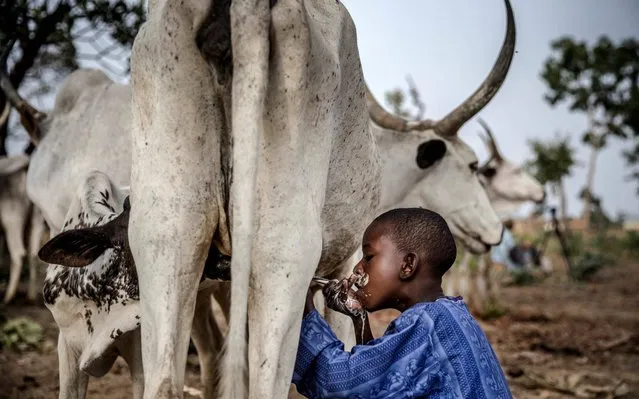
8-year-old Fulani boy Suleiman Yusuf drinks milk from a cow belonging to his father cattle near his family's house at Kachia Grazing Reserve, Kaduna State, Nigeria, on April 16, 2019. Kachia Grazing Reserve is an area set aside for the use of Fulani pastoralist and it is intended to be the foci of livestock development. The purpose for the grazing reserves is the settlement of nomadic pastoralists and inducement to sedentarisation through the provision of land for grazing and permanent water as way to avoid conflict. (Photo by Luis Tato/AFP Photo)

8-year-old Fulani boy Suleiman Yusuf drinks milk from a cow belonging to his father cattle near his family's house at Kachia Grazing Reserve, Kaduna State, Nigeria, on April 16, 2019. Kachia Grazing Reserve is an area set aside for the use of Fulani pastoralist and it is intended to be the foci of livestock development. The purpose for the grazing reserves is the settlement of nomadic pastoralists and inducement to sedentarisation through the provision of land for grazing and permanent water as way to avoid conflict. (Photo by Luis Tato/AFP Photo)
Details
10 Jul 2019 00:01:00