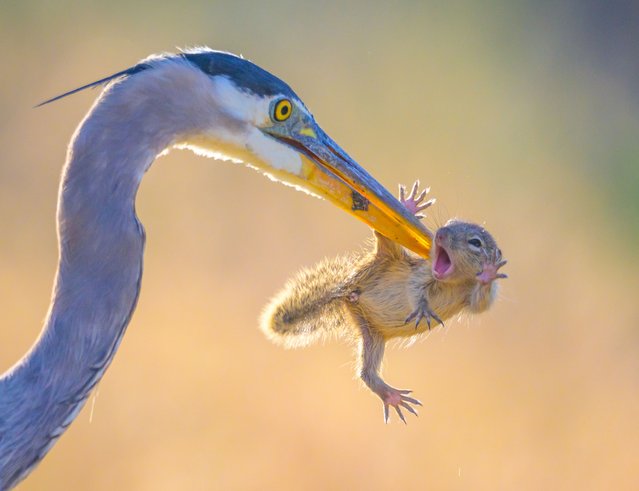
A squirrel fights for its life in the bill of a great blue heron at the Mission Trails Regional Park in California in the second decade of April 2025. (Phoot by Decker Nomura/Solent News & Photo Agency)
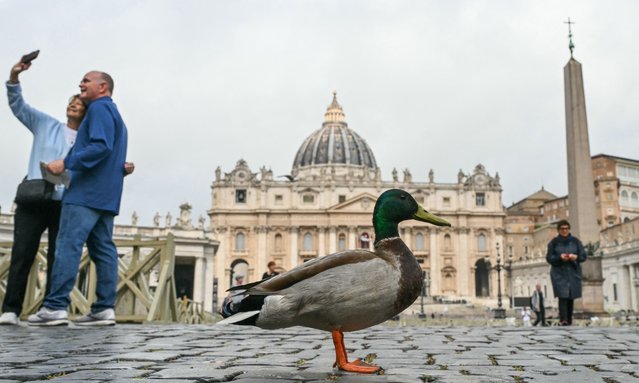
Visitors pose for a picture next to a mallard duck on the cobblestones of St Peter's Square with St Peter's Basilica in the background at The Vatican, on May 5, 2025. (Photo by Alberto Pizzoli/AFP Photo)
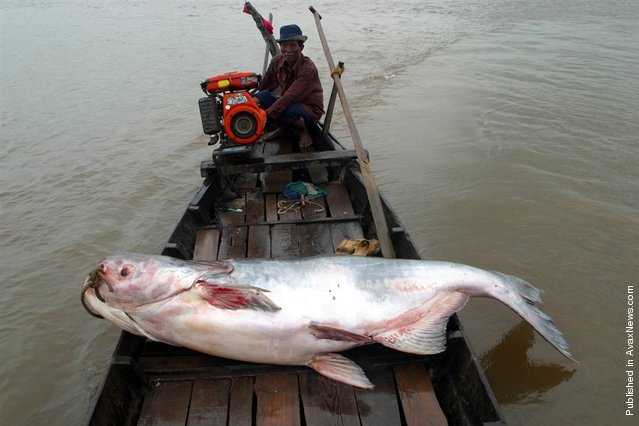
Among the fish populations that could be harmed by the Xayaburi dam in Laos is the critically endangered Mekong giant catfish, considered by the Guinness Book of World Records to be the world’s largest freshwater fish. The fish, which grows to 650 pounds and about 10 feet long, is only found in the Mekong River. It is migratory, moving between downstream habitats in Cambodia upstream to northern Thailand and Laos each year to spawn. Some experts fear the Xayaburi dam could block the migration and drive the giant catfish to extinction. (Photo by Courtesy of Zeb Hogan/University of Nevada, Reno)
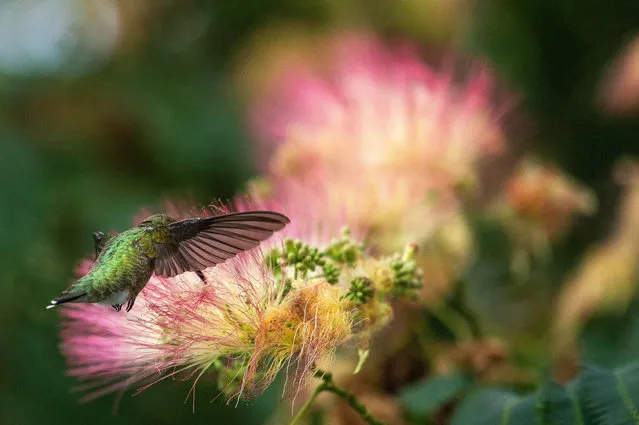
A hummingbird feeds on the nectar from a Mimosa tree in Saugus, Massachusetts on July 30, 2020. (Photo by Joseph Prezioso/ZUMA Wire/Rex Features/Shutterstock)
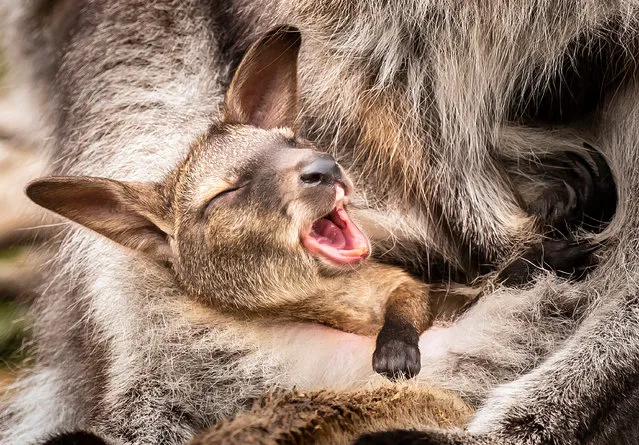
The head of a Bennett's Wallaby Joey emerges from its mothers' pouch at Yorkshire Wildlife Park in Doncaster, England on March 19, 2020, where the park still remains open to the public as coronavirus continues to hit the UK. (Photo by Danny Lawson/PA Images via Getty Images)
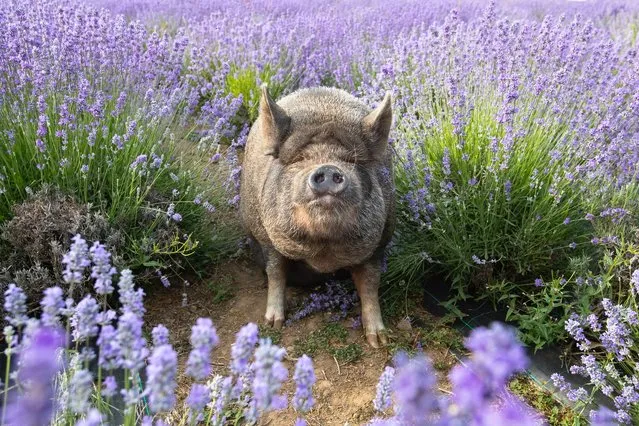
Adorable 1-year-old micro pig George from Gower Fresh Christmas Tree's Farm in Swansea, Wales, United Kingdom on June 26, 2023 enjoys a quiet evening stroll through the beautiful lavender field where he lives. (Photo by Joann Randles/Cover Images)
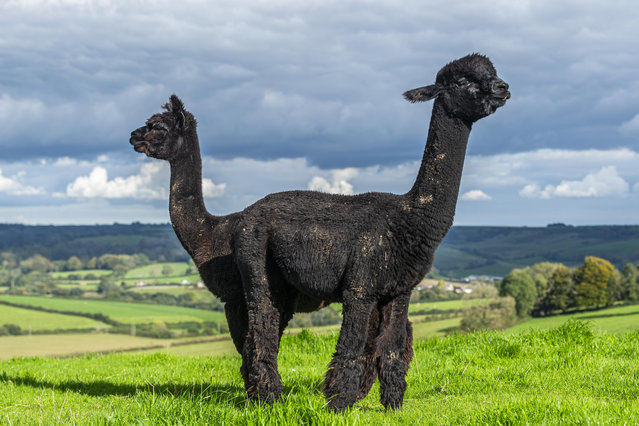
A pair of alpacas at a British farm in Dorchester, Dorset on October 9, 2024 pose together at the perfect time to conjure up a creature straight out of Dr Dolittle's imagination. (Phoot by MaxWillcock/Bournemouth News)
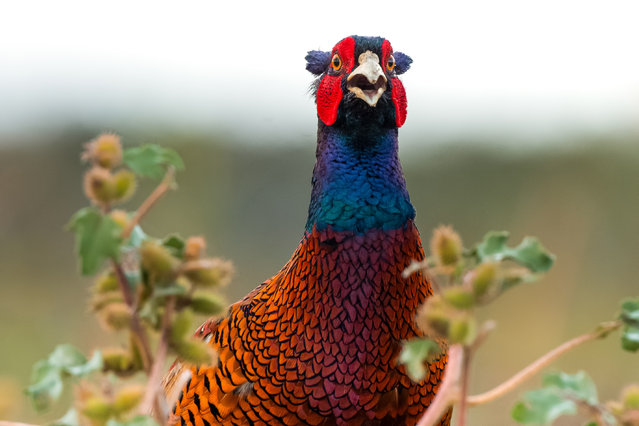
A pheasant is seen among grasses in Bursa, Turkiye on October 07, 2024. Pheasants mostly live in forested areas, thickets and wetlands. Unlike females, male pheasants have a much more remarkable structure with their long tails and feathers in bright and variable colors. Also, they feed on fruits, grains, seeds and invertebrates. (Photo by Alper Tuydes/Anadolu via Getty Images)