A singer drinks from a huge bowl of beer on-stage as he pays tribute to the customers after performing at an entertainment club in Beijing, on May 8, 2014. (Photo by Jason Lee/Reuters)
Women dressed in folk costumes take part in a traditional wedding ceremony in the village of Galicnik, west of Macedonia's capital Skopje, July 12, 2014. The Galicnik Wedding, a three-day traditional Macedonian wedding celebration held each “Petrovden” or St. Peter's Day, involves traditional customs, costumes, and rituals and dances that have been passed down over the centuries. (Photo by Ognen Teofilovski/Reuters)
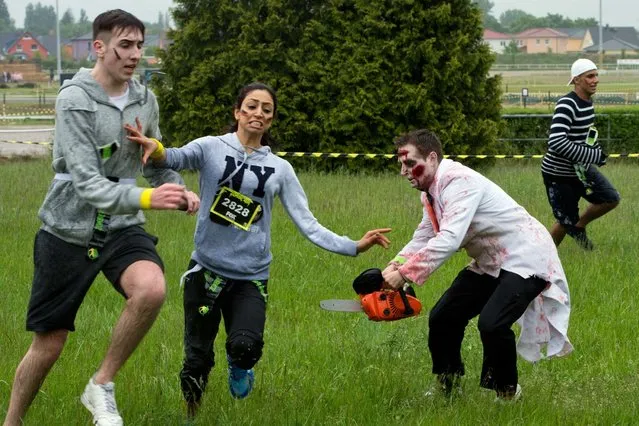
Participants costumed as zombies try to catch hobby runners during the so-called Zombie-Run at the harness racing track Karlshorst in Berlin, Germany, 18 May 2014. The runners carry small flags in their belts which they have to get safely across the finishing line while the zombies try to steal them. The sporting event is based on the US television series “The Walking Dead”. (Photo by Soeren Stache/DPA)
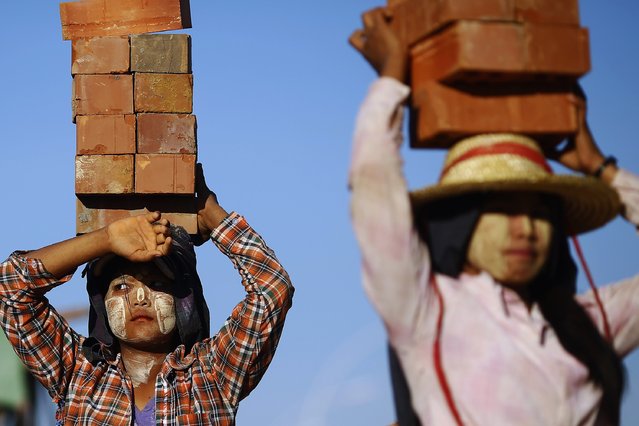
Construction workers carry bricks on their heads near the country's parliament building in Naypyitaw November 11, 2014. Yangon lost its status as Myanmar's capital in 2005, after the former military junta carved a new seat of government from a parched wilderness some 380 km (236 miles) to the north and called it Naypyitaw (“Abode of Kings”). (Photo by Damir Sagolj/Reuters)
Members of staff makes last minute touch ups of wax figure Chewbacca, from Star Wars, on display at “Star Wars At Madame Tussauds” on May 12, 2015 in London, England. (Photo by Stuart C. Wilson/Getty Images)
Revellers attend the Victorian Picnic during the Wave and Goth festival in Leipzig, Germany, May 22, 2015. The annual festival, known in Germany as Wave-Gotik Treffen (WGT), features over 100 bands and artists in venues all over the city playing Gothic rock and other styles of the dark wave music subculture. One of the biggest of its kind, the event attracts a regular audience of up to 20,000, the organisers said. (Photo by Hannibal Hanschke/Reuters)
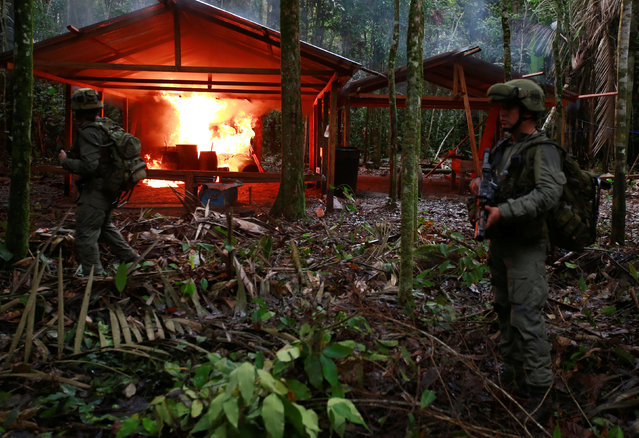
A Colombian anti-narcotics policeman stands guard after burning a cocaine lab, which police said belongs to criminal gangs, in a rural area of Calamar in Guaviare state, Colombia, August 2, 2016. Colombian law enforcement has destroyed 104 cocaine laboratories capable of producing some 100 tonnes of the drug annually, the head of the anti-narcotics police said on Tuesday. (Photo by John Vizcaino/Reuters)