Loading...
Done
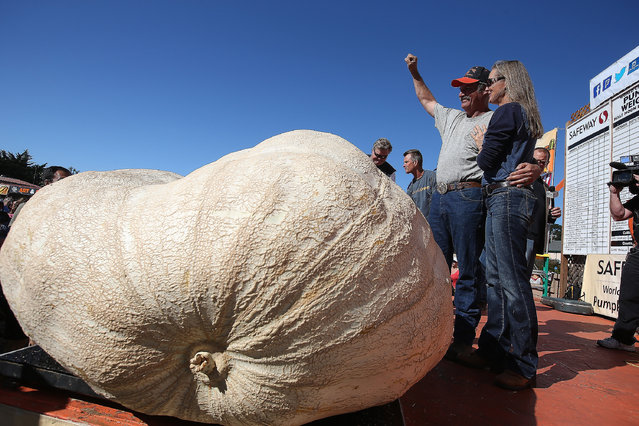
John Hawkley and his wife Patty Hawkley stand next to their 2,058 pound pumpkin and celebrate after winning the 41st Annual Safeway World Championship Pumpkin Weigh-Off on October 13, 2014 in Half Moon Bay, California. John Hawkley of Napa, California won the 41st Annual Safeway World Championship Pumpkin Weigh-Off and broke a state record with his gigantic pumpkin weighing in at 2,085 pounds. Hawkley took home a cash prize of $12,510, or $6.00 a pound. (Photo by Justin Sullivan/Getty Images)

John Hawkley and his wife Patty Hawkley stand next to their 2,058 pound pumpkin and celebrate after winning the 41st Annual Safeway World Championship Pumpkin Weigh-Off on October 13, 2014 in Half Moon Bay, California. John Hawkley of Napa, California won the 41st Annual Safeway World Championship Pumpkin Weigh-Off and broke a state record with his gigantic pumpkin weighing in at 2,085 pounds. Hawkley took home a cash prize of $12,510, or $6.00 a pound. (Photo by Justin Sullivan/Getty Images)
Details
15 Oct 2014 12:27:00
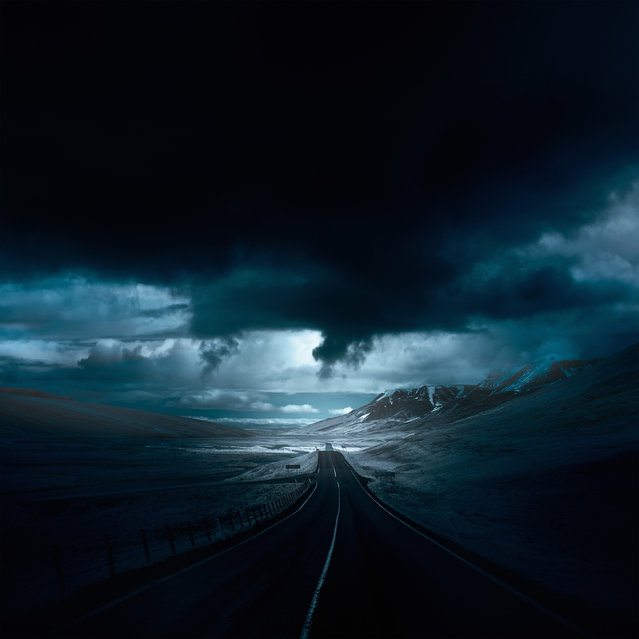
A globe-trotting photographer has captured some of the worlds most beautiful roads. Andy Lee's roads series features picturesque routes running through the likes of Iceland, Wales, England and Scotland. Here: moon sky over Hvammstangi, Iceland. (Photo by Andy Lee/Caters News)

A globe-trotting photographer has captured some of the worlds most beautiful roads. Andy Lee's roads series features picturesque routes running through the likes of Iceland, Wales, England and Scotland. The photographer, 46, began taking pictures for this series in 2013. And since then Andy, from Stackpole, Pembrokeshire, has been travelling the world for the most stunning drives. In searching for the ideal road he often drives miles upon miles in order to find a suitable, remote area. Here: moon sky over Hvammstangi, Iceland. (Photo by Andy Lee/Caters News)
Details
24 Jan 2015 14:19:00
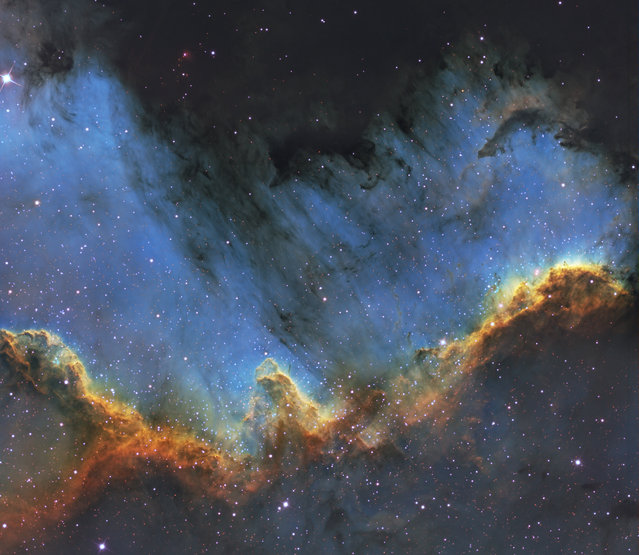
The Cygnus Wall is in the southern  area of NGC7000 also known as the North America Nebula. It is approximately 1800 light years from Earth, and is in the constellation Cygnus. The Wall is an energized shock front and contains the most concentrated star formations in the nebula. The size of the North America Nebula is about 4 full moons. (Bill Snyder)

Amateur astronomer Bill Snyder has been involved with astrophotography since 2007. Photo: The Cygnus Wall is in the southern area of NGC7000 also known as the North America Nebula. It is approximately 1800 light years from Earth, and is in the constellation Cygnus. The Wall is an energized shock front and contains the most concentrated star formations in the nebula. The size of the North America Nebula is about 4 full moons. (Photo and caption by Bill Snyder)
Details
30 Oct 2013 09:15:00
Wasibi, (r), yawns at backstage before the Algonquin Hotel’s Annual Cat Fashion Show in the Manhattan borough of New York City, New York, U.S., August 1, 2019. The theme of this year's show was “It's a Small World”. The cats represented countries including Ireland, Spain, the United Kingdom and the United States. (Photo by Jeenah Moon/Reuters)

Wasibi, (r), yawns at backstage before the Algonquin Hotel’s Annual Cat Fashion Show in the Manhattan borough of New York City, New York, U.S., August 1, 2019. The theme of this year's show was “It's a Small World”. The cats represented countries including Ireland, Spain, the United Kingdom and the United States. (Photo by Jeenah Moon/Reuters)
Details
05 Aug 2019 00:01:00
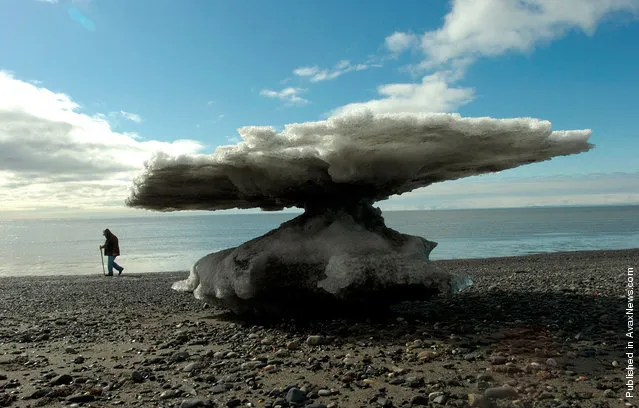
Brad Snead walks past melting ice on the Cook Inlet beach, Saturday, March 26, 2011, in Kenai, Alaska, while looking for agates

Brad Snead walks past melting ice on the Cook Inlet beach, Saturday, March 26, 2011, in Kenai, Alaska, while looking for agates. (AP Photo/Peninsula Clarion, M. Scott Moon)
Details
11 Apr 2012 12:18:00
Anti-frost candles burn in apricot plantations to protect flowering buds and blossoms from frost in the midst of the Swiss Alps, in Saxon, Canton of Valais, Switzerland, 05 April 2019. With an unusually low temperature forecast for the season, fruit growers try to protect their buds from frost damage with two different means, icy water or large candles. (Photo by Valentin Flauraud/EPA/EFE)

Anti-frost candles burn in apricot plantations to protect flowering buds and blossoms from frost in the midst of the Swiss Alps, in Saxon, Canton of Valais, Switzerland, 05 April 2019. With an unusually low temperature forecast for the season, fruit growers try to protect their buds from frost damage with two different means, icy water or large candles. (Photo by Valentin Flauraud/EPA/EFE)
Details
18 Apr 2019 00:03:00
Drag queens Maude Boate, Anita Wiglit and Kita Mean pose for a photograph before boarding the NSW TrainLink Silver City Stiletto train at Central station in Sydney, Australia, 12 September 2019. Drag queens and kings will travel to the outback NSW town of Broken Hill to attend the annual Broken Heel festival, paying homage to the iconic Australian film “Priscilla, Queen of the Desert”. (Photo by James Gourley/AAP)

Drag queens Maude Boate, Anita Wiglit and Kita Mean pose for a photograph before boarding the NSW TrainLink Silver City Stiletto train at Central station in Sydney, Australia, 12 September 2019. Drag queens and kings will travel to the outback NSW town of Broken Hill to attend the annual Broken Heel festival, paying homage to the iconic Australian film “Priscilla, Queen of the Desert”. (Photo by James Gourley/AAP)
Details
14 Sep 2019 00:07:00
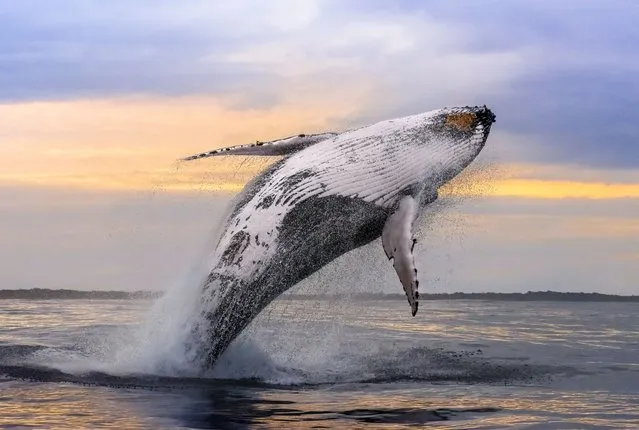
A 40-tonne humpback launching out of the water in an incredible breach in New South Wales, Australia on October 2022 in front of a sunset. The humpback whale can grow up to 56 feet long and typically covers 9,900 miles a year as it travels through the oceans of the world. Humpback whales are a species of Baleen whale, meaning they don't have teeth. Instead, they have baleen which helps them to filter feed. Their main source of food is krill or tiny bait fish. (Photo by Jodie Lowe/Media Drum Images)

A 40-tonne humpback launching out of the water in an incredible breach in New South Wales, Australia on October 2022 in front of a sunset. The humpback whale can grow up to 56 feet long and typically covers 9,900 miles a year as it travels through the oceans of the world. Humpback whales are a species of Baleen whale, meaning they don't have teeth. Instead, they have baleen which helps them to filter feed. Their main source of food is krill or tiny bait fish. (Photo by Jodie Lowe/Media Drum Images)
Details
30 Oct 2022 04:28:00