Loading...
Done
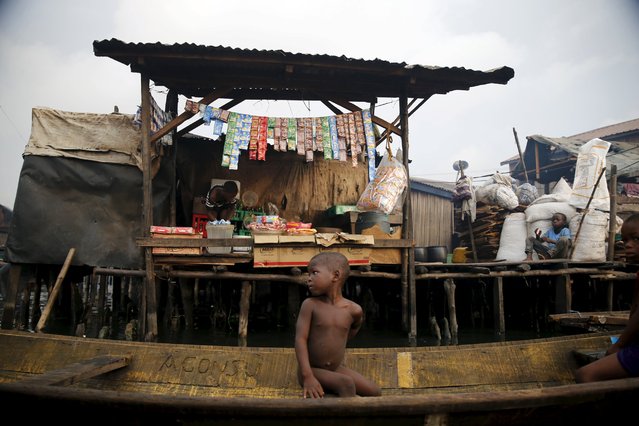
A boy sits in a canoe in front of a shed built on a raft in the Makoko fishing community on the Lagos Lagoon, Nigeria February 29, 2016. Makoko, a vast slum of houses on stilts in a Lagos lagoon, now boasts a new school – pyramid-shaped, floating and capable of withstanding the waterways' extreme weather, it is a beacon of hope for the nearly 100,000 Nigerians who live there.  (Photo by Akintunde Akinleye/Reuters)

A boy sits in a canoe in front of a shed built on a raft in the Makoko fishing community on the Lagos Lagoon, Nigeria February 29, 2016. In Makoko, a sprawling slum of Nigeria's megacity Lagos, a floating school capable of holding up to a hundred pupils has since November brought free education to the waterways known as the Venice of Lagos. It offers the chance of social mobility for youngsters who, like most of the city's 21 million inhabitants, lack a reliable electricity and water supply and whose water-based way of life is threatened by climate change as well as rapid urbanisation. (Photo by Akintunde Akinleye/Reuters)
Details
05 Mar 2016 12:01:00
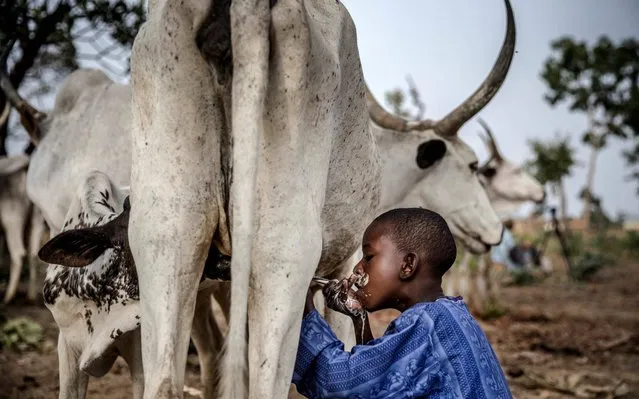
8-year-old Fulani boy Suleiman Yusuf drinks milk from a cow belonging to his father cattle near his family's house at Kachia Grazing Reserve, Kaduna State, Nigeria, on April 16, 2019. Kachia Grazing Reserve is an area set aside for the use of Fulani pastoralist and it is intended to be the foci of livestock development. The purpose for the grazing reserves is the settlement of nomadic pastoralists and inducement to sedentarisation through the provision of land for grazing and permanent water as way to avoid conflict. (Photo by Luis Tato/AFP Photo)

8-year-old Fulani boy Suleiman Yusuf drinks milk from a cow belonging to his father cattle near his family's house at Kachia Grazing Reserve, Kaduna State, Nigeria, on April 16, 2019. Kachia Grazing Reserve is an area set aside for the use of Fulani pastoralist and it is intended to be the foci of livestock development. The purpose for the grazing reserves is the settlement of nomadic pastoralists and inducement to sedentarisation through the provision of land for grazing and permanent water as way to avoid conflict. (Photo by Luis Tato/AFP Photo)
Details
10 Jul 2019 00:01:00
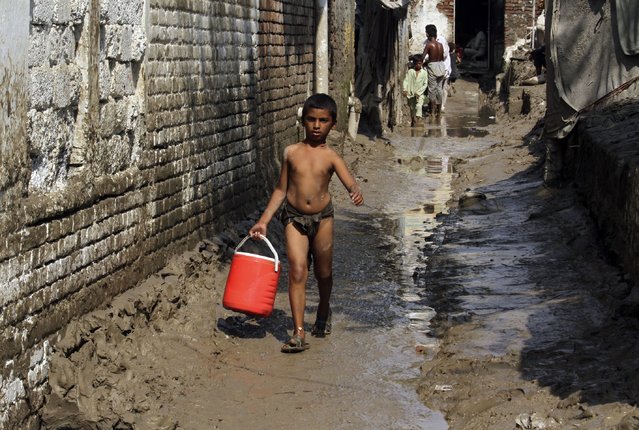
An affected boy walks along a muddy street after heavy rain in Nowshera district of Khyber Pakhtunkhwa, Pakistan, Friday, September 2, 2022. Planes carrying fresh supplies are surging across a humanitarian air bridge to flood-ravaged Pakistan as the death toll surged past 1,200, officials said Friday, with families and children at special risk of disease and homelessness. (Photo by Mohammad Sajjad/AP Photo)

An affected boy walks along a muddy street after heavy rain in Nowshera district of Khyber Pakhtunkhwa, Pakistan, Friday, September 2, 2022. Planes carrying fresh supplies are surging across a humanitarian air bridge to flood-ravaged Pakistan as the death toll surged past 1,200, officials said Friday, with families and children at special risk of disease and homelessness. (Photo by Mohammad Sajjad/AP Photo)
Details
08 Sep 2022 04:29:00
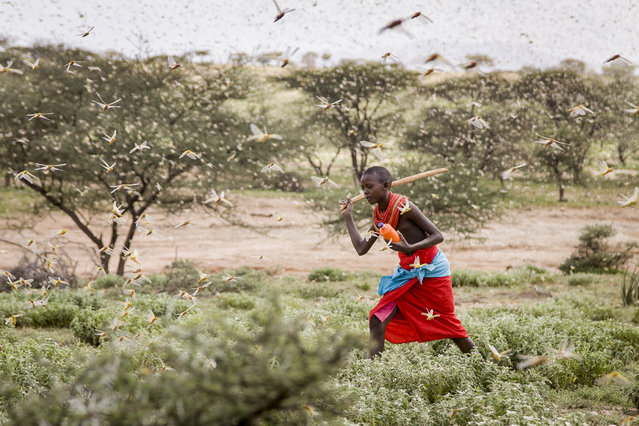
In this photo taken Thursday, January 16, 2020, a Samburu boy uses a wooden stick to try to swat a swarm of desert locusts filling the air, as he herds his camel near the village of Sissia, in Samburu county, Kenya. The most serious outbreak of desert locusts in 25 years is spreading across East Africa and posing an unprecedented threat to food security in some of the world's most vulnerable countries, authorities say, with unusual climate conditions partly to blame. (Photo by Patrick Ngugi/AP Photo)

In this photo taken Thursday, January 16, 2020, a Samburu boy uses a wooden stick to try to swat a swarm of desert locusts filling the air, as he herds his camel near the village of Sissia, in Samburu county, Kenya. The most serious outbreak of desert locusts in 25 years is spreading across East Africa and posing an unprecedented threat to food security in some of the world's most vulnerable countries, authorities say, with unusual climate conditions partly to blame. (Photo by Patrick Ngugi/AP Photo)
Details
19 Jan 2020 00:07:00
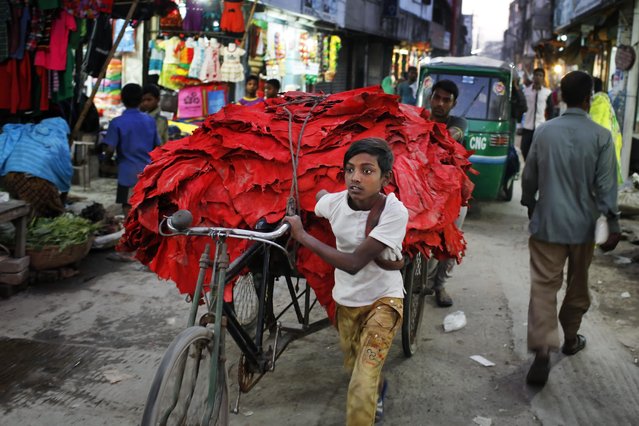
In this Thursday, February 9, 2017 photo, a Bangladeshi boy pulls a rickshaw loaded with strips of leather at the highly polluted Hazaribagh tannery area in Dhaka, Bangladesh. Hazardous, heavily polluting tanneries with workers as young as 14 supplied leather to companies that make shoes and handbags for Western brands, a nonprofit group that investigates supply chains says. (Photo by A.M. Ahad/AP Photo)

In this Thursday, February 9, 2017 photo, a Bangladeshi boy pulls a rickshaw loaded with strips of leather at the highly polluted Hazaribagh tannery area in Dhaka, Bangladesh. Hazardous, heavily polluting tanneries with workers as young as 14 supplied leather to companies that make shoes and handbags for Western brands, a nonprofit group that investigates supply chains says. (Photo by A.M. Ahad/AP Photo)
Details
25 Mar 2017 08:02:00
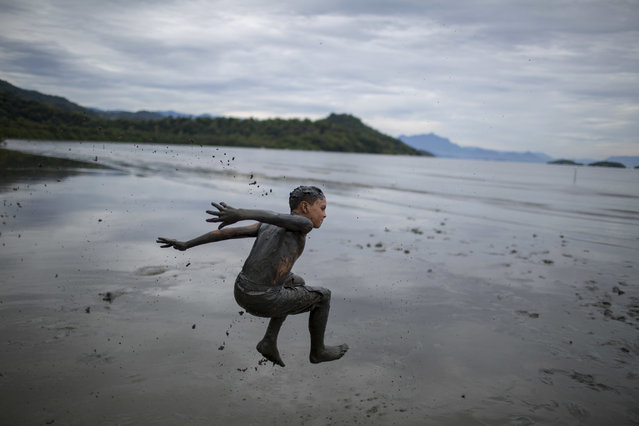
A boy jumps into a pool of mud during the traditional “Bloco da Lama” or “Mud Street” carnival party, in Paraty, Brazil, Saturday, February 25, 2017. Legend has it the “bloco” was born in 1986 after local teens hiking in a nearby mangrove forest smeared themselves with mud to discourage mosquitoes and then wandered through Paraty. The party grew year after year, but revelers eventually were banned from parading in the colonial downtown after shopkeepers complained pristine white walls were stained with the hard-to-remove mud. (Photo by Mauro Pimentel/AP Photo)

A boy jumps into a pool of mud during the traditional “Bloco da Lama” or “Mud Street” carnival party, in Paraty, Brazil, Saturday, February 25, 2017. Legend has it the “bloco” was born in 1986 after local teens hiking in a nearby mangrove forest smeared themselves with mud to discourage mosquitoes and then wandered through Paraty. The party grew year after year, but revelers eventually were banned from parading in the colonial downtown after shopkeepers complained pristine white walls were stained with the hard-to-remove mud. (Photo by Mauro Pimentel/AP Photo)
Details
28 Mar 2017 09:07:00
Soldier boys at Fort Dix, N.J., learn something about guns during their working hours, as they show their girlfriends at a camp dance, December 13, 1940. In front row, playing with the coin amusement gun, from left: Pvt. Tom D'Amato of West Orange; Rose Sinkewicz, behind gun site, of Trenton; Julia Ivans of Trenton, and Pvt. Vernon Landers of Kearney. Back row: Pvts. William Sargent and William Corlies of Philadelphia. (Photo by AP Photo)

Soldier boys at Fort Dix, N.J., learn something about guns during their working hours, as they show their girlfriends at a camp dance, December 13, 1940. In front row, playing with the coin amusement gun, from left: Pvt. Tom D'Amato of West Orange; Rose Sinkewicz, behind gun site, of Trenton; Julia Ivans of Trenton, and Pvt. Vernon Landers of Kearney. Back row: Pvts. William Sargent and William Corlies of Philadelphia. (Photo by AP Photo)
Details
06 Mar 2018 00:03:00
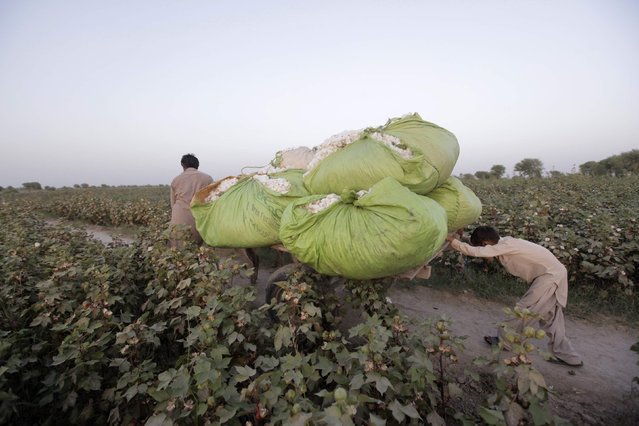
A boy pushes a donkey cart loaded with bundles of cotton blooms that were collected by women cotton pickers in Meeran Pur village, north of Karachi September 25, 2014. Women make up the bulk of Pakistan's half a million cotton producers, but labour rights activists say they are often exploited by overseers, who often withhold their wages and may subject some of them to sexual harassment. (Photo by Akhtar Soomro/Reuters)

A boy pushes a donkey cart loaded with bundles of cotton blooms that were collected by women cotton pickers in Meeran Pur village, north of Karachi September 25, 2014. Women make up the bulk of Pakistan's half a million cotton producers, but labour rights activists say they are often exploited by overseers, who often withhold their wages and may subject some of them to sexual harassment. (Photo by Akhtar Soomro/Reuters)
Details
10 Dec 2014 12:27:00