Loading...
Done
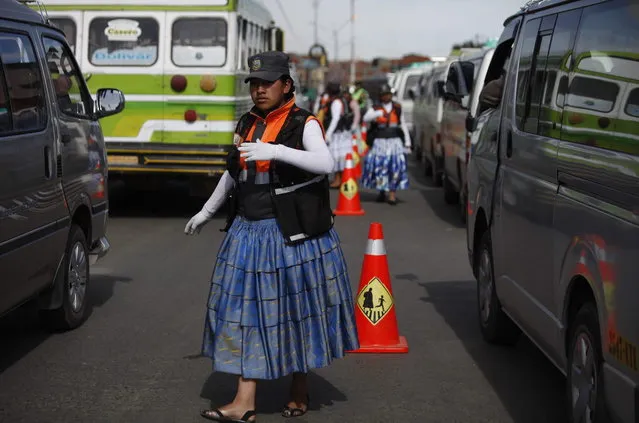
In this December 3, 2013 photo, an Aymara woman cops directs traffic on the streets of El Alto, Bolivia. The women wear the bright petticoats and shawls of indigenous women in the Andes, called cholitas in Bolivian slang, the main difference being that instead of bowler hats they wear khaki green police-style caps. Some don fluorescent traffic vests. (Photo by Juan Karita/AP Photo)

“This city in Bolivia's highlands has hired Aymara women dressed in traditional multilayered Andean skirts and brightly embroidered vests to work as traffic cops and bring order to its road chaos. About 20 of the “traffic cholitas” have been trained to direct cars and buses in El Alto, a teeming, impoverished sister city of La Paz in Bolivia's Andes mountains”. – El Alto via Associated Press. Photo: In this December 3, 2013 photo, an Aymara woman cops directs traffic on the streets of El Alto, Bolivia. The women wear the bright petticoats and shawls of indigenous women in the Andes, called cholitas in Bolivian slang, the main difference being that instead of bowler hats they wear khaki green police-style caps. Some don fluorescent traffic vests. (Photo by Juan Karita/AP Photo)
Details
25 Dec 2013 10:48:00
Dorothy Bradley (left), photographed for LIFE magazine article on obesity, 1949. (Photo by Martha Holmes/Time & Life Pictures)

“The most serious health problem in the U.S. today is obesity.” Sounds familiar, doesn’t it? But that pronouncement about obesity’s primacy in the hierarchy of national health problems is not new. Rather, it’s the opening line to a remarkable article published 60 years ago in LIFE magazine. This photographs made by Martha Holmes to illustrate that March 1954 article, titled “The Plague of Overweight.” Photo: Dorothy Bradley (left), photographed for LIFE magazine article on obesity, 1949. (Photo by Martha Holmes/Time & Life Pictures)
Details
11 Apr 2013 11:42:00
Brad Snead walks past melting ice on the Cook Inlet beach, Saturday, March 26, 2011, in Kenai, Alaska, while looking for agates

Brad Snead walks past melting ice on the Cook Inlet beach, Saturday, March 26, 2011, in Kenai, Alaska, while looking for agates. (AP Photo/Peninsula Clarion, M. Scott Moon)
Details
11 Apr 2012 12:18:00
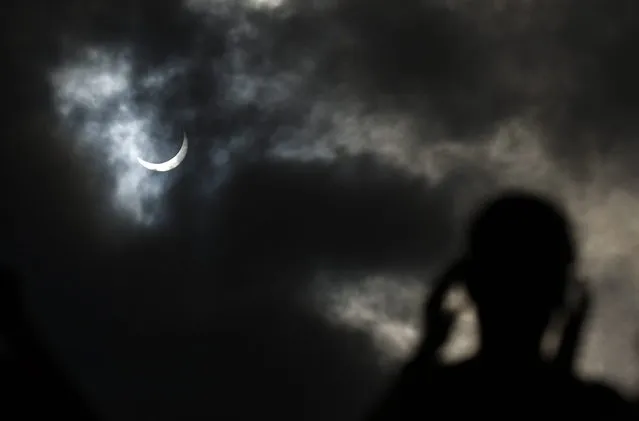
A tourist watches as the moon passing in front of the sun as it approaches a full solar eclipse in the northern Australian city of Cairns November 14, 2012. (Photo by Tim Wimborne/Reuters)

A tourist watches as the moon passing in front of the sun as it approaches a full solar eclipse in the northern Australian city of Cairns November 14, 2012. (Photo by Tim Wimborne/Reuters)
Details
14 Nov 2012 09:38:00
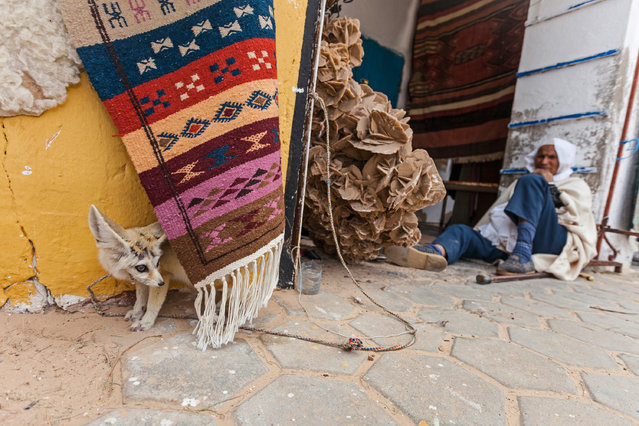
Sultan, a famous captive fennec that is displayed tied on a rope in front of a tourist shop, is the main attraction in the souk of Douz, a desert town in Tunisia. By the display of such a charismatic animal, tourists are often lured to buy things or pay for pictures. On inquiry, although Sultan has been caught as a pup in the wild, the owners of the shop reassure the foreigners stating that the animal is ‘domestic’. (Photo by Bruno D’Amicis/Fritz Pölking Prize/GDT EWPY 2015)

Sultan, a famous captive fennec that is displayed tied on a rope in front of a tourist shop, is the main attraction in the souk of Douz, a desert town in Tunisia. By the display of such a charismatic animal, tourists are often lured to buy things or pay for pictures. On inquiry, although Sultan has been caught as a pup in the wild, the owners of the shop reassure the foreigners stating that the animal is ‘domestic’. (Photo by Bruno D’Amicis/Fritz Pölking Prize/GDT EWPY 2015)
Details
23 Nov 2015 08:02:00
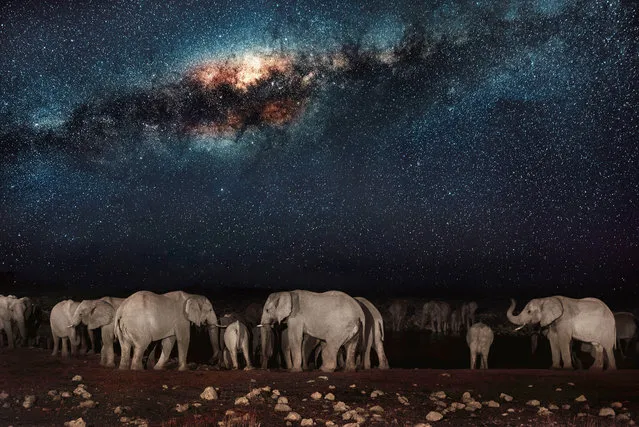
This watering hole is the social hub of the veldt; the scrubby grasslands that stretch across Namibia. The scorched earth supports sometimes fragile populations of magnificent wildlife – from endangered predators to plentiful herds of game. But these gentle giraffes and elephants need to be careful: lions don’t sleep at night, they hunt! The spectacular starscape above southern Africa is unchanged since explorers first mapped the continent. The photographer, Pietro Olivetta from Italy, said he had to be patient to capture these shots – but it was worth the wait. (Photo by Pietro Olivetta/Caters News)

This watering hole is the social hub of the veldt; the scrubby grasslands that stretch across Namibia. The scorched earth supports sometimes fragile populations of magnificent wildlife – from endangered predators to plentiful herds of game. But these gentle giraffes and elephants need to be careful: lions don’t sleep at night, they hunt! The spectacular starscape above southern Africa is unchanged since explorers first mapped the continent. The photographer, Pietro Olivetta from Italy, said he had to be patient to capture these shots – but it was worth the wait. (Photo by Pietro Olivetta/Caters News)
Details
20 Feb 2017 00:05:00
Inmates sleep on the steps of a ladder inside the Quezon City jail at night in Manila in this picture taken on July 21, 2016. (Photo by Noel Celis/AFP Photo)

Inmates sleep on the steps of a ladder inside the Quezon City jail at night in Manila in this picture taken on July 21, 2016. There are 3,800 inmates at the jail, which was built six decades ago to house 800, and they engage in a relentless contest for space. Men take turns to sleep on the cracked cement floor of an open-air basketball court, the steps of staircases, underneath beds and hammocks made out of old blankets. (Photo by Noel Celis/AFP Photo)
Details
06 Aug 2016 13:24:00
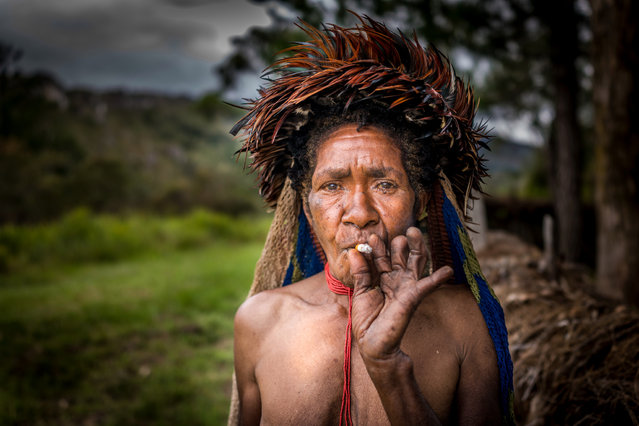
Dani tribeswoman smokes a cigarette and shows her amputated fingers in, Western New Guinea, Indonesia, August 2016. (Photo by Teh Han Lin/Barcroft Images)

Dani tribeswoman smokes a cigarette and shows her amputated fingers in, Western New Guinea, Indonesia, August 2016. Deep in the highlands of Western New Guinea, Indonesia, lives one of the world’s most isolated tribes. Known as the Dani people, the tribe was unwittingly discovered by American philanthropist, Richard Archbold, after an expedition in 1938. (Photo by Teh Han Lin/Barcroft Images)
Details
18 Nov 2016 11:03:00