Loading...
Done
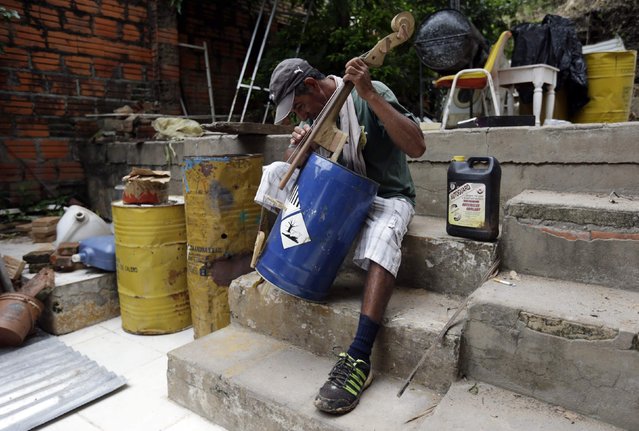
Recycling artist Nicolas Gomez checks the strings of a cello he has made out of an oil barrel for the Orchestra of Recycled Instruments of Cateura, in Cateura, Paraguay February 13, 2015. (Photo by Jorge Adorno/Reuters)

Recycling artist Nicolas Gomez checks the strings of a cello he has made out of an oil barrel for the Orchestra of Recycled Instruments of Cateura, in Cateura, Paraguay February 13, 2015. Saudi Arabia's oil exports have risen in February in response to stronger demand from customers. As OPEC's top producer battles for market share Reuters photographers around the globe have been photographing oil barrels to document how they are utilised once the fuel has been used. (Photo by Jorge Adorno/Reuters)
Details
21 Feb 2015 10:39:00
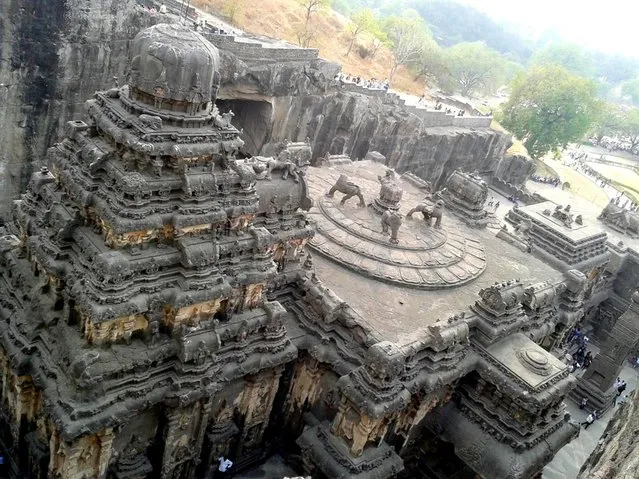
Ellora Cave Temples

Ellora is an archaeological site, 29 km (18 mi) North-West of the city of Aurangabad in the Indian state of Maharashtra built by the Rashtrakuta dynasty. It is also known as Elapura (in the Rashtrakuta literature-Kannada).
Details
06 May 2014 14:08:00
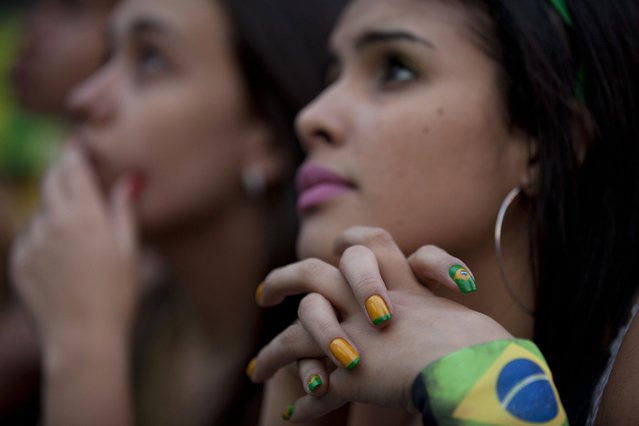
A fan watches the group A World Cup match between Mexico and Brazil via a live broadcast at the FIFA Fan Fest in Sao Paulo, Brazil, Tuesday, June 17, 2014. Forget the French manicure. It’s Brazil during World Cup, and women here want to flaunt their love of the national team with wacky nail designs. (Photo by Dario Lopez-Mills/AP Photo)

A fan watches the group A World Cup match between Mexico and Brazil via a live broadcast at the FIFA Fan Fest in Sao Paulo, Brazil, Tuesday, June 17, 2014. Forget the French manicure. It’s Brazil during World Cup, and women here want to flaunt their love of the national team with wacky nail designs. (Photo by Dario Lopez-Mills/AP Photo)
Details
19 Jun 2014 10:24:00
Face Off  Is An American Reality Television Show Part 1

Face Off is an American reality television game show on the Syfy cable network in which a group of prosthetic makeup artists compete against each other to create prostheses such as those found in science fiction and horror films.
Details
10 Sep 2014 14:26:00
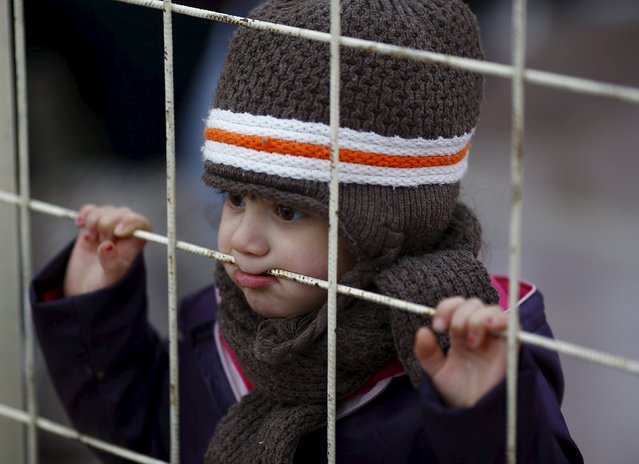
A Syrian boy looks through a gate as others wait to cross into Syria at Oncupinar border crossing in the southeastern city of Kilis, Turkey February 11, 2016.. (Photo by Osman Orsal/Reuters)

A Syrian boy looks through a gate as others wait to cross into Syria at Oncupinar border crossing in the southeastern city of Kilis, Turkey February 11, 2016.. (Photo by Osman Orsal/Reuters)
Details
13 Feb 2016 09:42:00
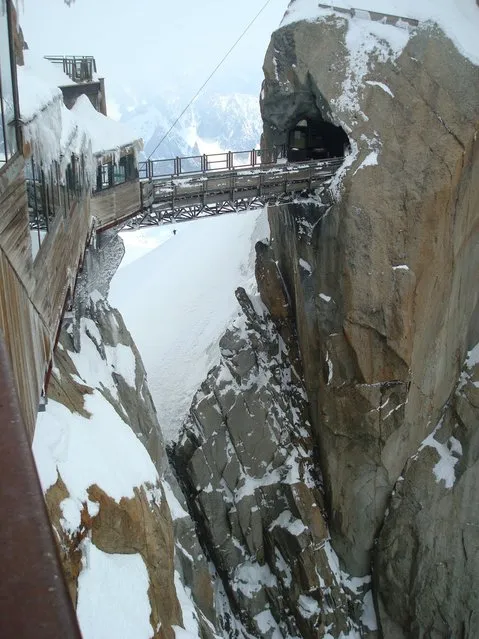
Aiguille du Midi In The French Alps

The name “Aiguille du Midi” translates literally as “Needle of the Noon” or “Needle of the South”. It gets its name from its tapered form and from its position when viewed from Chamonix: it approximately indicates noon when the sun passes over its summit.
Details
27 Dec 2013 10:52:00
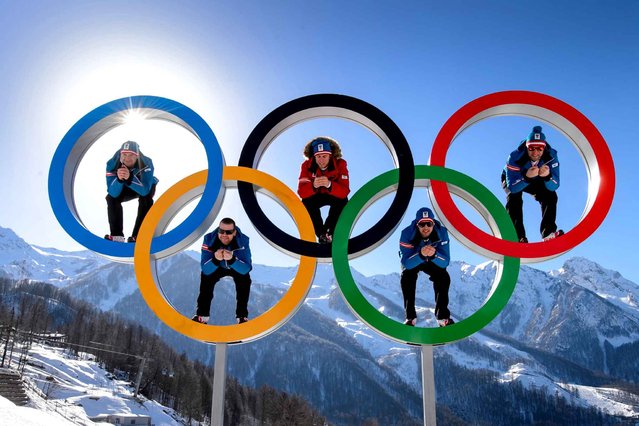
Austrian alpine skiers (LtoR) Georg Streitberger, Klaus Kroell, Max Franz, Joachim Puchner, Romed Baumann pose in the Olympic Rings on February 4, 2014 at the Mountain Olympic Village at the Rosa Khutor Alpine centre, four days prior to the start of the 2014 Sochi Winter Olympic Games. (Photo by Fabrice Coffrini/AFP Photo)

Austrian alpine skiers (LtoR) Georg Streitberger, Klaus Kroell, Max Franz, Joachim Puchner, Romed Baumann pose in the Olympic Rings on February 4, 2014 at the Mountain Olympic Village at the Rosa Khutor Alpine centre, four days prior to the start of the 2014 Sochi Winter Olympic Games. (Photo by Fabrice Coffrini/AFP Photo)
Details
05 Feb 2014 10:54:00
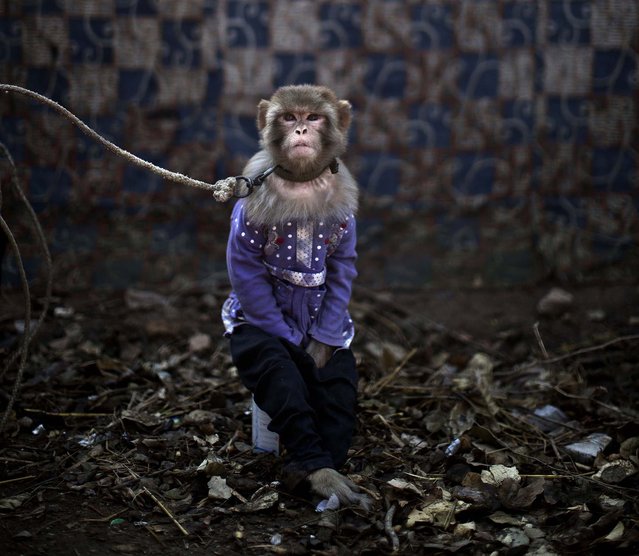
In this Tuesday, February 11, 2014, photo, a trained monkey, that makes a living for her Pakistani owner by performing to a crowd in public and private places, sits held by a leash, in Rawalpindi, Pakistan. For Pakistanis who raise and train the monkeys they are an important source of income in an impoverished country, and they form a strong bond with the animals. The monkeys are usually captured in the wild when they are babies and then trained. A trained monkey can fetch 20,000 to 30,000 rupees ($190 to $285). (Photo by Muhammed Muheisen/Associated Press)

In this Tuesday, February 11, 2014, photo, a trained monkey, that makes a living for her Pakistani owner by performing to a crowd in public and private places, sits held by a leash, in Rawalpindi, Pakistan. For Pakistanis who raise and train the monkeys they are an important source of income in an impoverished country, and they form a strong bond with the animals. The monkeys are usually captured in the wild when they are babies and then trained. A trained monkey can fetch 20,000 to 30,000 rupees ($190 to $285). (Photo by Muhammed Muheisen/Associated Press)
Details
23 Feb 2014 09:50:00