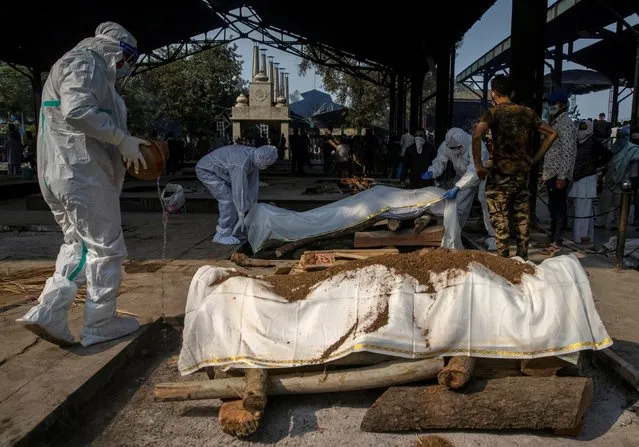
A relative performs rituals for a man who died of coronavirus disease (COVID-19), before his cremation at a crematorium in New Delhi, India, November 19, 2020. (Photo by Danish Siddiqui/Reuters)
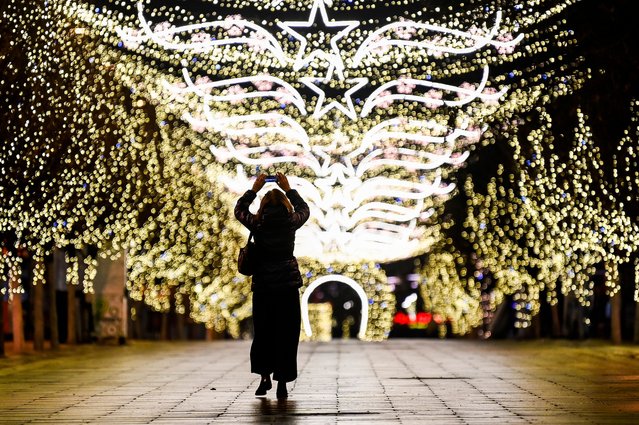
A woman takes pictures using her mobile phone on a deserted square decorated ahead of Christmas, in Pristina on December 7, 2020, during a government-imposed curfew from 7pm to 5am, as part of preventive measures against the spread of the Covid-19. (Photo by Armend Nimani/AFP Photo)
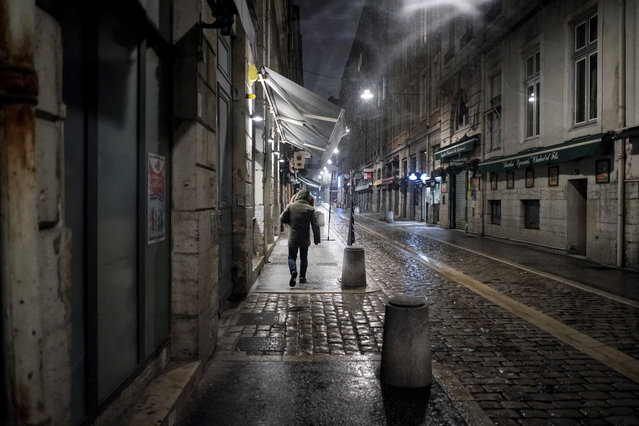
A man walks in the street at the start of the new curfew to counter the COVID-19 in the center of Lyon, central France, Saturday, January 16, 2021. All of France will be under a stricter curfew starting Saturday at 6 p.m. for at least 15 days to fight the spread of the coronavirus. (Photo by Laurent Cipriani/AP Photo)
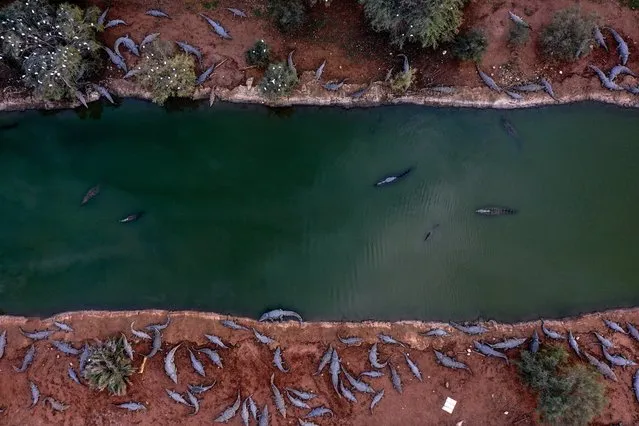
Dozens of crocodiles are seen in an inactive farm in the Jordan Valley near the Israeli Petzael settlement in the West Bank on January 18, 2021. Hundreds of crocodiles are stranded in a farm after an Israeli businessmen lost his business as Israel passed a law in 2012 defining the crocodile as a protected animal, and banning raising the animals for sale as meat or merchandise. (Photo by Menahem Kahana/AFP Photo)
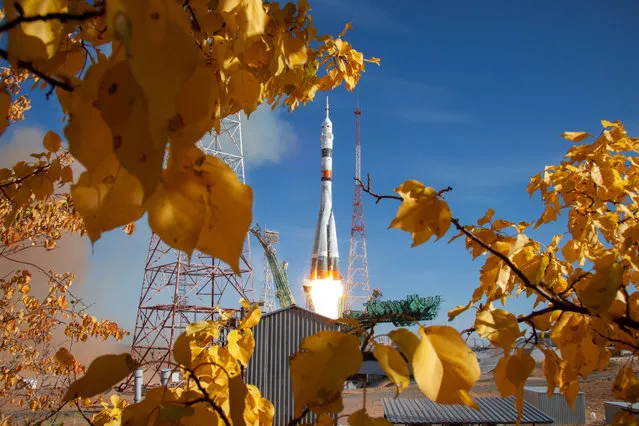
The Soyuz MS-17 spacecraft carrying the crew formed of Kathleen Rubins of NASA, Sergey Ryzhikov and Sergey Kud-Sverchkov of the Russian space agency Roscosmos blasts off to the International Space Station (ISS) from the launchpad at the Baikonur Cosmodrome, Kazakhstan on October 14, 2020. (Photo by Russian space agency Roscosmos/Handout via Reuters)
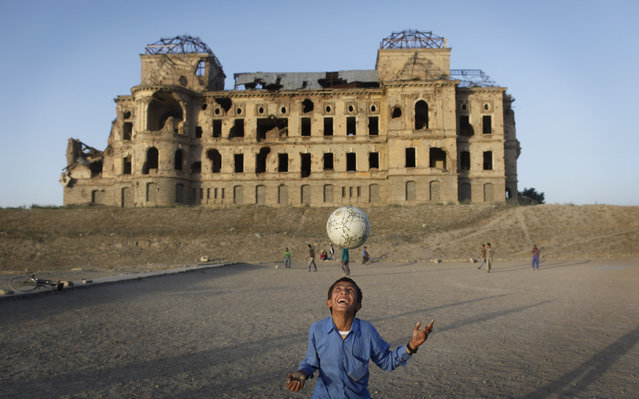
Afghan children play soccer in front of the war-damaged Darul Aman Palace in the suburbs of Kabul, Afghanistan, Wednesday, June 8, 2011. (Photo by Gemunu Amarasinghe/AP Photo)
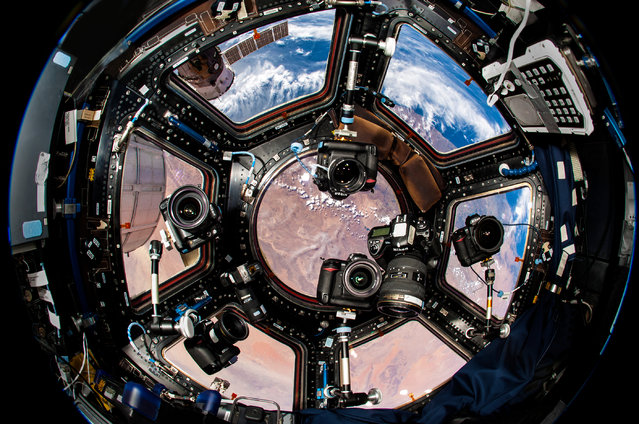
Astronaut Donald R. Pettit would often rig an array of as many as six cameras in the cupola windows and set them all to fire continuously for events such as sunsets, which only last around seven seconds on the ISS. (Photo by Donald R. Pettit)