Loading...
Done
En attendant davoir des balles..... Photo Art by Pierre Beteille

Talented French artist, Pierre Beteille, is skillful in manipulation of portraits (specially his own self portraits) using Photoshop. This is how he describes himself: “I am not a photographer or an artist, I just make images… I shoot very average or even bad photos that I try to improve thanks to Photoshop”…

Photo: “En attendant d'avoir des balles”...., 2007 (Photo by Pierre Beteille)

Details
23 Jul 2012 08:52:00
People play with foam at a water park in Yantai, Shandong province, China June 16, 2107. (Photo by Reuters/Stringer)

People play with foam at a water park in Yantai, Shandong province, China June 16, 2107. (Photo by Reuters/Stringer)
Details
17 Jun 2017 08:46:00


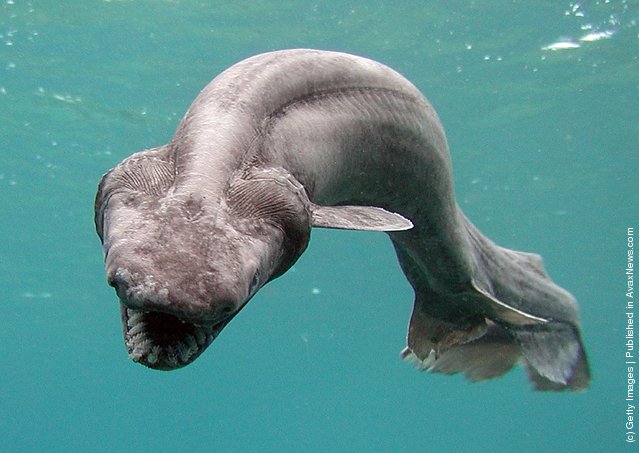
“The frilled shark (Chlamydoselachus anguineus) is one of two extant species of shark in the family Chlamydoselachidae, with a wide but patchy distribution in the Atlantic and Pacific Oceans. This uncommon species is found over the outer continental shelf and upper continental slope, generally near the bottom though there is evidence of substantial upward movements. It has been caught as deep as 1,570 m (5,150 ft), whereas in Suruga Bay, Japan it is most common at depths of 50–200 m (160–660 ft). Exhibiting several “primitive” features, the frilled shark has often been termed a «living fossil»”. – Wikipedia

Photo: A 1.6 meter long Frill shark swims in a tank after being found by a fisherman at a bay in Numazu, on January 21, 2007 in Numazu, Japan. The frill shark, also known as a Frilled shark usually lives in waters of a depth of 600 meters and so it is very rare that this shark is found alive at sea-level. It's body shape and the number of gill are similar to fossils of sharks which lived 350,000,000 years ago. (Photo by Awashima Marine Park/Getty Images)

Details
05 May 2011 10:01:00
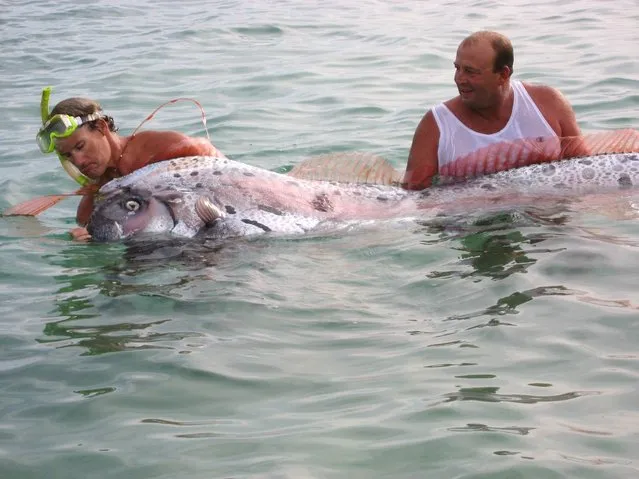
Regalecus Glesne

“The king of herrings or giant oarfish, an oarfish of the family Regalecidae, is the world's longest bony fish. Its total length has been documented to reach 17 m (56 ft), and it can weigh up to 300 kg (661 lb)”. – Wikipedia
Details
23 May 2012 13:38:00
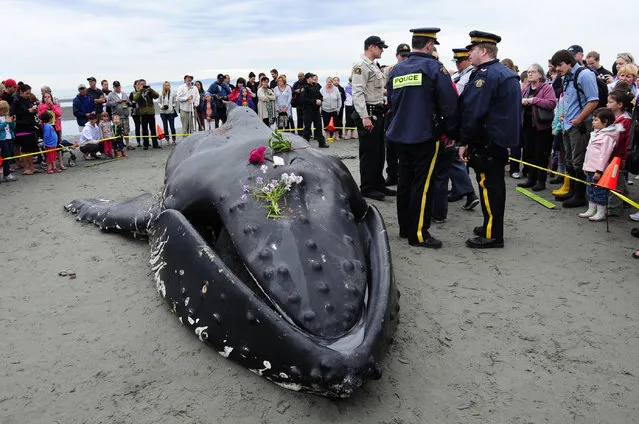
Young humpback whale found dead on the beach in White Rock

Hundreds of onlookers descended upon White Rock beach, just south of Vancouver, Canada, on June 12, 2012 to mourn a beached whale that died on the sandy tidal flats. (Photo by Nick Procaylo/PNG/PNG Merlin Archive)
Details
14 Jun 2012 07:18:00
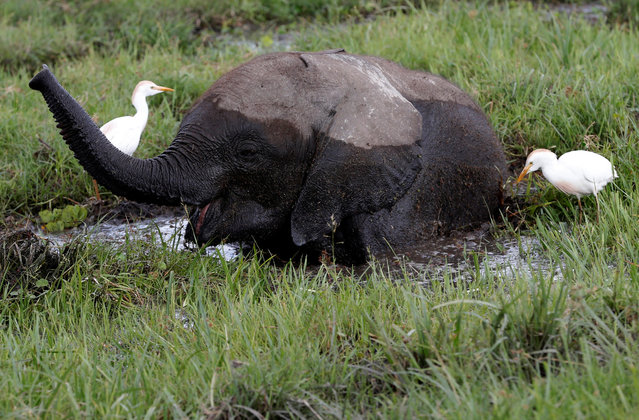
A baby elephant eats in a swamp in Amboseli national park, Kenya, March 19, 2017. (Photo by Goran Tomasevic/Reuters)

A baby elephant eats in a swamp in Amboseli national park, Kenya, March 19, 2017. (Photo by Goran Tomasevic/Reuters)
Details
26 Mar 2017 08:35:00
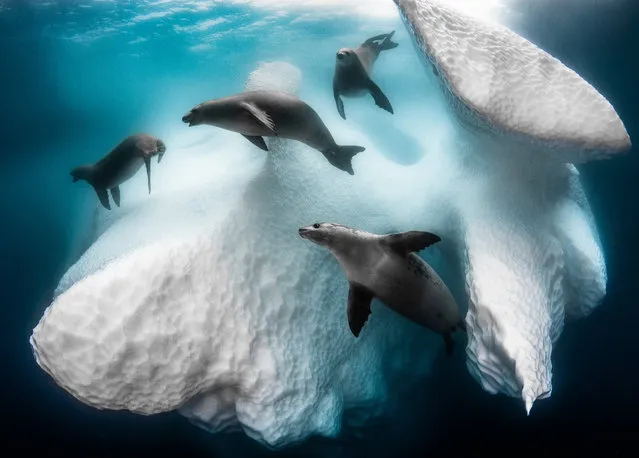
Underwater photographer of the year 2020 and wide angle category winner: Frozen Mobile Home by Greg Lecoeur (France) in the Antarctic peninsula, Antarctica. Crabeater seals swim around an iceberg. These massive and mysterious habitats are dynamic kingdoms that support marine life. As they swing and rotate slowly through polar currents, icebergs fertilise the oceans by carrying nutrients from land that spark blooms of phytoplankton, fundamental to the carbon cycle. (Photo by Greg Lecoeur/Underwater Photographer of the Year 2020)

Underwater photographer of the year 2020 and wide angle category winner: Frozen Mobile Home by Greg Lecoeur (France) in the Antarctic peninsula, Antarctica. Crabeater seals swim around an iceberg. These massive and mysterious habitats are dynamic kingdoms that support marine life. As they swing and rotate slowly through polar currents, icebergs fertilise the oceans by carrying nutrients from land that spark blooms of phytoplankton, fundamental to the carbon cycle. (Photo by Greg Lecoeur/Underwater Photographer of the Year 2020)
Details
28 Feb 2020 00:05:00
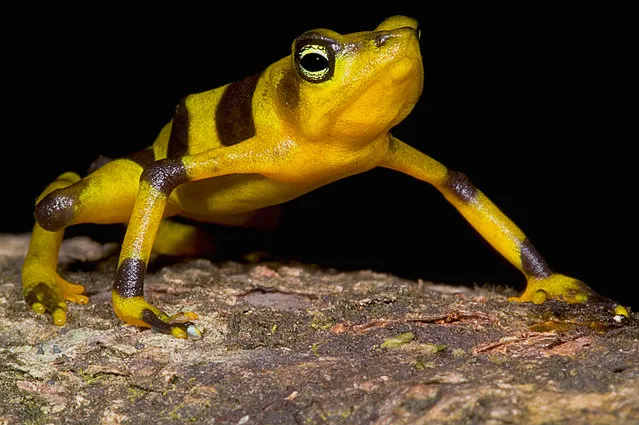
The golden harlequin toad has vanished from the wild, and only a small number live on in captivity. A fungus caused them, and many other amphibians, to die out in their home in Central America. (Photo by Danté Fenolio/The Guardian/Johns Hopkins University Press)

Wildlife photographer Danté Fenolio has headed into areas untouched by sunlight – deep seas, caves and underground – and found creatures that are exploding with colour. Here: The golden harlequin toad has vanished from the wild, and only a small number live on in captivity. A fungus caused them, and many other amphibians, to die out in their home in Central America. (Photo by Danté Fenolio/The Guardian/Johns Hopkins University Press)
Details
20 Jun 2016 12:19:00