Loading...
Done
Revellers participate in a parade on the street during a carnival in the village of Vevcani, south of Skopje, Macedonia January 13, 2016. Vevcani village marks the annual Orthodox St. Vasilij Day with a carnival that features a 1,400-year-old celebration with pagan roots. The highlights of the carnival include a political satire where masked villagers act out current events. (Photo by Ognen Teofilovski/Reuters)

Revellers participate in a parade on the street during a carnival in the village of Vevcani, south of Skopje, Macedonia January 13, 2016. Vevcani village marks the annual Orthodox St. Vasilij Day with a carnival that features a 1,400-year-old celebration with pagan roots. The highlights of the carnival include a political satire where masked villagers act out current events. (Photo by Ognen Teofilovski/Reuters)
Details
15 Jan 2016 08:05:00
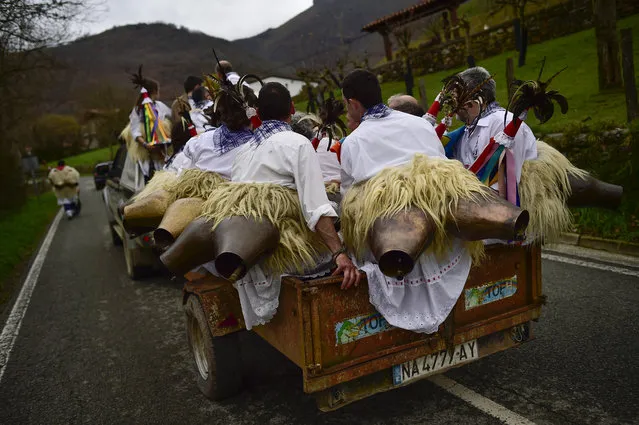
Joaldunaks return in a trailer to their town at the end of Carnival between of the Pyrenees villages of Ituren and Zubieta, northern Spain, Monday, February 1, 2016. In one of the most ancient carnivals in Europe, dating from before the Roman empire, companies of Joaldunak (cowbells) made up of residents of two towns, Ituren and Zubieta, parade the streets costumed in sandals, lace petticoats, sheepskins around the waist and shoulders, coloured neckerchiefs, conical caps with ribbons and a hyssop of horsehair in their right hands and cowbells hung across their lower back. (Photo by Alvaro Barrientos/AP Photo)

Joaldunaks return in a trailer to their town at the end of Carnival between of the Pyrenees villages of Ituren and Zubieta, northern Spain, Monday, February 1, 2016. In one of the most ancient carnivals in Europe, dating from before the Roman empire, companies of Joaldunak (cowbells) made up of residents of two towns, Ituren and Zubieta, parade the streets costumed in sandals, lace petticoats, sheepskins around the waist and shoulders, coloured neckerchiefs, conical caps with ribbons and a hyssop of horsehair in their right hands and cowbells hung across their lower back. (Photo by Alvaro Barrientos/AP Photo)
Details
02 Feb 2016 13:07:00
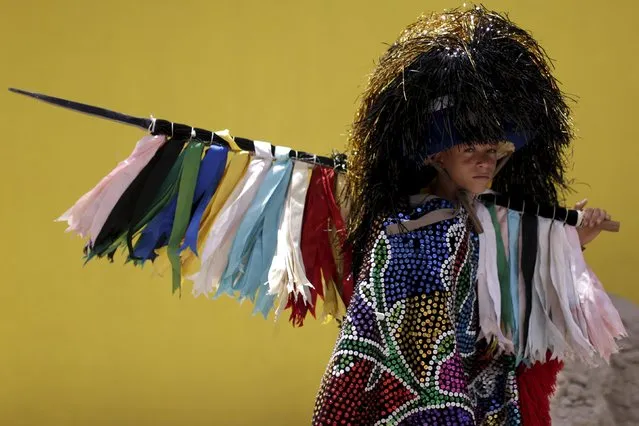
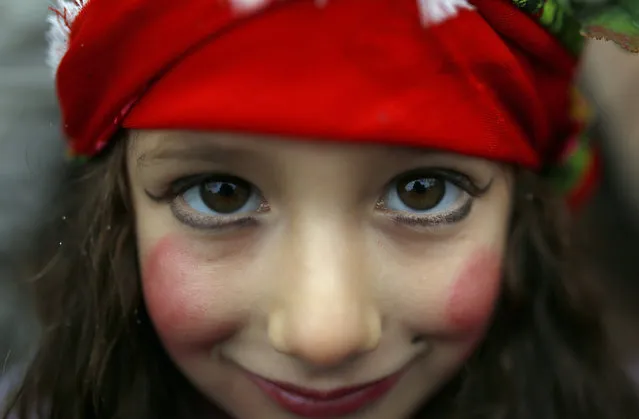
A reveller is photographed during a traditional Maracatu carnival in Olinda, Brazil February 8, 2016. (Photo by Ueslei Marcelino/Reuters)

A reveller is photographed during a traditional Maracatu carnival in Olinda, Brazil February 8, 2016. (Photo by Ueslei Marcelino/Reuters)
Details
10 Feb 2016 11:53:00
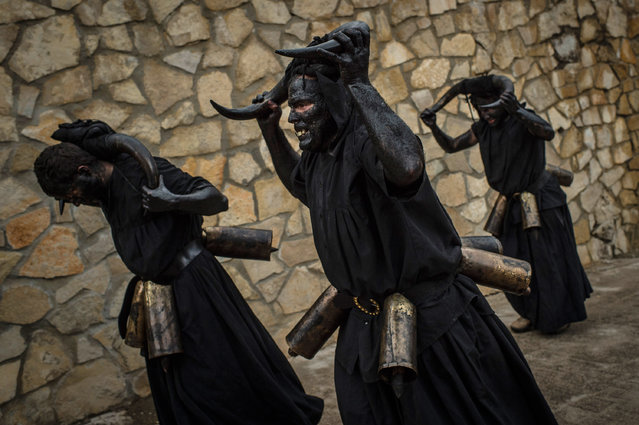
People with his face covered in oil and soot and carrying bull horns representing a devil join a carnival festival on February 14, 2015 in Luzon, Spain. (Photo by David Ramos/Getty Images)

People with his face covered in oil and soot and carrying bull horns representing a devil join a carnival festival on February 14, 2015 in Luzon, Spain. (Photo by David Ramos/Getty Images)
Details
15 Feb 2015 15:09:00
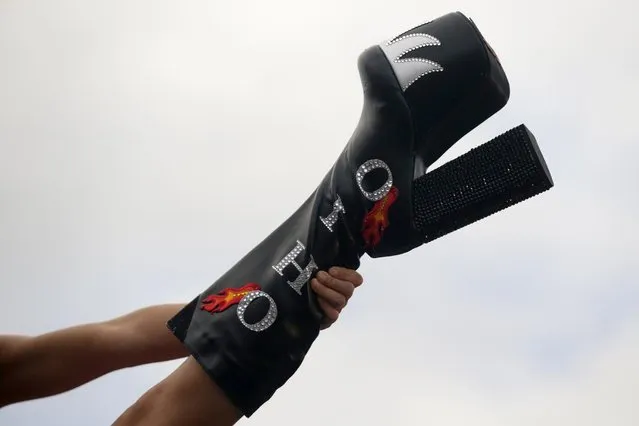
Miss Ohio Mackenzie Bart displays her shoe during the Miss America Shoe Parade at the Atlantic City boardwalk, Saturday, September 13, 2014, in Atlantic City, N.J. (Photo by Julio Cortez/AP Photo)

Miss Ohio Mackenzie Bart displays her shoe during the Miss America Shoe Parade at the Atlantic City boardwalk, Saturday, September 13, 2014, in Atlantic City, N.J. (Photo by Julio Cortez/AP Photo)
Details
14 Sep 2014 10:37:00
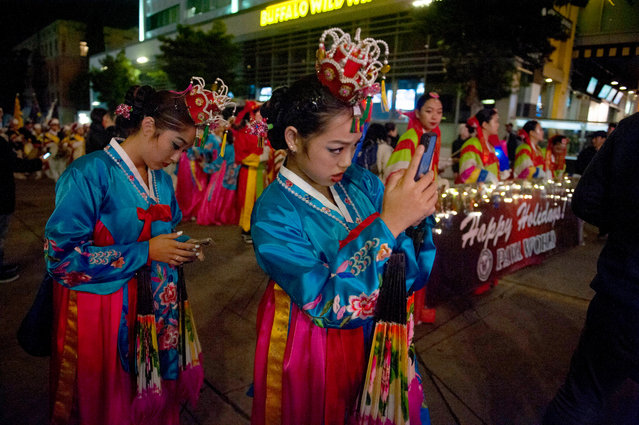
Participants wearing East Asian traditional costumes take photos during the 88th annual Hollywood Christmas Parade in Hollywood, Californi​a, USA, 01 December 2019. (Photo by Christian Monterrosa/EPA/EFE)

Participants wearing East Asian traditional costumes take photos during the 88th annual Hollywood Christmas Parade in Hollywood, Californi​a, USA, 01 December 2019. (Photo by Christian Monterrosa/EPA/EFE)
Details
04 Dec 2019 00:01:00
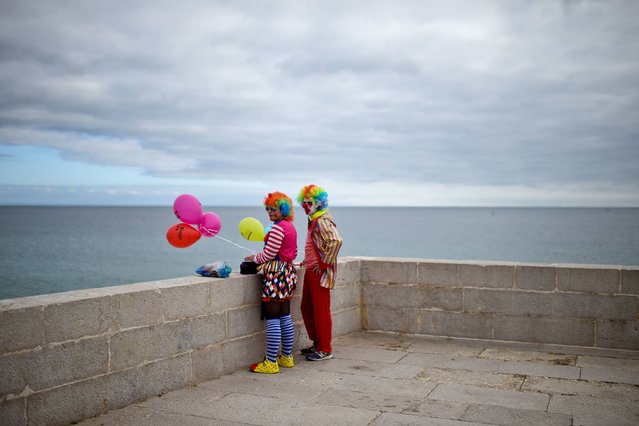
A couple dressed as clowns stands near the beach during the Carnival Clown's Parade at Sesimbra village, Portugal on February 27, 2017. (Photo by Patricia De Melo Moreira/AFP Photo)

A couple dressed as clowns stands near the beach during the Carnival Clown's Parade at Sesimbra village, Portugal on February 27, 2017. (Photo by Patricia De Melo Moreira/AFP Photo)
Details
02 Mar 2017 00:00:00
A woman is helped with adorning her hair with jewelry, part of the traditional clothing known as “Pollera”, before the annual Thousand Polleras parade in Las Tablas, in the province of Los Santos January 10, 2015. According to local residents, the Pollera dates back to the 18th century and was worn by the Spanish lower classes. (Photo by Carlos Jasso/Reuters)

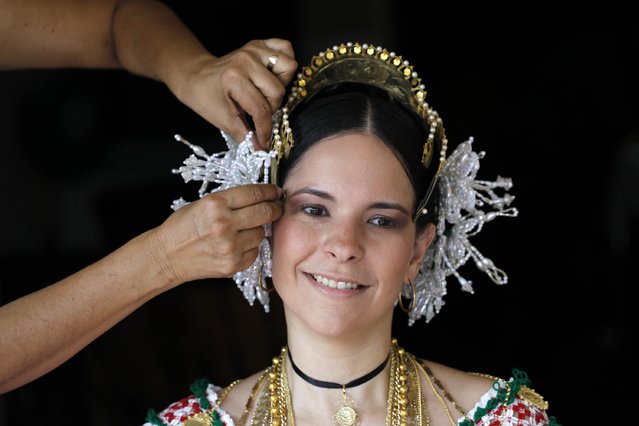
A woman is helped with adorning her hair with jewelry, part of the traditional clothing known as “Pollera”, before the annual Thousand Polleras parade in Las Tablas, in the province of Los Santos January 10, 2015. According to local residents, the Pollera dates back to the 18th century and was worn by the Spanish lower classes. Today, it has become the Panamanian national costume. The dress is made entirely by hand and the jewellery worn is pure gold and worth thousands of dollars. (Photo by Carlos Jasso/Reuters)
Details
12 Jan 2015 15:46:00