Loading...
Done
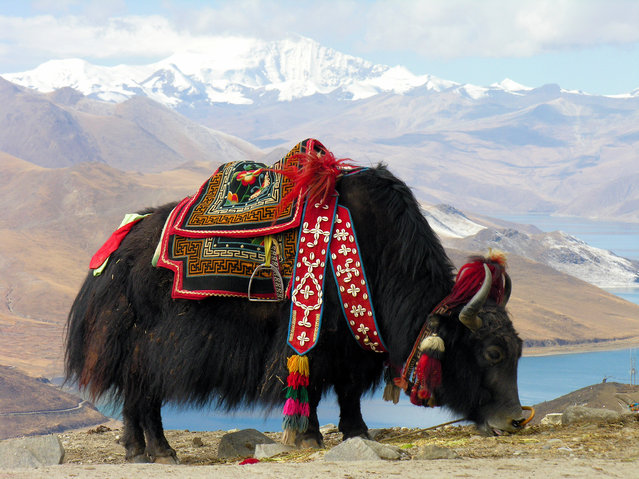
Yak near Yamdrok lake, Tibet. It is a long-haired bovinae found throughout the Himalayan region of south Central Asia, the Tibetan Plateau and as far north as Mongolia and Russia. The Tibetan economy is dominated by subsistence agriculture. Due to limited arable land, the primary occupation of the Tibetan Plateau is raising livestock, such as sheep, cattle, goats, camels, yaks, dzo, and horses. The Tibetan yak is an integral part of Tibetan life. (Photo by Dennis Jarvis)

Yak near Yamdrok lake, Tibet. It is a long-haired bovinae found throughout the Himalayan region of south Central Asia, the Tibetan Plateau and as far north as Mongolia and Russia. The Tibetan economy is dominated by subsistence agriculture. Due to limited arable land, the primary occupation of the Tibetan Plateau is raising livestock, such as sheep, cattle, goats, camels, yaks, dzo, and horses. The Tibetan yak is an integral part of Tibetan life. (Photo by Dennis Jarvis)
Details
10 Jun 2015 10:48:00
Master of throat singing (or Khoomei) Aikhan Orzhak (L) and model Choigana Kertek, dressed in traditional costume, perform during sunset at the Aldyn Bulak area on the bank of the Yenisei River outside the village of Ust-Elegest in Tuva region, Southern Siberia, Russia, October 7, 2015. The region is inhabited by Tuvans, historically cattle-herding nomads, who nowadays practise two main confessions - Buddhism and Shamanism. (Photo by Ilya Naymushin/Reuters)

Master of throat singing (or Khoomei) Aikhan Orzhak (L) and model Choigana Kertek, dressed in traditional costume, perform during sunset at the Aldyn Bulak area on the bank of the Yenisei River outside the village of Ust-Elegest in Tuva region, Southern Siberia, Russia, October 7, 2015. The region is inhabited by Tuvans, historically cattle-herding nomads, who nowadays practise two main confessions – Buddhism and Shamanism. (Photo by Ilya Naymushin/Reuters)
Details
17 Oct 2015 08:03:00
8-year-old Fulani boy Suleiman Yusuf drinks milk from a cow belonging to his father cattle near his family's house at Kachia Grazing Reserve, Kaduna State, Nigeria, on April 16, 2019. Kachia Grazing Reserve is an area set aside for the use of Fulani pastoralist and it is intended to be the foci of livestock development. The purpose for the grazing reserves is the settlement of nomadic pastoralists and inducement to sedentarisation through the provision of land for grazing and permanent water as way to avoid conflict. (Photo by Luis Tato/AFP Photo)

8-year-old Fulani boy Suleiman Yusuf drinks milk from a cow belonging to his father cattle near his family's house at Kachia Grazing Reserve, Kaduna State, Nigeria, on April 16, 2019. Kachia Grazing Reserve is an area set aside for the use of Fulani pastoralist and it is intended to be the foci of livestock development. The purpose for the grazing reserves is the settlement of nomadic pastoralists and inducement to sedentarisation through the provision of land for grazing and permanent water as way to avoid conflict. (Photo by Luis Tato/AFP Photo)
Details
10 Jul 2019 00:01:00
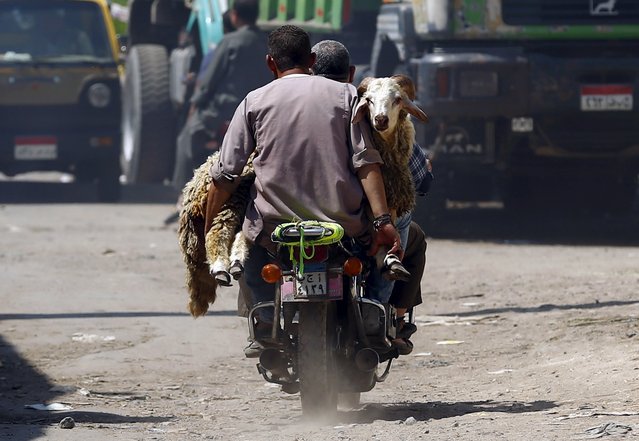
Men transport a sheep on their motorcycle after buying it at an old cattle market named “Al Emam Market” ahead of the Muslim festival Eid al-Adha in Cairo, Egypt, September 19, 2015. Muslims across the world are preparing to celebrate the annual festival of Eid al-Adha or the Festival of Sacrifice, which marks the end of the annual hajj pilgrimage, by slaughtering goats, sheep. (Photo by Amr Abdallah Dalsh/Reuters)

Men transport a sheep on their motorcycle after buying it at an old cattle market named “Al Emam Market” ahead of the Muslim festival Eid al-Adha in Cairo, Egypt, September 19, 2015. Muslims across the world are preparing to celebrate the annual festival of Eid al-Adha or the Festival of Sacrifice, which marks the end of the annual hajj pilgrimage, by slaughtering goats, sheep, cows and camels in commemoration of the Prophet Abraham's readiness to sacrifice his son to show obedience to Allah. (Photo by Amr Abdallah Dalsh/Reuters)
Details
22 Sep 2015 08:05:00
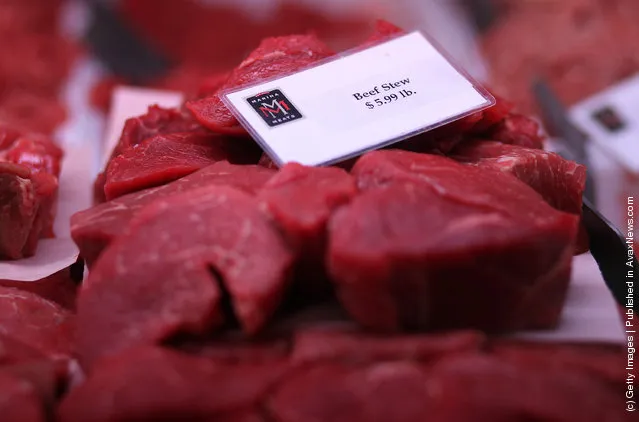
Cuts of beef are displayed at Marina Meats

Cuts of beef are displayed at Marina Meats on January 31, 2012 in San Francisco, California. Severe drought is a contributing factor in the declining cattle count, which has sent wholesale beef prices up 6.4 percent in the past 12 months. The price for a pound of beef (0.454 kg) peaked in price at $1.98 a pound on November 23, the highest price since 2004. (Photo by Justin Sullivan/Getty Images)
Details
01 Feb 2012 10:29:00
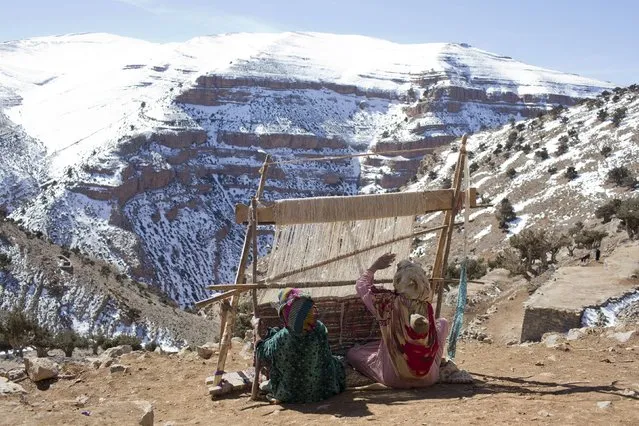
Berber women weave traditional carpets in the village of Ait Sghir in the High Atlas region of Morocco February 15, 2015. The snowy foothills of the High Atlas mountains in Morocco are home to several Berber villages where the inhabitants make their living by farming, baking bread in traditional ovens, herding cattle, and the making and selling of honey, olive oil and pottery. Extreme weather fluctuations and erosion that causes flooding and landslides have led to a drop in agricultural productivity, the United Nations said. (Photo by Youssef Boudlal/Reuters)

Berber women weave traditional carpets in the village of Ait Sghir in the High Atlas region of Morocco February 15, 2015. The snowy foothills of the High Atlas mountains in Morocco are home to several Berber villages where the inhabitants make their living by farming, baking bread in traditional ovens, herding cattle, and the making and selling of honey, olive oil and pottery. Extreme weather fluctuations and erosion that causes flooding and landslides have led to a drop in agricultural productivity, the United Nations said. (Photo by Youssef Boudlal/Reuters)
Details
26 Feb 2015 06:07:00
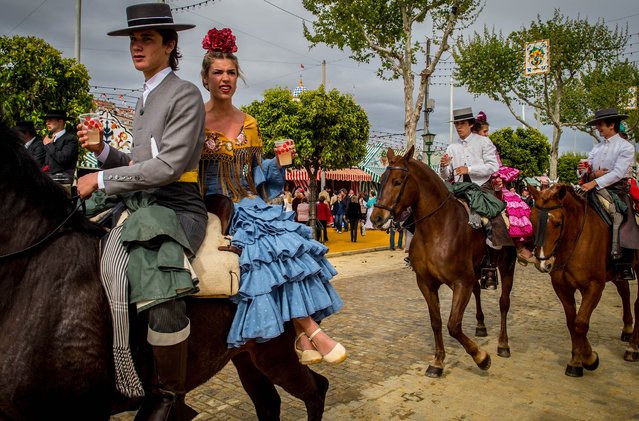
Participants in traditional dress ride on horseback as they enjoy the atmosphere at the Feria de Abril (April's Fair) on April 12, 2016 in Seville, Spain. The Feria de Abril has a history that dates back to 1857 and takes place a fortnight after Easter each year. The origin of the fair was a cattle market but the event quickly turned its goal from commerce to having fun. More than 1 million local and international participants are expected to attend the Feria de Abril. (Photo by David Ramos/Getty Images)

Participants in traditional dress ride on horseback as they enjoy the atmosphere at the Feria de Abril (April's Fair) on April 12, 2016 in Seville, Spain. The Feria de Abril has a history that dates back to 1857 and takes place a fortnight after Easter each year. The origin of the fair was a cattle market but the event quickly turned its goal from commerce to having fun. More than 1 million local and international participants are expected to attend the Feria de Abril. (Photo by David Ramos/Getty Images)
Details
14 Apr 2016 12:25:00
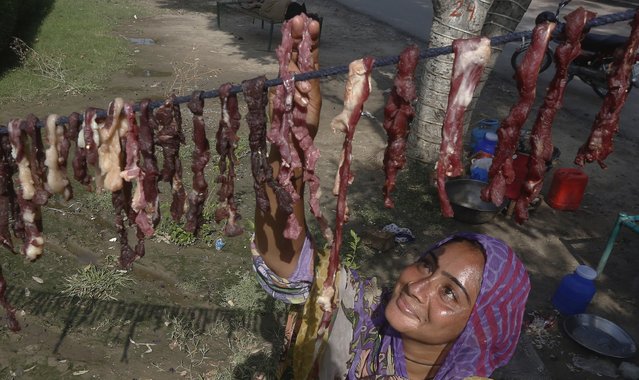
A woman hangs strips of salted meat she collected from different places during the Muslim's Eid al-Adha or Festival of Sacrifice, in Lahore, Pakistan, Sunday, August 2, 2020. Pakistanis are celebrating the Eid al-Adha, or the Feast of the Sacrifice, to mark the willingness of the Prophet Ibrahim – Abraham to Christians and Jews – to sacrifice his son. During the holiday Muslims slaughter sheep and cattle, distribute part of the meat to the poor. (Photo by K.M. Chaudary/AP Photo)

A woman hangs strips of salted meat she collected from different places during the Muslim's Eid al-Adha or Festival of Sacrifice, in Lahore, Pakistan, Sunday, August 2, 2020. Pakistanis are celebrating the Eid al-Adha, or the Feast of the Sacrifice, to mark the willingness of the Prophet Ibrahim – Abraham to Christians and Jews – to sacrifice his son. During the holiday Muslims slaughter sheep and cattle, distribute part of the meat to the poor. (Photo by K.M. Chaudary/AP Photo)
Details
28 Aug 2020 00:05:00