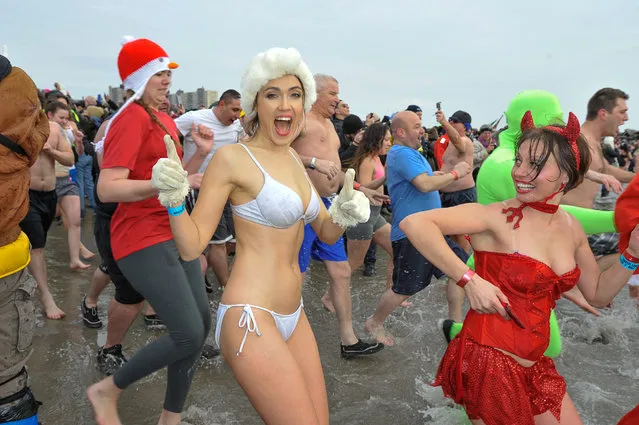
Polar Bear club swimmers take their annual swim in the sea at Coney Island in New York City on January 1, 2014. (Photo by Curtis Means/ACE/INFphoto.com)
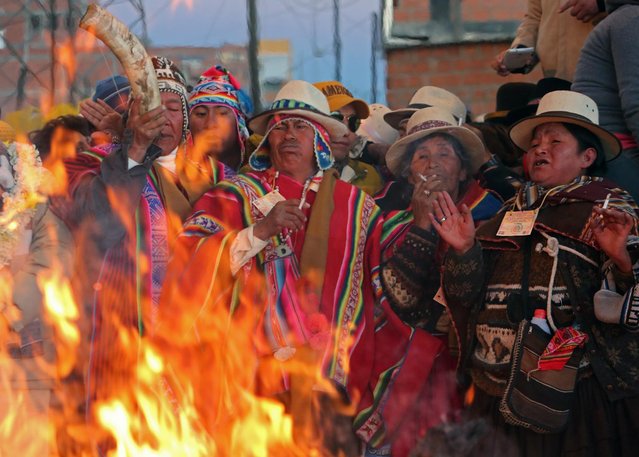
Local priests celebrate the “Aimara New Year”, an Andean Bolivian traditional festival that marks the winter solstice in El Alto, Bolivia, 21 June 2016. Aimara or Aymara means the Return of the Sun. (Photo by Martin Alipaz/EPA)
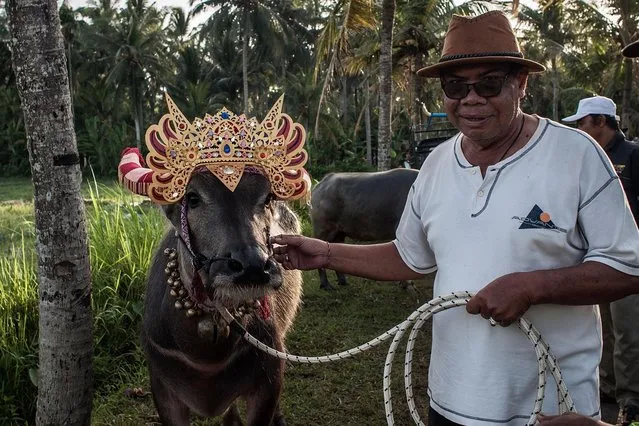
A man poses with his water buffalo during “Mekepung” traditional water buffalo race on July 28, 2013 in Jembrana, Bali, Indonesia. Meaning “to chase around”, Mekepung was originally designed as a fun game for peasants to spend their free time when the harvest time was ended, as they were waiting for the start of the planting season. (Photo by Putu Sayoga)
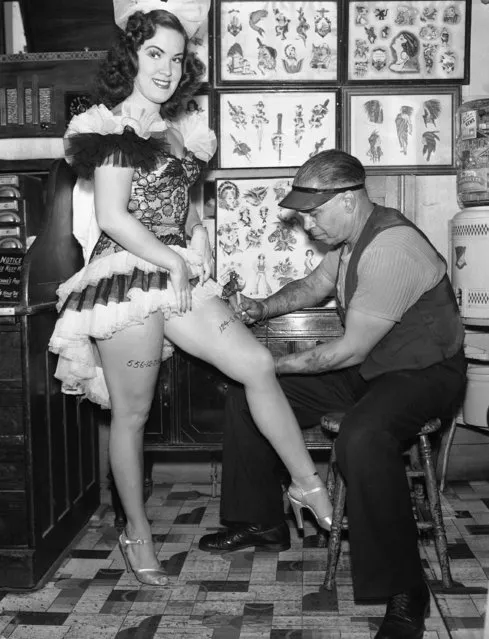
“Be prepared” is the motto of petite Doris Sherrell, vocalist and dancer with “Blackouts of 1942”. In the event of a bombing, the young lady had her social security number tattooed on one leg by artist Jack Julian, and address placed on the other limb for means of identification in Los Angeles, September 29, 1942. (Photo by AP Photo)
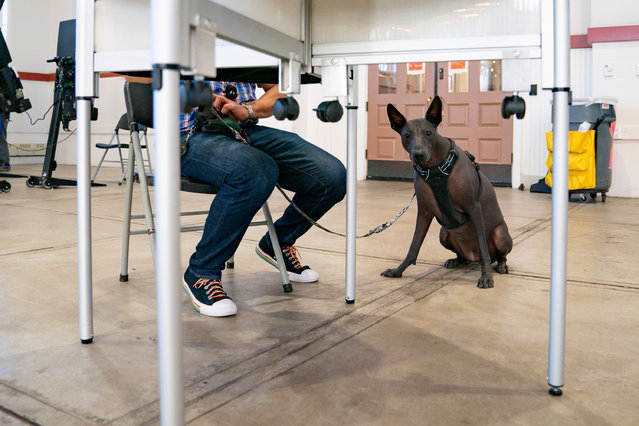
A dog waits as his companion fills out their ballot at Eastern Market in Washington, DC, on November 5, 2024. (Photo by Allison Robbert for The Washington Post)
Supporters of Venezuela's President Nicolas Maduro take part in a rally in support of the government in Caracas, Venezuela on May 20, 2019. (Photo by Ivan Alvarado/Reuters)
Tattoos are commonly used among criminals to show gang membership and record the wearer's personal history—such as his or her skills, specialties, accomplishments and convictions. They are also used as a means of personal expression. Certain designs have developed recognized coded meanings. The code systems can be quite complex and because of the nature of what they encode, the tattoo designs are not widely recognized.