Loading...
Done
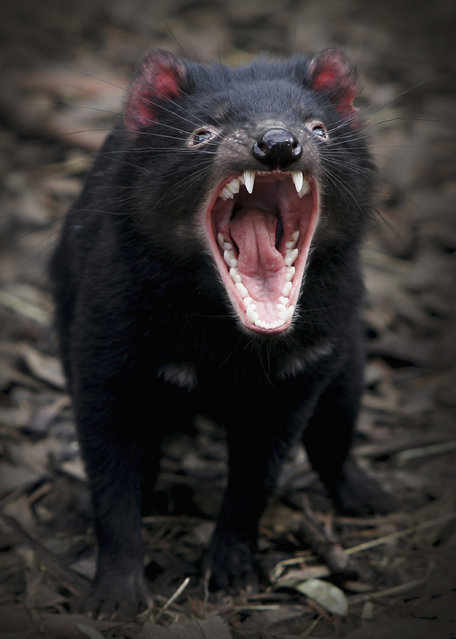
A Tasmanian Devil bears it's teeth at a quarantine facility August 31, 2005 in Hobart, Australia. The Devil, a native marsupial unique to Tasmania, is under threat from Devil Facial Tumor Disease (DFTD) which is decimating numbers throughout Tasmania. (Photo by Ian Waldie/Getty Images)

“The Tasmanian devil (Sarcophilus harrisii) is a carnivorous marsupial of the family Dasyuridae now found in the wild only in the Australian island state of Tasmania. The size of a small dog, it became the largest carnivorous marsupial in the world following the extinction of the thylacine in 1936. It is characterised by its stocky and muscular build, black fur, pungent odour, extremely loud and disturbing screech, keen sense of smell, and ferocity when feeding”. – Wikipedia. Photo: A Tasmanian Devil bears it's teeth at a quarantine facility August 31, 2005 in Hobart, Australia. (Photo by Ian Waldie/Getty Images)
Details
27 Jan 2014 09:45:00


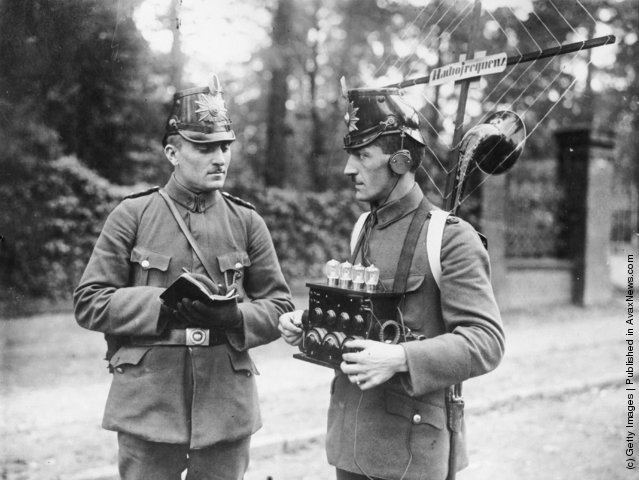
A member of the German wireless police picks up signals on the radio equipment he carries on his back, while his colleague takes notes. (Photo by General Photographic Agency/Getty Images). Circa 1925
Details
22 Jul 2013 22:48:00
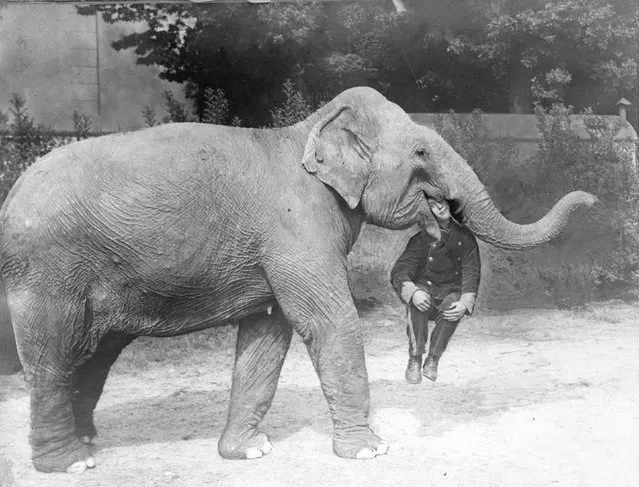
An elephant from Earl's Court Circus with a man in its mouth, 1928.

An elephant from Earl's Court Circus with a man in its mouth, 1928. P.S. All pictures are presented in high resolution.
Details
31 Aug 2012 14:35:00
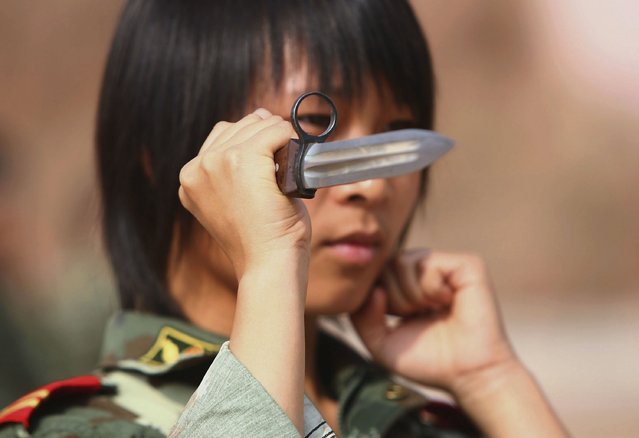
A member of a female grappling team from Qinghai Province armed police undergoes dagger exercise on August 8, 2006 in Xining of Qinghai Province, China. The female grappling team, established in May 2006, has 40 women soldiers aged 18 to 21. The training program includes grappling, boxing, dagger exercise and shooting.  (Photo by China Photos/Getty Images)

A member of a female grappling team from Qinghai Province armed police undergoes dagger exercise on August 8, 2006 in Xining of Qinghai Province, China. The female grappling team, established in May 2006, has 40 women soldiers aged 18 to 21. The training program includes grappling, boxing, dagger exercise and shooting. (Photo by China Photos). P.S. All pictures are presented in high resolution.
Details
02 Sep 2012 09:20:00
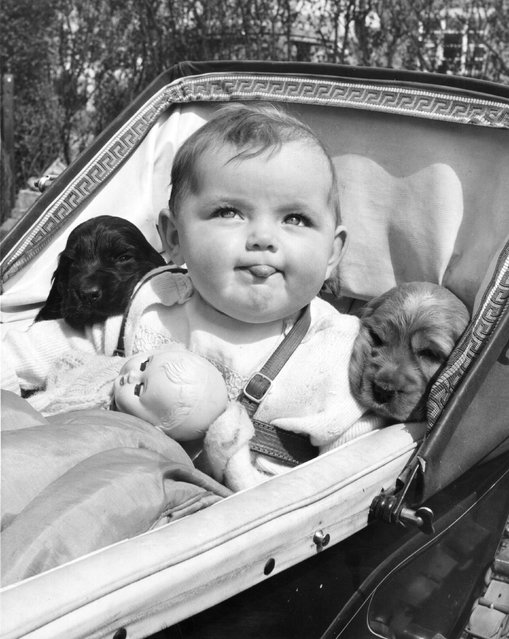
Seven month old Christine Joy shares her pram with two 5 week old Gunsure Golden Cherry's cocker spaniel pups from Gunsure Kennels in Ashford, Middlesex. 22nd May 1953. (Photo by Fred Morley/Fox Photos)

Seven month old Christine Joy shares her pram with two 5 week old Gunsure Golden Cherry's cocker spaniel pups from Gunsure Kennels in Ashford, Middlesex. 22nd May 1953. (Photo by Fred Morley/Fox Photos)
Details
08 Oct 2012 09:00:00
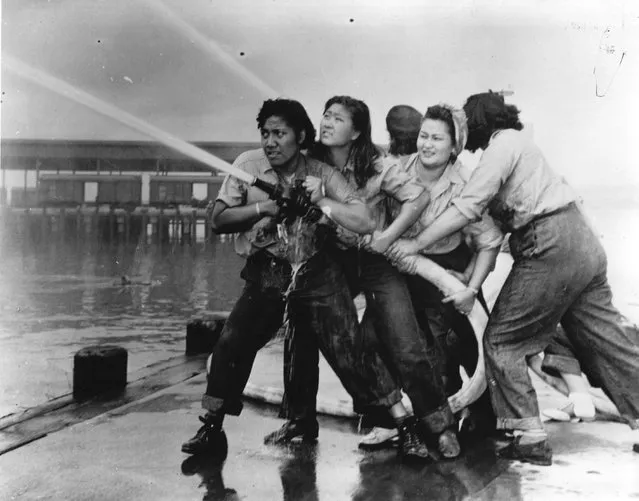
Women fire fighters directing a hose after the Japanese attack on the US naval base at Pearl Harbour (Pearl Harbor). (Photo by Three Lions/Getty Images)

“Pearl Harbor, known to Hawaiians as Puʻuloa, is a lagoon harbor on the island of Oʻahu, Hawaiʻi, west of Honolulu. Much of the harbor and surrounding lands is a United States Navy deep-water naval base. It is also the headquarters of the U.S. Pacific Fleet. The attack on Pearl Harbor by the Empire of Japan on December 7, 1941, brought the United States into World War II”. – Wikipedia

Photo: Women fire fighters directing a hose after the Japanese attack on the US naval base at Pearl Harbour (Pearl Harbor). (Photo by Three Lions)


Details
07 Dec 2012 09:01:00


A sign marks a railway crossing next to the troubled Kruemmel nuclear power plant on June 2, 2011 in Geesthacht, Germany. The German government recently announced it will phase out the country's 17 remaining nuclear reactors by 2022 in a policy initiative that represents a radical reversal from its previous policy and was sparked by the disaster at Fukushima. Kruemmel went into operation in 1983 but was taken offline following a fire in 2007. (Photo by Sean Gallup/Getty Images)
Details
03 Jun 2011 09:12:00
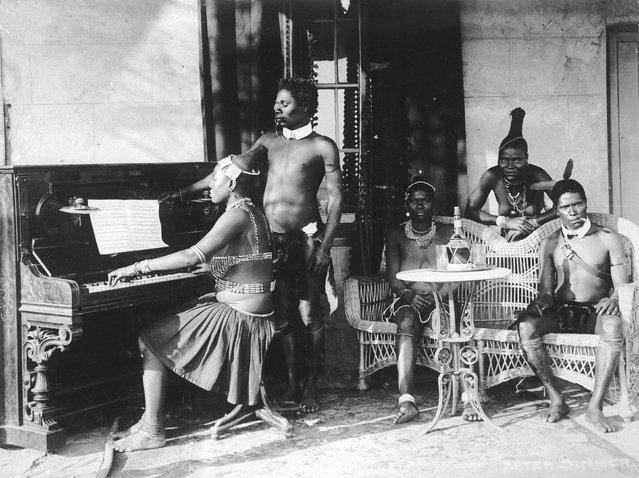
circa 1925:  A Zulu woman playing the piano while a group of others sit and listen.  (Photo by General Photographic Agency/Getty Images)

“The Zulu are the largest South African ethnic group, with an estimated 10–11 million people living mainly in the province of KwaZulu-Natal. Small numbers also live in Zimbabwe, Zambia, and Mozambique. Their language, Zulu, is a Bantu language; more specifically, part of the Nguni subgroup. The Zulu Kingdom played a major role in South African history during the 19th and 20th centuries. Under apartheid, Zulu people were classed as third-class citizens and suffered from state-sanctioned discrimination. They remain today the most numerous ethnic group in South Africa, and now have equal rights along with all other citizens”. – Wikipedia.

Photo: A Zulu woman playing the piano while a group of others sit and listen (to put it briefly, Englishmen scoff over Zulu). South Africa, circa 1925. (Photo by General Photographic Agency)

Details
03 Feb 2014 09:40:00