Loading...
Done
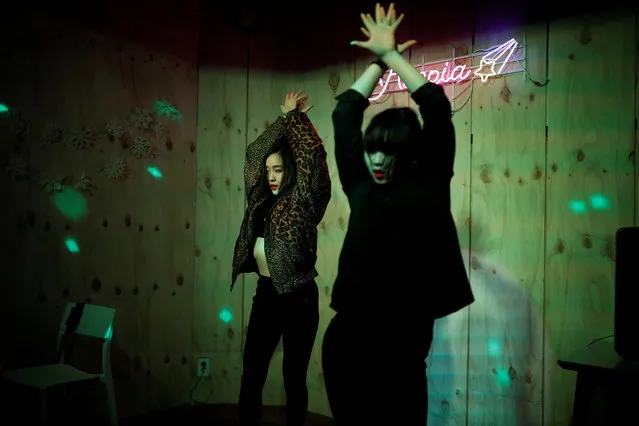
Japanese Yuuka Hasumi, 17, and Ibuki Ito, 17, also from Japan, who want to become K-pop stars, perform at an Acopia School party in Seoul, South Korea, March 16, 2019. Acopia is a prep school offering young Japanese a shot at K-pop stardom, teaching them the dance moves, the songs and also the language. (Photo by Kim Hong-Ji/Reuters)

Japanese Yuuka Hasumi, 17, and Ibuki Ito, 17, also from Japan, who want to become K-pop stars, perform at an Acopia School party in Seoul, South Korea, March 16, 2019. Acopia is a prep school offering young Japanese a shot at K-pop stardom, teaching them the dance moves, the songs and also the language. (Photo by Kim Hong-Ji/Reuters)
Details
06 Jun 2019 00:01:00
Special forces officers stand guard during a government-organised event marking Chechen language day in the centre of the Chechen capital Grozny April 25, 2013. (Photo by Maxim Shemetov/Reuters)

“What did I know about Chechnya before last week? For someone who grew up in the 1990s the very word Chechnya meant a string of grainy images on TV showing people in battered camouflage outfits, shooting at each other amid destruction and ruin. Fear, wahhabis, Shamil Basayev, terrorism, mountains: these were the words that used to spring to my mind when someone mentioned Chechnya”. – Maxim Shemetov. Photo: Special forces officers stand guard during a government-organised event marking Chechen language day in the centre of the Chechen capital Grozny April 25, 2013. (Photo by Maxim Shemetov/Reuters)
Details
14 May 2013 12:02:00
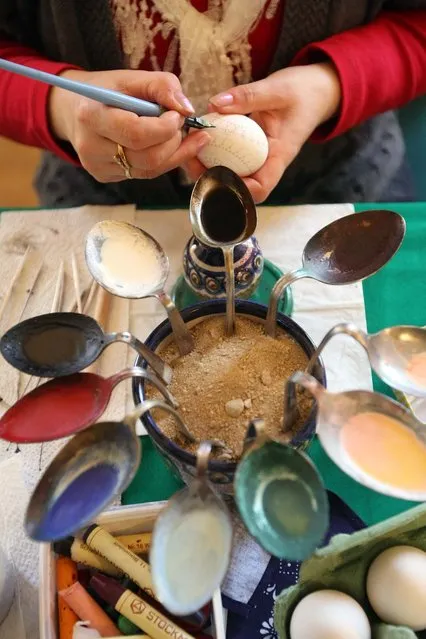
A Sorb egg painter decorates an Easter egg while using bent spoons full of melted wax as coloring at the annual Easter egg market on March 16, 2013 in Schleife, Germany. Easter is a particularly important time of year for Sorbs, a Slavic minority in eastern Germany, and the period includes the tradition of painting Easter eggs that include visual elements intended to ward off evil. Many Sorbs still speak Sorbian, a language closely related to Polish and Czech.  (Photo by Adam Berry)

A Sorb egg painter decorates an Easter egg while using bent spoons full of melted wax as coloring at the annual Easter egg market on March 16, 2013 in Schleife, Germany. Easter is a particularly important time of year for Sorbs, a Slavic minority in eastern Germany, and the period includes the tradition of painting Easter eggs that include visual elements intended to ward off evil. Many Sorbs still speak Sorbian, a language closely related to Polish and Czech. (Photo by Adam Berry)
Details
19 Mar 2013 06:41:00
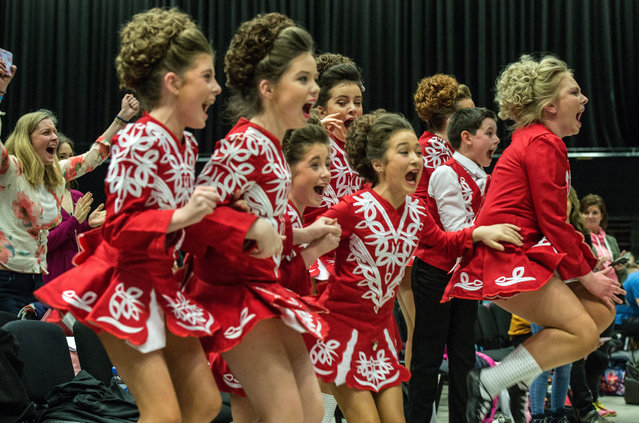
A team of Irish dancers celebrate after winning the under 12's group kaylee World Irish Dance Championship on April 2, 2016 in Brighton, England. The 8th World and 11th European Irish Dance Championships sees over 1500 dancers from 26 countries, speaking over 20 languages, competing in a variety of contests at the Brighton Centre on the city's beachfront. The event is organised by the World Irish Dance Association and is billed as the “Irish Dance Spectacular”. (Photo by Chris Ratcliffe/Getty Images)

A team of Irish dancers celebrate after winning the under 12's group kaylee World Irish Dance Championship on April 2, 2016 in Brighton, England. The 8th World and 11th European Irish Dance Championships sees over 1500 dancers from 26 countries, speaking over 20 languages, competing in a variety of contests at the Brighton Centre on the city's beachfront. The event is organised by the World Irish Dance Association and is billed as the “Irish Dance Spectacular”. (Photo by Chris Ratcliffe/Getty Images)
Details
03 Apr 2016 12:23:00
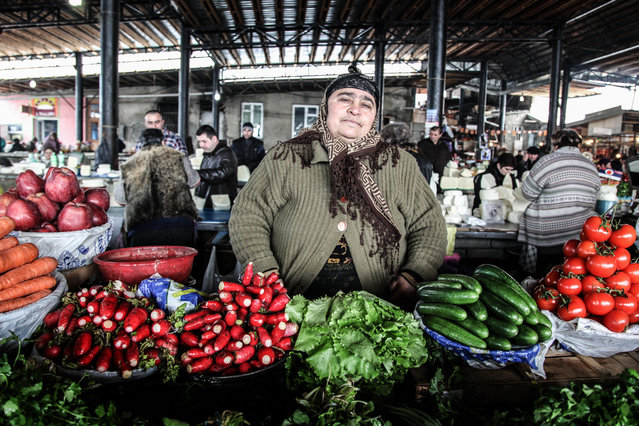
Telavi, Georgia. The photographer says his fascination with Slavic languages and culture took him onto a long journey through post-Soviet Europe, before he finally settled in Tbilisi, the capital of Georgia. (Photo by Gianluca Pardelli)

Gianluca Pardelli is something of an expert on markets. For the past two years, he’s travelled across eastern Europe, from Azerbaijan to Uzbekistan, Moldova to Georgia, photographing them. Here: Telavi, Georgia. (Photo by Gianluca Pardelli)
Details
16 Nov 2015 08:10:00
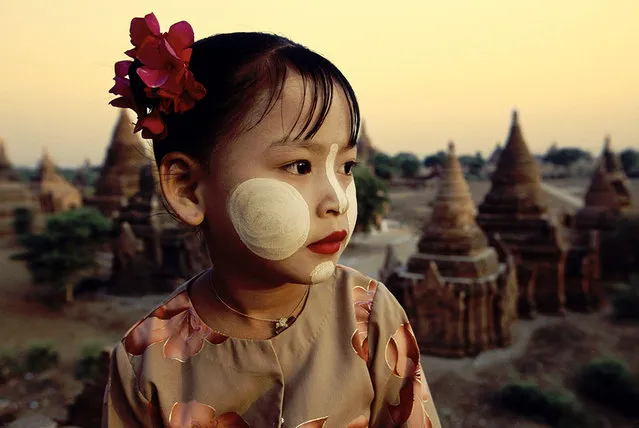
Pagan Kingdom, Myanmar

The Kingdom of Pagan (also commonly known as the Pagan Dynasty and the Pagan Empire) was the first kingdom to unify the regions that would later constitute modern-day Burma (Myanmar). Pagan's 250-year rule over the Irrawaddy valley and its periphery laid the foundation for the ascent of Burmese language and culture, the spread of Burman ethnicity in Upper Burma, and the growth of Theravada Buddhism in Burma and in mainland Southeast Asia.
Details
22 Feb 2014 15:14:00
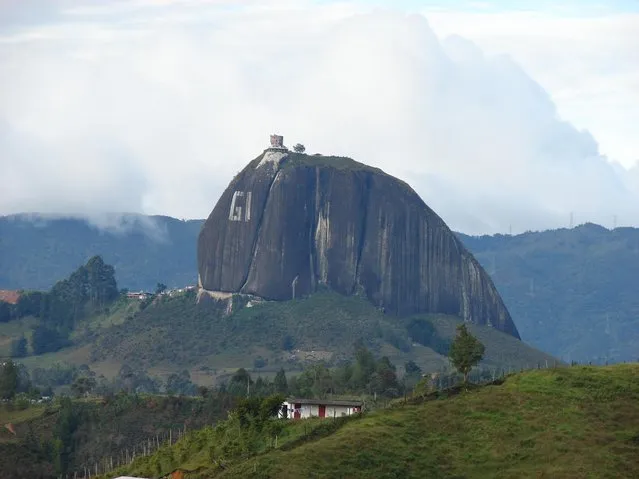
Guatape Rock In Colombia

Guatapé is a town and municipality in Antioquia Department, Colombia. Part of the subregion of Eastern Antioquia. Guatapé is located in the outskirts of Medellín, bordering a reservoir created by the Colombian government for a hydro-electric dam, built in the late 1960s. This quaint town is the gathering place for "Las Vegas", or the small farms of the area. It is also a growing area of recreation for citizens of Medellín, and aims to be a tourist destination for foreign travellers.
Guatapé was founded in 1811, by the Spaniard Don Francisco Giraldo y Jimenez. The name "Guatapé", comes from the Quechua language, related to "stones and water". The area was visited by the conquistadors circa 1551.
Details
25 Dec 2013 09:18:00
Sulfur mining in Kawah Ijen Lake

The Ijen volcano complex is a group of stratovolcanoes, in East Java, Indonesia. It is inside a larger caldera Ijen, which is about 20 kilometers wide. The Gunung Merapi stratovolcano is the highest point of that complex. The name of this volcano resembles that of a different volcano, Mount Merapi in central Java, also known as Gunung Merapi; there is also a third volcano named Marapi in Sumatra. The name "Merapi" means "fire" in the Indonesian language.
Details
03 Aug 2012 08:37:00