Loading...
Done
An orphan plays with her new hula hoop during the food and toy distribution, for total about 500 orphans in 11 orphanages, by National Muslim COVID-19 Response Committee to celebrate Eid al-Fitr, the Muslim holiday which marks the end of the fasting month of Ramadan at Good hope markazil Banatil Islamia orphans centre in Nairobi, Kenya, on May 25, 2020. (Photo by Yasuyoshi Chiba/AFP Photo)

An orphan plays with her new hula hoop during the food and toy distribution, for total about 500 orphans in 11 orphanages, by National Muslim COVID-19 Response Committee to celebrate Eid al-Fitr, the Muslim holiday which marks the end of the fasting month of Ramadan at Good hope markazil Banatil Islamia orphans centre in Nairobi, Kenya, on May 25, 2020. (Photo by Yasuyoshi Chiba/AFP Photo)
Details
06 Jun 2020 00:01:00
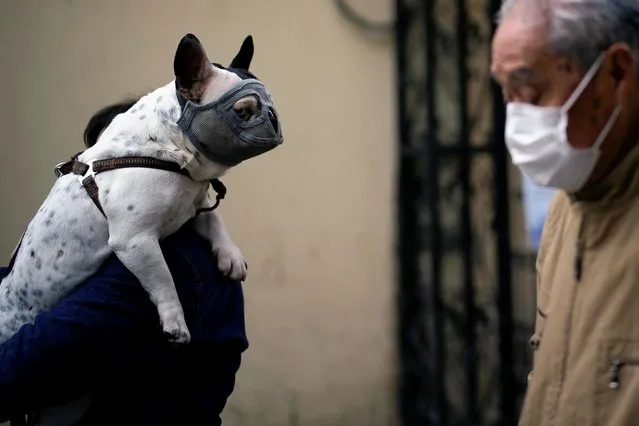
A dog wearing a mask is seen on a street following an outbreak of the novel coronavirus disease (COVID-19), in Shanghai, China on March 22, 2020. (Photo by Aly Song/Reuters)

A dog wearing a mask is seen on a street following an outbreak of the novel coronavirus disease (COVID-19), in Shanghai, China on March 22, 2020. (Photo by Aly Song/Reuters)
Details
29 Mar 2020 00:07:00


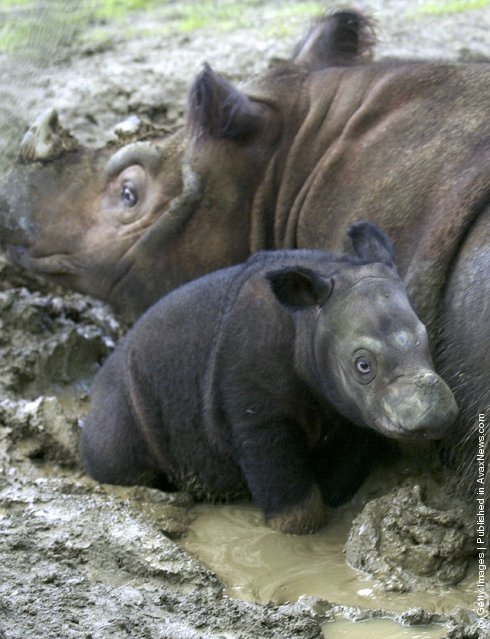
“The Sumatran Rhinoceros (Dicerorhinus sumatrensis) is a member of the family Rhinocerotidae and one of five extant rhinoceroses. It is the only extant species of the genus Dicerorhinus. It is the smallest rhinoceros, standing about 120–145 centimetres (3.9–4.76 ft) high at the shoulder, with a body length of 250 centimetres (8.2 ft) and weight of 500–800 kilograms (1,100–1,800 lb). Like the African species, it has two horns; the larger is the nasal horn, typically 15–25 centimetres (5.9–9.8 in), while the other horn is typically a stub. A coat of reddish-brown hair covers most of the Sumatran Rhino's body”. – Wikipedia

Photo: Emi, a Sumatran rhinoceros lies in the mud with her three-week-old female calf at the Cincinnati Zoo and Botanical Garden August 19, 2004 in Cincinnati, Ohio. Emi made history by becoming the first Sumatran rhino to produce two calves in captivity. (Photo by Mike Simons/Getty Images)

Details
22 Jun 2011 12:37:00
Weimaraner with his owner enjoys riding on a Vespa in Belgrade on April 19, 2025. (Photo by Milan Maricic/ATAImages)

Weimaraner with his owner enjoys riding on a Vespa in Belgrade on April 19, 2025. (Photo by Milan Maricic/ATAImages)
Details
11 May 2025 03:23:00
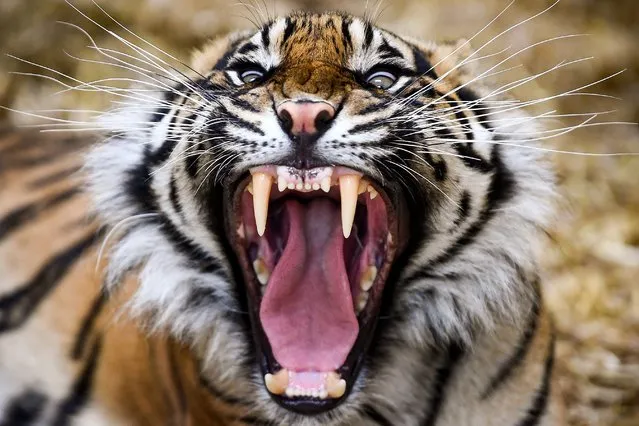
Dharma the Sumatran tiger yawns as members of the public return to Edinburgh Zoo as it opens for the first time following the easing of Scottish Governments lockdown restrictions on June 29, 2020 in Edinburgh, Scotland. Outdoor visitor attractions in Scotland have reopened along with many non-essential retailers after more than three months in lockdown, as Scotland moves into phase 2 of its “route map” for easing coronavirus restrictions. (Photo by Jeff J. Mitchell/Getty Images)

Dharma the Sumatran tiger yawns as members of the public return to Edinburgh Zoo as it opens for the first time following the easing of Scottish Governments lockdown restrictions on June 29, 2020 in Edinburgh, Scotland. Outdoor visitor attractions in Scotland have reopened along with many non-essential retailers after more than three months in lockdown, as Scotland moves into phase 2 of its “route map” for easing coronavirus restrictions. (Photo by Jeff J. Mitchell/Getty Images)
Details
05 Jul 2020 00:01:00
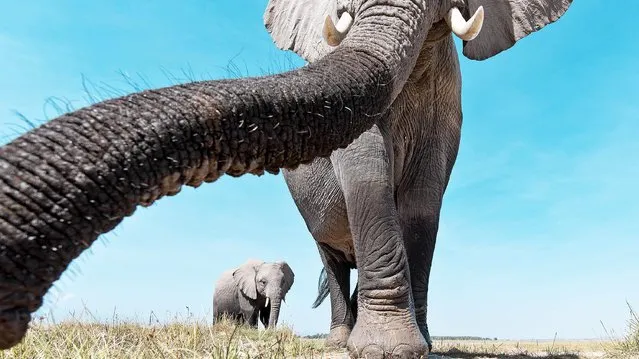
An elephant in Amboseli National Park in Kenya, June 2021. Gurcharan Roopra, 42, a Nairobi-born engineer-turned-wildlife photographer, has dedicated the past four years of his career to photographing these animals. He spends hours in his workshop camouflaging and encasing his equipment with protective gear before laying his camera in the path of lions, elephants, rhino, zebra and buffalo. (Photo by Gurcharan Roopra/Mercury Press)

An elephant in Amboseli National Park in Kenya, June 2021. Gurcharan Roopra, 42, a Nairobi-born engineer-turned-wildlife photographer, has dedicated the past four years of his career to photographing these animals. He spends hours in his workshop camouflaging and encasing his equipment with protective gear before laying his camera in the path of lions, elephants, rhino, zebra and buffalo. (Photo by Gurcharan Roopra/Mercury Press)
Details
24 Feb 2024 08:48:00
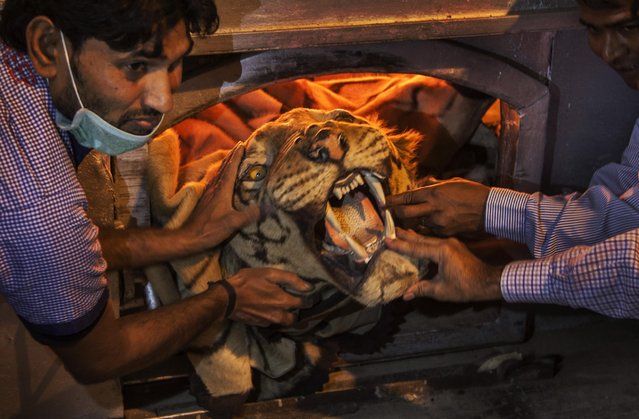
Indian authorities hold a tiger skin as they set fire to a stockpile of illegal wildlife parts at the Delhi Zoo in New Delhi, India, Sunday, November 2, 2014. A stockpile of tiger skins, elephant tusks, rhino horns and other illegal animal parts were burned Sunday in an effort to discourage wildlife smuggling in South Asia. (Photo by Tsering Topgyal/AP Photo)

Indian authorities hold a tiger skin as they set fire to a stockpile of illegal wildlife parts at the Delhi Zoo in New Delhi, India, Sunday, November 2, 2014. A stockpile of tiger skins, elephant tusks, rhino horns and other illegal animal parts were burned Sunday in an effort to discourage wildlife smuggling in South Asia. (Photo by Tsering Topgyal/AP Photo)
Details
03 Nov 2014 12:44:00
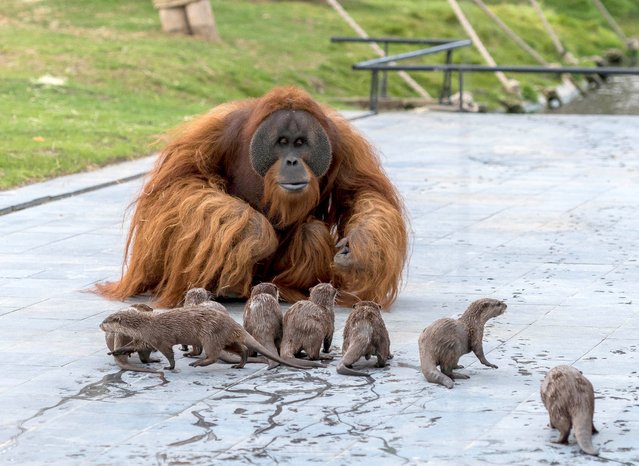
The three orangutans at Pairi Daiza zoo, Belgium, developed a “special bond” with the otters after their river was run through the ape enclosure on March 2020. The zoo said it enriched both species’ environments. An animal – and this is even more the case of orangutans, with whom humans share 97 per cent of their DNA – must be entertained, occupied, challenged and kept busy mentally, emotionally and physically at all times. (Photo by Pascale Jones/The Sun)

The three orangutans at Pairi Daiza zoo, Belgium, developed a “special bond” with the otters after their river was run through the ape enclosure on March 2020. The zoo said it enriched both species’ environments. An animal – and this is even more the case of orangutans, with whom humans share 97 per cent of their DNA – must be entertained, occupied, challenged and kept busy mentally, emotionally and physically at all times. (Photo by Pascale Jones/The Sun)
Details
05 Apr 2020 00:01:00